
Person · Nation
Israel
Hebrew for "he strives with God" or "God strives" · also the Israelites
The new name God gave Jacob after he wrestled all night at Peniel, and from him the name of the whole nation of the twelve tribes, of the northern kingdom after the split, and of God's true people.
- The man
- Jacob, renamed at Peniel (Genesis 32:28) and again at Bethel (Genesis 35:10)
- The nation
- The twelve tribes, "the children of Israel", from the Exodus on
- The kingdom
- The ten northern tribes, 931–722 BC, as against Judah
- Meaning
- "He strives with God" or "a prince with God"
The man
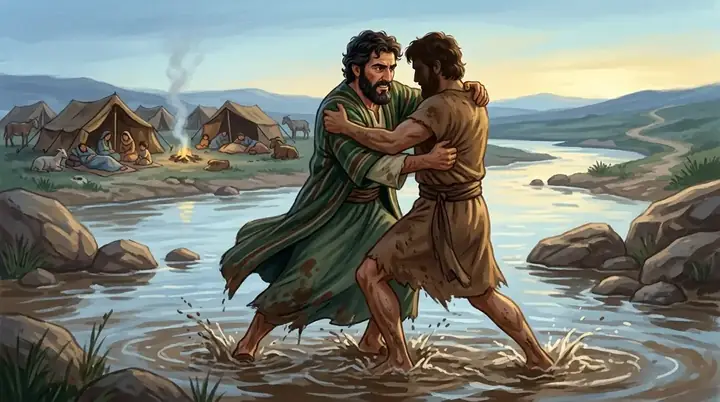
On his way home to face Esau, Jacob sent his family across the brook Jabbok and was left alone, and a man wrestled with him till daybreak. When Jacob would not let go without a blessing, the stranger said, "Thy name shall be called no more Jacob, but Israel: for as a prince hast thou power with God and with men, and hast prevailed" (Genesis 32:24–28). Jacob called the place Peniel, "the face of God", and limped away. God repeated the new name at Bethel (Genesis 35:10). The trickster had become the man who clung to God. His twelve sons became the twelve tribes.
The nation
From Egypt onward "the children of Israel" is the people's own name (Exodus 1:1; Exodus 1:7). God calls Israel "my son, even my firstborn" (Exodus 4:22) and makes his covenant with the nation at Mount Sinai. Through the wilderness, the conquest, the judges and the kings, "all Israel" means the whole people, and the hope of the prophets is a restored Israel.
The northern kingdom
After Solomon died the ten northern tribes broke away under Jeroboam and kept the name Israel, with its capital at last in Samaria, while the south was called Judah (1 Kings 12:16–20). Its kings, from Jeroboam to Hoshea, every one of them judged bad, led the people into calf worship and Baal worship until Assyria destroyed Samaria in 722 BC and carried the people away (2 Kings 17:5–23). After the exile the returning Jews took the name Israel for the whole nation again.
The true Israel
The prophets knew that not all Israel lived up to the name, and spoke of a faithful remnant. Jesus called Nathanael "an Israelite indeed, in whom is no guile" (John 1:47). Paul says, "they are not all Israel, which are of Israel" (Romans 9:6): the true children of Abraham are those who share his faith, and he blesses "the Israel of God" (Galatians 6:16). Yet he insists that God has not cast off his ancient people and looks for the day when "all Israel shall be saved" (Romans 11:1; Romans 11:26). In the New Jerusalem the twelve gates still bear the names of the twelve tribes (Revelation 21:12).
Key verses
- Genesis 32:28
And he said, Thy name shall be called no more Jacob, but Israel: for as a prince hast thou power with God and with men, and hast prevailed.
- Exodus 4:22
And thou shalt say unto Pharaoh, Thus saith the Lord, Israel is my son, even my firstborn:
- 1 Kings 12:16–20
So when all Israel saw that the king hearkened not unto them, the people answered the king, saying, What portion have we in David? neither have we inheritance in the son of Jesse: to your tents, O Israel: now see to thine own house, David. So Israel departed unto their tents. But as for the children of Israel which dwelt in the cities of Judah, Rehoboam reigned over them. Then king Rehoboam sent Adoram, who was over the tribute; and all Israel stoned him with stones, that he died. Therefore king Rehoboam made speed to get him up to his chariot, to flee to Jerusalem. …
- John 1:47
Jesus saw Nathanael coming to him, and saith of him, Behold an Israelite indeed, in whom is no guile!
- Romans 9:6
Not as though the word of God hath taken none effect. For they are not all Israel, which are of Israel:
- Romans 11:26
And so all Israel shall be saved: as it is written, There shall come out of Sion the Deliverer, and shall turn away ungodliness from Jacob:
On the map
Family
- Parents
- Isaac, Rebekah
- Brothers and sisters
- Esau
- Married to
- Rachel, Leah, Zilpah, Bilhah
- Children
- Reuben, Simeon, Levi, Judah, Dan, Naphtali, Gad, Asher, Issachar, Zebulun, Dinah, Joseph, Benjamin
Mentioned in 2,578 verses
- Genesis 186
- Exodus 167
- Leviticus 61
- Numbers 210
- Deuteronomy 76
- Joshua 140
- Judges 154
- Ruth 4
- 1 Samuel 132
- 2 Samuel 101
- 1 Kings 171
- 2 Kings 147
- 1 Chronicles 97
- 2 Chronicles 162
- Ezra 36
- Nehemiah 19
- Psalms 82
- Proverbs 1
- Ecclesiastes 1
- Song of Solomon 1
- Isaiah 105
- Jeremiah 130
- Lamentations 5
- Ezekiel 170
- Daniel 4
- Hosea 43
- Joel 3
- Amos 32
- Obadiah 4
- Micah 17
- Nahum 1
- Zephaniah 4
- Zechariah 5
- Malachi 8
- Matthew 15
- Mark 3
- Luke 16
- John 8
- Acts 28
- Romans 13
- 1 Corinthians 1
- 2 Corinthians 3
- Galatians 1
- Ephesians 1
- Philippians 1
- Hebrews 6
- Revelation 3
Read next
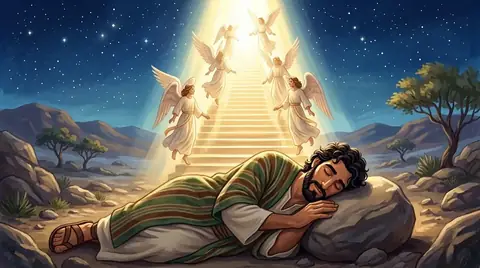 PersonJacobIsaac's younger twin son, who won his brother's birthright and blessing by cunning, was changed by God, and was renamed…
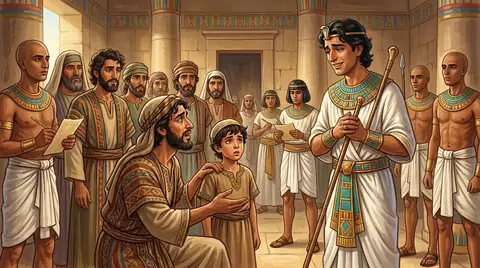 PersonJudahJacob's fourth son, who became leader among his brothers and the father of Israel's royal tribe. David, the kings of…
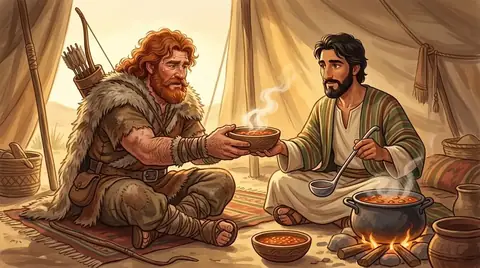 PersonEsauIsaac's elder twin, a hunter who traded away his birthright for a meal and lost his father's blessing to Jacob's trick.…
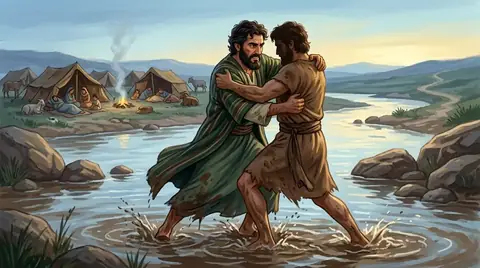 PlacePenielThe place by the river Jabbok where Jacob wrestled all night and was renamed Israel. He called it Peniel, "the face of…PlaceBethelA town about 10 miles north of Jerusalem where Jacob dreamed of a stairway to heaven. Later it became the home of…
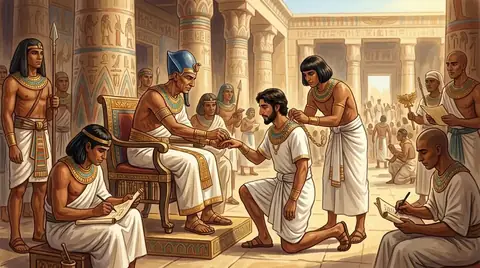 Place · NationEgyptThe great kingdom of the Nile, where Israel grew from a family into a nation and was then enslaved. The Exodus from…
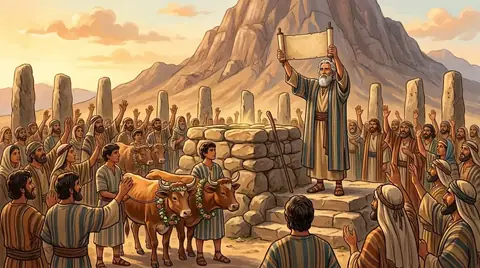 TeachingCovenantA solemn, binding agreement. God made covenants with Noah, Abraham, Israel and David, each with a promise and a sign…
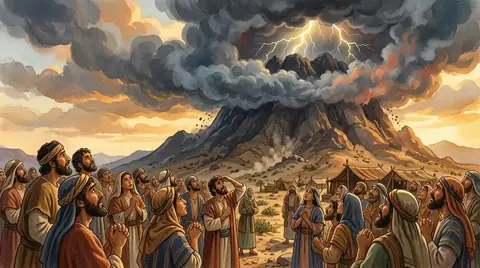 Place · MountainSinaiThe mountain where God came down in fire and smoke, spoke the Ten Commandments, and made his covenant with Israel. The…
Written for this app in its own words, from the Bible, with the facts checked against Bible dictionaries and encyclopedias: Easton's, Smith's, Fausset's, ISBE, Holman, the New Bible Dictionary, Vine's and the Thompson Chain topics. People and places: STEPBible.org (TIPNR), CC BY 4.0; where a place is today and its photo: OpenBible.info, CC BY 4.0.
