
Place · Mountain
Sinai
SY-nyAlso called Horeb, "the mountain of God" · by long tradition Jebel Musa in the south of the Sinai peninsula, 7,500 feet (2,285 m)
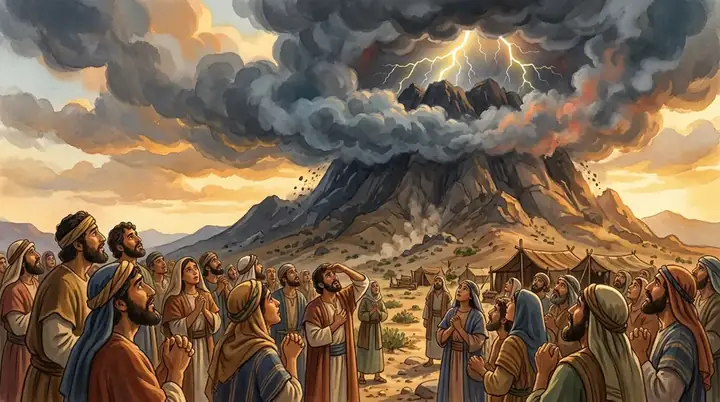
The mountain where God came down in fire and smoke, spoke the Ten Commandments, and made his covenant with Israel. The people camped at its foot for nearly a year after leaving Egypt.
- Where
- In the desert between Egypt and Canaan; the Bible does not give its exact site
- Known for
- The burning bush; the Ten Commandments; the covenant; the golden calf; Elijah's cave
- Where
- Exodus 3:1; Exodus 19–24; Exodus 32–34; Deuteronomy 5:2; 1 Kings 19:8; Psalms 68:8; Galatians 4:24–25; Hebrews 12:18–24
- Today
- in Egypt, about 50 km north-east of El Tur.
Where
Sinai is both a mountain and the desert round it. The Bible also calls the mountain Horeb; the two names are used for the same place. Since early Christian times pilgrims have climbed Jebel Musa, "the mountain of Moses", a granite peak near the southern tip of the peninsula, with the monastery of St Catherine at its foot and a wide plain, er-Rahah, where a great camp could have stood. The Bible itself gives no map, and other peaks have been suggested; the site isn't certain.
What happened there
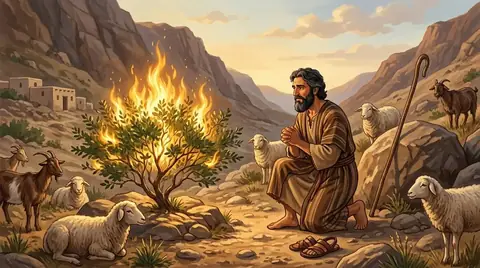
Moses first met God here, at the burning bush, while keeping Jethro's sheep, and was told that the people he would bring out of Egypt would worship on this mountain (Exodus 3:1–12). Three months after the Exodus they arrived (Exodus 19:1). God told them to wash and get ready, and on the third day the mountain shook, covered in thick smoke and fire, with thunder, lightning and a trumpet growing louder and louder, and God spoke the Ten Commandments out loud so that all the people heard (Exodus 19:16–20:19). Terrified, they asked Moses to speak to God for them. He went up into the cloud for forty days and came back with the two stone tablets and the plans for the tabernacle; the covenant was sealed with blood and a meal in God's presence (Exodus 24). While he was away the people made the golden calf, and Moses smashed the tablets at the mountain's foot (Exodus 32). He went up again, saw God's glory pass by, and came down with new tablets and a face that shone (Exodus 33–34). Israel stayed almost a year, and left in the second year, in its second month (Numbers 10:11–12).
Centuries later Elijah, running from Jezebel, walked forty days to Horeb and heard God not in wind, earthquake or fire but in "a still small voice" (1 Kings 19:8–12).
What it means
Sinai stands for the law and the old covenant: God's holiness, and the fear of a people who could not come near. Paul contrasts "mount Sinai, which gendereth to bondage" with the Jerusalem above (Galatians 4:24–26). Hebrews says Christians have not come to a mountain burning with fire and a voice too dreadful to bear, but to Mount Zion, to Jesus and his sprinkled blood (Hebrews 12:18–24). The same God spoke at both; the way to him is now open.
Today
Jebel Musa is in Egypt. Thousands of visitors climb the 3,750 steps cut by monks to watch the sunrise from the top, and St Catherine's monastery, founded in the 500s, still keeps a bush it holds to be the one Moses saw.
Key verses
- Exodus 3:1–2
Now Moses kept the flock of Jethro his father in law, the priest of Midian: and he led the flock to the backside of the desert, and came to the mountain of God, even to Horeb. And the angel of the Lord appeared unto him in a flame of fire out of the midst of a bush: and he looked, and, behold, the bush burned with fire, and the bush was not consumed.
- Exodus 19:18–20
And mount Sinai was altogether on a smoke, because the Lord descended upon it in fire: and the smoke thereof ascended as the smoke of a furnace, and the whole mount quaked greatly. And when the voice of the trumpet sounded long, and waxed louder and louder, Moses spake, and God answered him by a voice. And the Lord came down upon mount Sinai, on the top of the mount: and the Lord called Moses up to the top of the mount; and Moses went up.
- Exodus 24:16–18
And the glory of the Lord abode upon mount Sinai, and the cloud covered it six days: and the seventh day he called unto Moses out of the midst of the cloud. And the sight of the glory of the Lord was like devouring fire on the top of the mount in the eyes of the children of Israel. And Moses went into the midst of the cloud, and gat him up into the mount: and Moses was in the mount forty days and forty nights.
- Exodus 34:29
And it came to pass, when Moses came down from mount Sinai with the two tables of testimony in Moses’ hand, when he came down from the mount, that Moses wist not that the skin of his face shone while he talked with him.
- 1 Kings 19:8
And he arose, and did eat and drink, and went in the strength of that meat forty days and forty nights unto Horeb the mount of God.
- Hebrews 12:18–22
For ye are not come unto the mount that might be touched, and that burned with fire, nor unto blackness, and darkness, and tempest, And the sound of a trumpet, and the voice of words; which voice they that heard intreated that the word should not be spoken to them any more: (For they could not endure that which was commanded, And if so much as a beast touch the mountain, it shall be stoned, or thrust through with a dart: …
On the map
Mentioned in 43 verses
- Exodus 14
- Leviticus 4
- Numbers 2
- Deuteronomy 10
- Judges 1
- 1 Kings 2
- 2 Chronicles 1
- Nehemiah 1
- Psalms 3
- Malachi 1
- Acts 2
- Galatians 2
Read next
 PersonMosesThe man God used to bring Israel out of Egypt, give them his Law at Sinai, and lead them for forty years in the…Event · SymbolBurning BushThe desert bush that burned without burning up, from which God spoke to Moses, told him his name and sent him to bring…EventExodusIsrael's departure from Egypt, when God brought his people out of slavery with great signs and led them through the Red…
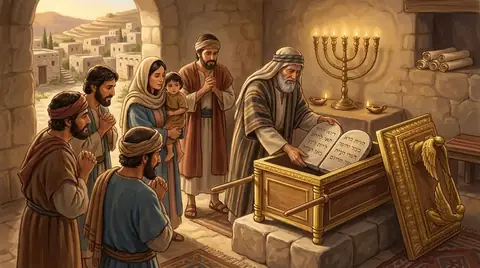 Teaching · LawDecalogueThe Ten Commandments, which God spoke from Mount Sinai and wrote with his own finger on two stone tablets. They sum up…
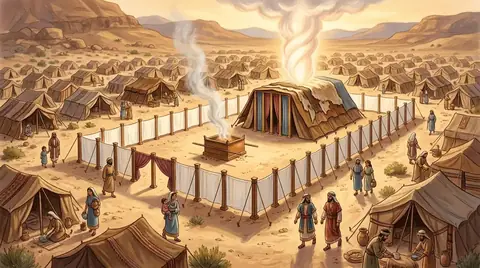 Thing · WorshipThe tabernacleThe holy tent Israel built in the wilderness, by God's own pattern, so that he could dwell in the middle of his people.…
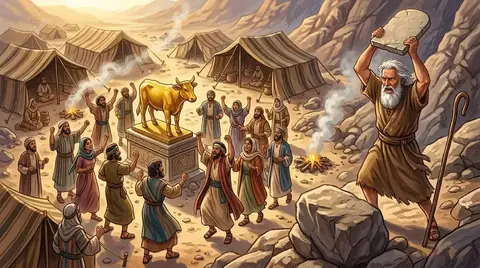 IdolThe golden calfThe image of a young bull that Aaron made at Sinai while Moses was on the mountain, and that Israel worshipped as the…
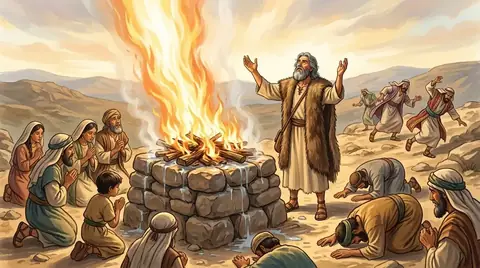 PersonElijahThe fiery prophet who stood alone against King Ahab and the prophets of Baal, called down fire on Mount Carmel, and was…TeachingLawGod's rule for how his people should live. In the Bible it means above all the commands given through Moses at Sinai…
Written for this app in its own words, from the Bible, with the facts checked against Bible dictionaries and encyclopedias: Easton's, Smith's, Fausset's, ISBE, Holman, the New Bible Dictionary, Vine's and the Thompson Chain topics. People and places: STEPBible.org (TIPNR), CC BY 4.0; where a place is today and its photo: OpenBible.info, CC BY 4.0.
