
Person
Esau
EE-sawOld Testament · born about 2006 BC · also called Edom
Isaac's elder twin, a hunter who traded away his birthright for a meal and lost his father's blessing to Jacob's trick. He forgave his brother in the end and his descendants became the Edomites.
- Family
- Elder twin son of Isaac and Rebekah; brother of Jacob; wives Judith, Basemath and Mahalath, Ishmael's daughter
- Meaning
- Hairy; his nickname Edom means red (Genesis 25:25, 30)
- Known for
- Selling his birthright; losing the blessing; forgiving Jacob
- Descendants
- The Edomites, who lived in Mount Seir (Edom)
His life
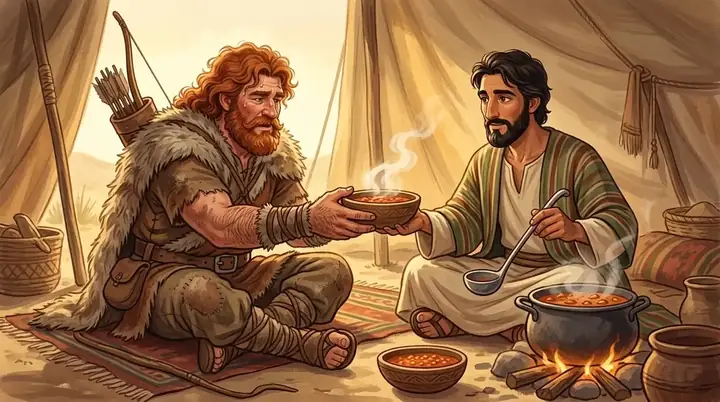
Esau came out of the womb first, red and hairy, with Jacob gripping his heel (Genesis 25:24–26). Before they were born God had told Rebekah that the elder would serve the younger. Esau grew up an outdoorsman and a hunter, his father's favourite, while Jacob kept to the tents (Genesis 25:27–28). One day he came in from the field starving, and Jacob would only give him some red lentil stew in exchange for his rights as firstborn. Esau agreed: "what profit shall this birthright do to me?" (Genesis 25:29–34). At forty he married two Hittite women who made life bitter for his parents (Genesis 26:34–35).
When Isaac, old and blind, prepared to give Esau the blessing, Rebekah and Jacob got in first, and Jacob, dressed in goatskins, took it. Esau came back from hunting too late, and his cry, "Bless me, even me also, O my father", is one of the saddest in Genesis (Genesis 27:30–38). He swore to kill Jacob once Isaac was dead, and Jacob fled.
Twenty years later
Jacob came home rich and terrified, and sent gifts ahead. Esau, now a chief with four hundred men, ran to meet him, hugged him and wept, and refused the presents until pressed (Genesis 33:1–11). The brothers buried their father together (Genesis 35:29). Esau moved his family to the hill country of Seir, which took his other name, Edom (Genesis 36:6–8).
What to learn
The New Testament calls Esau "profane": he treated a holy thing as cheap, trading a lifelong inheritance for one meal, and afterwards "found no place of repentance, though he sought it carefully with tears" (Hebrews 12:16–17). God's choice of Jacob, "the elder shall serve the younger", shows that his promise runs by grace and not by birth or merit (Romans 9:10–13; Malachi 1:2–3). Yet Esau's generous welcome of the brother who had cheated him remains a picture of forgiveness.
Key verses
- Genesis 25:29–34
And Jacob sod pottage: and Esau came from the field, and he was faint: And Esau said to Jacob, Feed me, I pray thee, with that same red pottage; for I am faint: therefore was his name called Edom. And Jacob said, Sell me this day thy birthright. …
- Genesis 27:34–38
And when Esau heard the words of his father, he cried with a great and exceeding bitter cry, and said unto his father, Bless me, even me also, O my father. And he said, Thy brother came with subtilty, and hath taken away thy blessing. And he said, Is not he rightly named Jacob? for he hath supplanted me these two times: he took away my birthright; and, behold, now he hath taken away my blessing. And he said, Hast thou not reserved a blessing for me? …
- Genesis 33:4
And Esau ran to meet him, and embraced him, and fell on his neck, and kissed him: and they wept.
- Malachi 1:2–3
I have loved you, saith the Lord. Yet ye say, Wherein hast thou loved us? Was not Esau Jacob’s brother? saith the Lord: yet I loved Jacob, And I hated Esau, and laid his mountains and his heritage waste for the dragons of the wilderness.
- Hebrews 12:16–17
Lest there be any fornicator, or profane person, as Esau, who for one morsel of meat sold his birthright. For ye know how that afterward, when he would have inherited the blessing, he was rejected: for he found no place of repentance, though he sought it carefully with tears.
On the map
Family
- Parents
- Isaac, Rebekah
- Brothers and sisters
- Israel
- Married to
- Oholibamah, Judith, Adah, Mahalath
- Children
- Eliphaz, Reuel, Jeush, Jalam, Korah
Mentioned in 84 verses
- Genesis 64
- Deuteronomy 6
- Joshua 1
- 1 Chronicles 4
- Jeremiah 2
- Obadiah 2
- Malachi 2
- Romans 1
- Hebrews 2
Read next
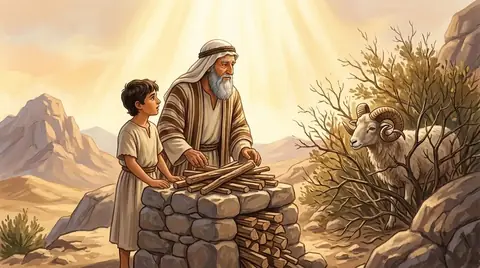 PersonIsaacThe son God promised to Abraham and Sarah when they were far too old for children, offered on Mount Moriah and spared.…
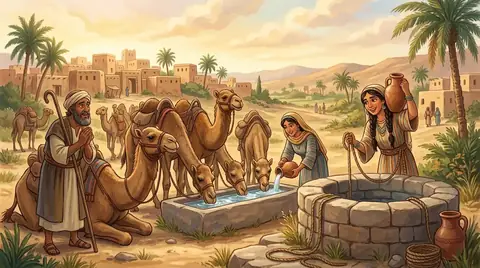 PersonRebekahIsaac's wife, found for him at a well far away in Abraham's homeland. She was told before her twins were born that the…
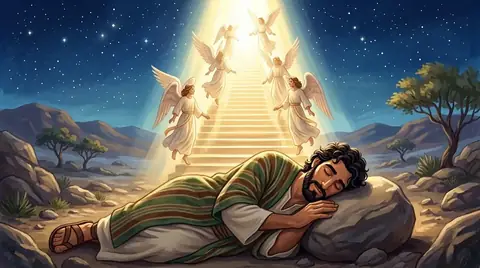 PersonJacobIsaac's younger twin son, who won his brother's birthright and blessing by cunning, was changed by God, and was renamed…
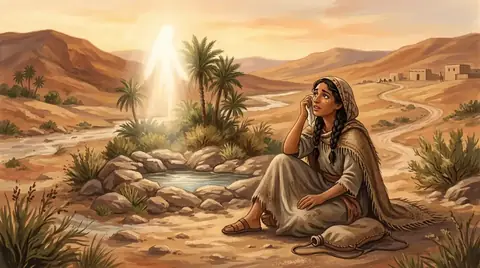 PersonIshmaelAbraham's first son, born to Hagar, Sarah's Egyptian maid. Sent away into the desert as a boy, he became a great archer…NationThe EdomitesThe people descended from Esau who lived in the mountains of Edom. Kin to Israel yet mostly hostile, they refused…
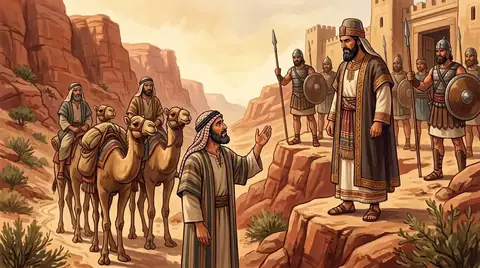 Place · NationEdomThe rugged land south of the Dead Sea where Esau's descendants lived. Edom was Israel's unfriendly brother nation, and…
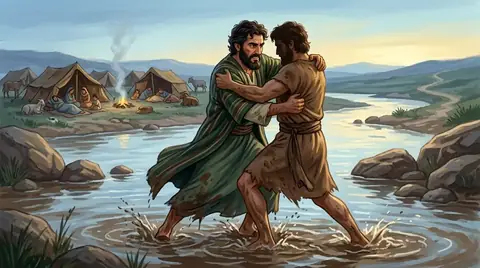 Person · NationIsraelThe new name God gave Jacob after he wrestled all night at Peniel, and from him the name of the whole nation of the…PersonOholibamahOne of Esau's wives, a Hivite woman from the land of Seir, and the mother of three Edomite chiefs. An Edomite chief…
Written for this app in its own words, from the Bible, with the facts checked against Bible dictionaries and encyclopedias: Easton's, Smith's, Fausset's, ISBE, Holman, the New Bible Dictionary, Vine's and the Thompson Chain topics. People and places: STEPBible.org (TIPNR), CC BY 4.0; where a place is today and its photo: OpenBible.info, CC BY 4.0.
