
Teaching
Covenant
A solemn, binding agreement. God made covenants with Noah, Abraham, Israel and David, each with a promise and a sign, and Jesus brought the new covenant in his blood.
- Hebrew
- berith, from a root meaning "to cut"; Greek diatheke, often "testament" in the KJV
- God's covenants
- With Noah (Genesis 9), Abraham (Genesis 15; 17), Israel at Mount Sinai (Exodus 24), David (2 Samuel 7), the new covenant (Jeremiah 31:31–34; Luke 22:20)
- Signs
- The rainbow, circumcision, the Sabbath, the cup of the Lord's Supper
What it was
A covenant was far more than a contract. It bound two parties together with promises sworn before God, often sealed by a sacrifice, a shared meal, a pillar of stones or a gift (see Covenant-making). People made them with each other: Abraham with Abimelech over a well (Genesis 21:27), Jacob with Laban on a heap of stones (Genesis 31:44–54), Jonathan with David in love (1 Samuel 18:3), and Israel with the Gibeonites, a covenant kept even though it had been won by a trick (Joshua 9). Marriage itself is called a covenant of God (Proverbs 2:17; Malachi 2:14). To break one was a serious sin (Jeremiah 34:18; Ezekiel 17:15–18).
God's covenants
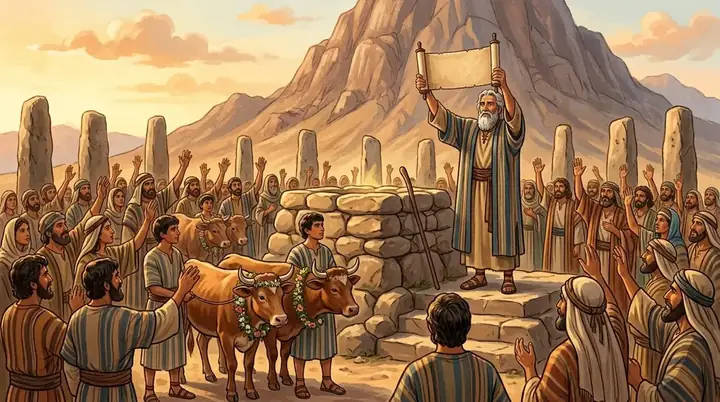
The Bible's story is held together by the covenants God made. He promised Noah never again to flood the earth, and set the rainbow in the sky as the sign (Genesis 9:8–17). He promised Abraham a land, a great people and blessing for all nations, passed between the pieces of the sacrifice alone (Genesis 15), and gave circumcision as the mark (Genesis 17). At Sinai he took Israel as his own people, and they promised to obey; Moses sprinkled the people with "the blood of the covenant" (Exodus 24:3–8). He promised David a son whose throne would last for ever (2 Samuel 7:12–16). Israel broke the Sinai covenant again and again, and God's prophets called them back to it, yet he never broke his side (Leviticus 26:44; Psalms 105:8).
The new covenant
Through Jeremiah God promised a new covenant, not written on stone but on the heart, with sins forgiven and forgotten (Jeremiah 31:31–34). At the Last Supper Jesus lifted the cup and said, "This cup is the new testament in my blood" (Luke 22:20): the new covenant, sealed by his death. Hebrews explains that he is the mediator of a better covenant built on better promises, and that the old has given way to it (Hebrews 8:6–13).
For us
A covenant means God has tied himself to his people by his word. His promises are not moods; he has sworn them. That is the ground of every Christian's confidence (Hebrews 6:17–18).
Key verses
- Genesis 15:18
In the same day the Lord made a covenant with Abram, saying, Unto thy seed have I given this land, from the river of Egypt unto the great river, the river Euphrates:
- Exodus 24:8
And Moses took the blood, and sprinkled it on the people, and said, Behold the blood of the covenant, which the Lord hath made with you concerning all these words.
- 2 Samuel 7:16
And thine house and thy kingdom shall be established for ever before thee: thy throne shall be established for ever.
- Jeremiah 31:31–34
Behold, the days come, saith the Lord, that I will make a new covenant with the house of Israel, and with the house of Judah: Not according to the covenant that I made with their fathers in the day that I took them by the hand to bring them out of the land of Egypt; which my covenant they brake, although I was an husband unto them, saith the Lord: But this shall be the covenant that I will make with the house of Israel; After those days, saith the Lord, I will put my law in their inward parts, and write it in their hearts; and will be their God, and they shall be my people. …
- Luke 22:20
Likewise also the cup after supper, saying, This cup is the new testament in my blood, which is shed for you.
- Hebrews 8:6
But now hath he obtained a more excellent ministry, by how much also he is the mediator of a better covenant, which was established upon better promises.
Read next
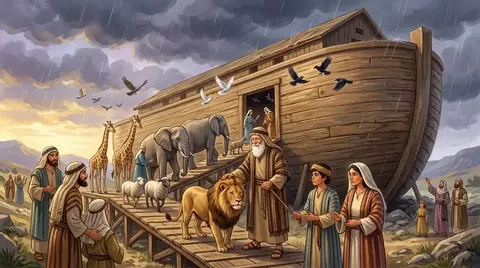 PersonNoahThe one righteous man of his age. God told him to build an ark, and through it saved him, his family and the animals…
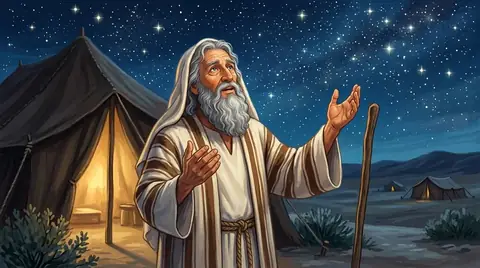 PersonAbrahamThe man God called out of Ur to a land he had never seen, promising him a people and a blessing for the whole world. He…
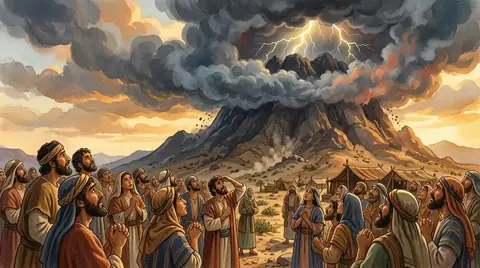 Place · MountainSinaiThe mountain where God came down in fire and smoke, spoke the Ten Commandments, and made his covenant with Israel. The…
 Person · KingDavidThe shepherd boy who killed Goliath and became Israel's greatest king, "a man after God's own heart". He wrote many…
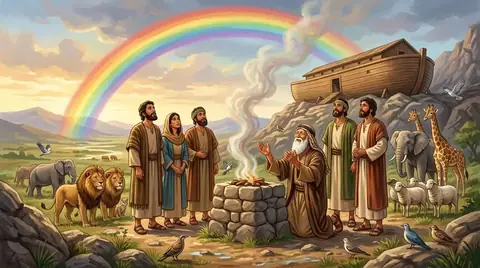 Symbol · NatureThe rainbowThe sign God set in the clouds after the flood as his promise never again to destroy the earth with water. In Ezekiel…Custom · CovenantCircumcisionThe removal of a baby boy's foreskin on his eighth day, the mark God gave Abraham's family as the sign of his covenant.…
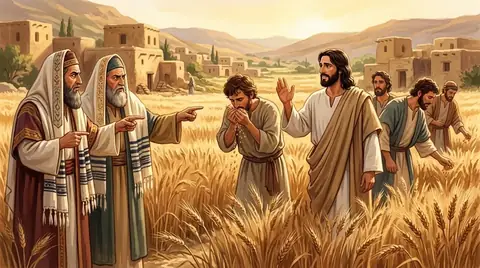 Custom · Day of restThe SabbathThe seventh day of the week, kept holy for rest and worship because God rested after creation. It was the sign of God's…
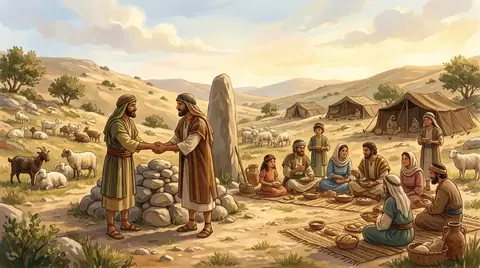 CustomCovenant-makingHow a solemn agreement was sealed in Bible times: by cutting animals in two and passing between the pieces, by an oath…
Written for this app in its own words, from the Bible, with the facts checked against Bible dictionaries and encyclopedias: Easton's, Smith's, Fausset's, ISBE, Holman, the New Bible Dictionary, Vine's and the Thompson Chain topics.
