
Idol
Baal
BAY-almeans "lord" or "owner" · plural Baalim
The Canaanites' chief god, a storm god believed to send rain and harvests. Israel kept falling into his worship, until Elijah faced his prophets on Mount Carmel and fire fell from the LORD.
- Worshipped by
- The Canaanites, Phoenicians and Moabites; Israel under the judges, Ahab and Manasseh
- Partner
- Ashtoreth, and Asherah's poles stood by his altars
- Fought by
- Gideon, Elijah, Jehu, Jehoiada, Josiah
- Place names
- Baal-peor, Baal-hazor, Baal-zephon: places where he once had a shrine
Who he was
Baal was the god the Canaanites prayed to for rain. In a land where no rain meant no harvest, that made him the god who mattered most. Every town had its own Baal, and together they were "the Baalim". His worship included feasts, the shedding of worshippers' own blood, and in the worst cases the burning of children (Jeremiah 19:5). His female partner was Ashtoreth.
Israel and Baal
Israel's first fall came at Baal-peor on the way to Canaan (Numbers 25:3). Once in the land they served him again and again through the days of the judges (Judges 2:11–13). Gideon's first act was to tear down his father's altar of Baal, which earned him the name Jerubbaal, "let Baal plead" (Judges 6:25–32).
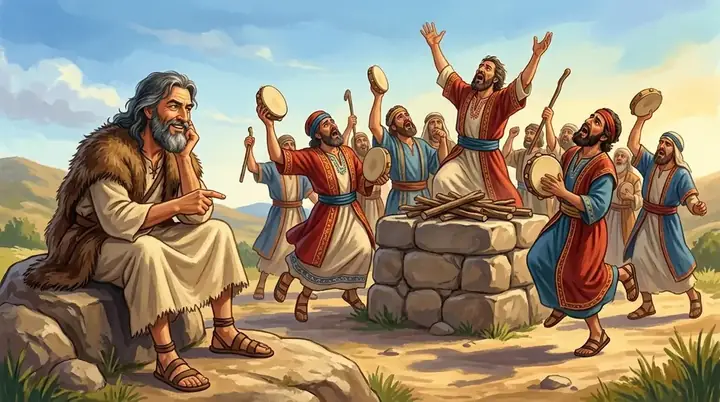
The worst days were under King Ahab, whose wife Jezebel brought hundreds of Baal's prophets from Sidon and built him a temple in Samaria (1 Kings 16:31–32). God sent a three-year drought, striking the rain-god where it hurt, and then Elijah called the people to Mount Carmel. Baal's prophets cried and cut themselves all day and nothing happened; Elijah prayed once and fire fell from heaven (1 Kings 18:17–40). Later Jehu wiped out Baal's worshippers in Israel (2 Kings 10:18–28), Jehoiada broke his temple in Judah (2 Kings 11:18), and Josiah burned his vessels (2 Kings 23:4–5). Only the exile ended it for good.
What it meant
God's complaint through Hosea was that Israel took the corn, wine and oil he gave them and thanked Baal (Hosea 2:8). He promised a day when they would call him "Ishi", my husband, and never again "my Baal" (Hosea 2:16–17). Paul quotes God's word to Elijah that seven thousand had never bowed the knee to Baal, a remnant kept by grace (Romans 11:4).
The name
Two Israelites were also called Baal, a Benjamite of Saul's family (1 Chronicles 8:30) and a Reubenite (1 Chronicles 5:5), and a town of Simeon bore the name (1 Chronicles 4:33).
Key verses
- Judges 2:11–13
And the children of Israel did evil in the sight of the Lord, and served Baalim: And they forsook the Lord God of their fathers, which brought them out of the land of Egypt, and followed other gods, of the gods of the people that were round about them, and bowed themselves unto them, and provoked the Lord to anger. And they forsook the Lord, and served Baal and Ashtaroth.
- 1 Kings 18:21
And Elijah came unto all the people, and said, How long halt ye between two opinions? if the Lord be God, follow him: but if Baal, then follow him. And the people answered him not a word.
- 1 Kings 18:38–39
Then the fire of the Lord fell, and consumed the burnt sacrifice, and the wood, and the stones, and the dust, and licked up the water that was in the trench. And when all the people saw it, they fell on their faces: and they said, The Lord, he is the God; the Lord, he is the God.
- Hosea 2:16–17
And it shall be at that day, saith the Lord, that thou shalt call me Ishi; and shalt call me no more Baali. For I will take away the names of Baalim out of her mouth, and they shall no more be remembered by their name.
- Romans 11:4
But what saith the answer of God unto him? I have reserved to myself seven thousand men, who have not bowed the knee to the image of Baal.
Family
- Parents
- Abiel, Maacah
- Brothers and sisters
- Kish, Ner, Abdon, Zur, Nadab, Gedor, Ahio, Zecher, Mikloth
Mentioned in 2 verses
- 1 Chronicles 2
Read next
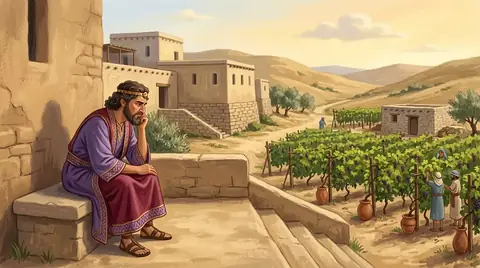 Person · KingAhabThe seventh king of the northern kingdom of Israel, who married Jezebel and led the nation into Baal worship. He…
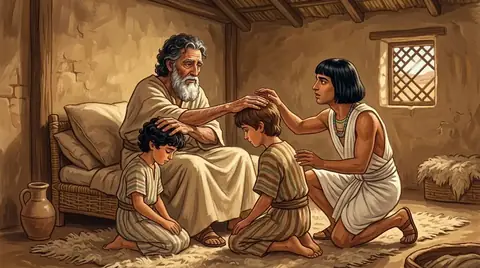 Person · TribeManassehJoseph's elder son, adopted by Jacob as a tribe of Israel, whose land straddled the Jordan. Also the longest-reigning…IdolAshtorethThe chief goddess of the Canaanites and Phoenicians, worshipped beside Baal as a goddess of love, fertility and war.…
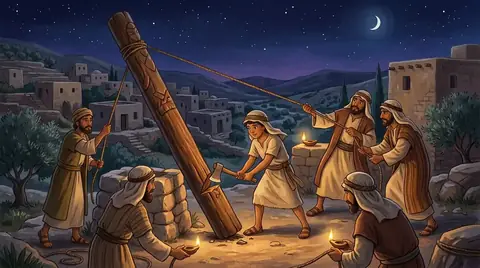 Custom · IdolatryAsherah polesWooden poles or carved trees that stood beside Canaanite altars in honour of the goddess Asherah. God told Israel to…
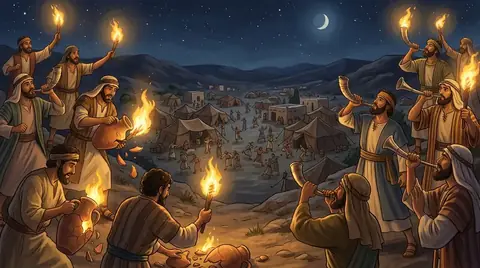 Person · JudgeGideonThe farmer God called to free Israel from the Midianites. Timid and full of questions, he obeyed, and with three…
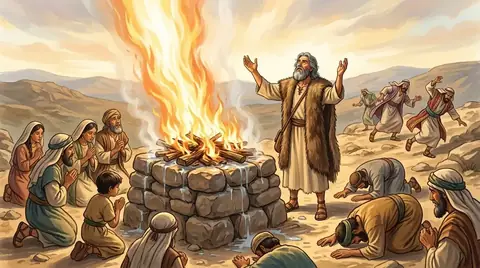 PersonElijahThe fiery prophet who stood alone against King Ahab and the prophets of Baal, called down fire on Mount Carmel, and was…
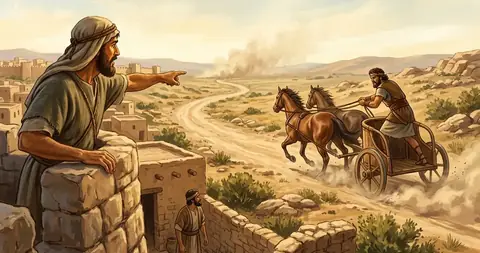 PersonJehuThe army commander anointed to wipe out Ahab's family. He drove his chariot furiously to Jezreel, shot King Joram, had…
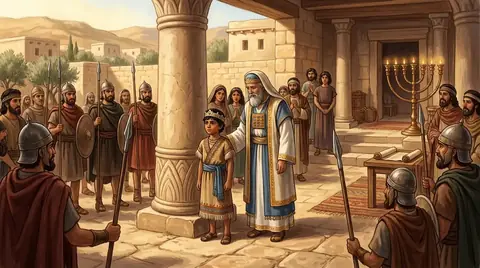 PersonJehoiadaThe high priest who hid the baby prince Joash from Queen Athaliah for six years, then crowned him king in the temple.…
Written for this app in its own words, from the Bible, with the facts checked against Bible dictionaries and encyclopedias: Easton's, Smith's, Fausset's, ISBE, Holman, the New Bible Dictionary, Vine's and the Thompson Chain topics. People and places: STEPBible.org (TIPNR), CC BY 4.0; where a place is today and its photo: OpenBible.info, CC BY 4.0.
