
Person · Tribe
Gad
Old Testament · the name means "a troop" or "good fortune"
Jacob's seventh son, by Leah's maid Zilpah, and the warlike tribe named after him that settled east of the Jordan. A prophet of the same name advised David.
- Family
- Son of Jacob and Zilpah; full brother of Asher. Seven sons (Genesis 46:16)
- Known for
- The tribe's land in Gilead; fighters with "faces of lions" (1 Chronicles 12:8)
- Where
- Genesis 30:11; Genesis 49:19; Numbers 32; Deuteronomy 33:20–21; Joshua 22
Jacob's son
When Leah had stopped bearing children she gave her maid Zilpah to Jacob, and the boy that was born she named Gad, saying "A troop cometh" (Genesis 30:9–11). Little is told of him as a man. On his deathbed Jacob said of him, "Gad, a troop shall overcome him: but he shall overcome at the last" (Genesis 49:19), a word that fitted a tribe always on the frontier.
The tribe
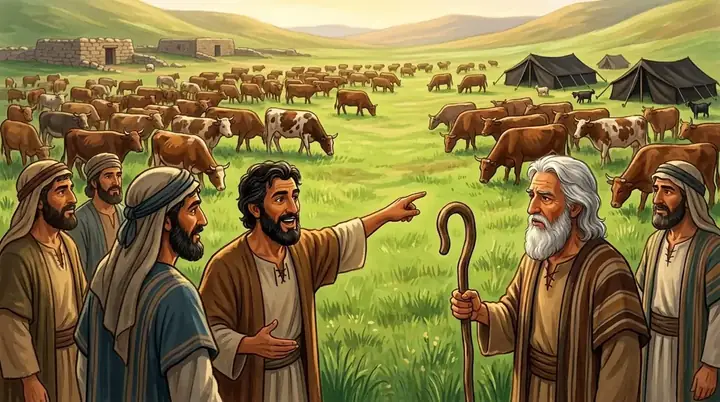
Gad grew into a tribe of more than forty thousand fighting men, camped south of the tabernacle beside Reuben and Simeon (Numbers 1:25; Numbers 2:14). Gad and Reuben had great herds, and when Israel reached the grasslands east of the Jordan they asked Moses to let them settle there. Moses was angry until they promised to cross over and fight with their brothers until all the land was won; then he agreed (Numbers 32). Their land was the southern half of Gilead, from the Jabbok down to the Dead Sea, with the whole Jordan valley (Joshua 13:24–28). Once the fighting was over they went home and built a great altar by the Jordan, not for sacrifice but as a witness that they still belonged to Israel (Joshua 22:10–34). Moses blessed them as a lion that had chosen the first share and yet did justice (Deuteronomy 33:20–21).
Gadites were famous soldiers, "whose faces were like the faces of lions", and some swam the Jordan in flood to join David in the wilderness (1 Chronicles 12:8–15). Jephthah the Gileadite and Elijah from Gilead came from their country. Living on the border, they bore the brunt of attacks from Ammon and Syria (Judges 11; 2 Kings 10:32–33), and they were among the first tribes carried off by Assyria under Tiglath-pileser (1 Chronicles 5:26).
Gad the prophet
A different Gad, called "David's seer", told David to leave his hideout and go back into Judah (1 Samuel 22:5). After David's sinful census, Gad brought him God's choice of three punishments, and then sent him to raise an altar where Araunah threshed his grain, where the plague stopped and where the temple would stand (2 Samuel 24:11–25). He wrote a record of David's reign and helped arrange the temple music (1 Chronicles 29:29; 2 Chronicles 29:25).
Key verses
- Genesis 30:11
And Leah said, A troop cometh: and she called his name Gad.
- Genesis 49:19
Gad, a troop shall overcome him: but he shall overcome at the last.
- Numbers 32:16–22
And they came near unto him, and said, We will build sheepfolds here for our cattle, and cities for our little ones: But we ourselves will go ready armed before the children of Israel, until we have brought them unto their place: and our little ones shall dwell in the fenced cities because of the inhabitants of the land. We will not return unto our houses, until the children of Israel have inherited every man his inheritance. …
- Deuteronomy 33:20–21
And of Gad he said, Blessed be he that enlargeth Gad: he dwelleth as a lion, and teareth the arm with the crown of the head. And he provided the first part for himself, because there, in a portion of the lawgiver, was he seated; and he came with the heads of the people, he executed the justice of the Lord, and his judgments with Israel.
- 1 Chronicles 12:8
And of the Gadites there separated themselves unto David into the hold to the wilderness men of might, and men of war fit for the battle, that could handle shield and buckler, whose faces were like the faces of lions, and were as swift as the roes upon the mountains;
- 2 Samuel 24:18
And Gad came that day to David, and said unto him, Go up, rear an altar unto the Lord in the threshingfloor of Araunah the Jebusite.
On the map
Family
- Parents
- Israel, Zilpah
- Brothers and sisters
- Reuben, Simeon, Levi, Judah, Dan, Naphtali, Asher, Issachar, Zebulun, Dinah, Joseph, Benjamin
- Children
- Ziphion, Haggi, Shuni, Ezbon, Eri, Arod, Areli
Mentioned in 55 verses
- Genesis 4
- Exodus 1
- Numbers 18
- Deuteronomy 2
- Joshua 19
- 1 Samuel 1
- 2 Samuel 1
- 1 Chronicles 4
- Jeremiah 1
- Ezekiel 3
- Revelation 1
Read next
 PersonJacobIsaac's younger twin son, who won his brother's birthright and blessing by cunning, was changed by God, and was renamed…
 PersonZilpahLeah's maidservant, given to Jacob as a wife. She was the mother of Gad and Asher, two of the twelve tribes of Israel.
 Person · TribeAsherJacob's eighth son, born to Leah's maid Zilpah, and the tribe that came from him. Asher's land was the rich coast north…PersonLeahJacob's first wife, given to him by her father's trick in place of her sister Rachel. Less loved, she bore six of…
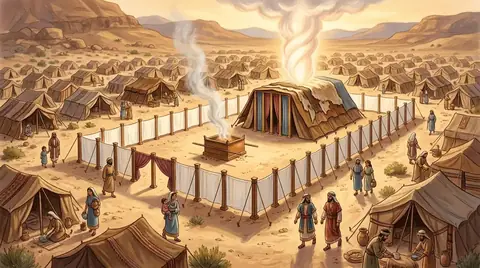 Thing · WorshipThe tabernacleThe holy tent Israel built in the wilderness, by God's own pattern, so that he could dwell in the middle of his people.…
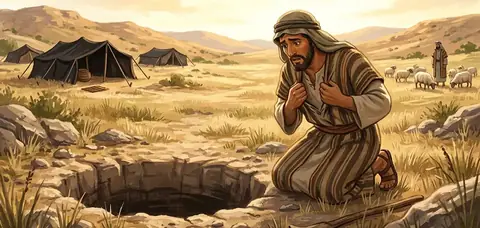 Person · TribeReubenJacob's firstborn, who lost the rights of the eldest by sleeping with his father's concubine. He tried to save Joseph…
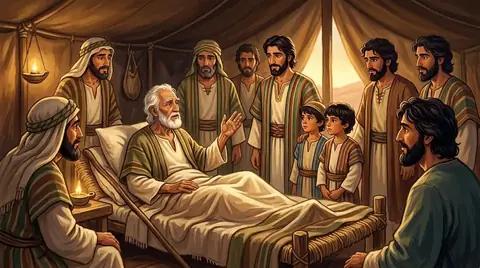 Person · PatriarchSimeonJacob's second son, by Leah. With Levi he massacred the men of Shechem to avenge their sister Dinah, and for that his…Place · RiverJordanThe river of the Bible: Israel crossed it on dry ground into the promised land, Elijah and Elisha parted it, Naaman…
Written for this app in its own words, from the Bible, with the facts checked against Bible dictionaries and encyclopedias: Easton's, Smith's, Fausset's, ISBE, Holman, the New Bible Dictionary, Vine's and the Thompson Chain topics. People and places: STEPBible.org (TIPNR), CC BY 4.0; where a place is today and its photo: OpenBible.info, CC BY 4.0.
