
Person
Paul
New Testament · about AD 5–67 · also called Saul
A Pharisee who hated the church until the risen Jesus met him on the road to Damascus. He became the apostle to the Gentiles, planted churches across the Roman world and wrote thirteen New Testament letters.
- Family
- Of the tribe of Benjamin; born a Roman citizen in Tarsus; a sister and nephew in Jerusalem (Acts 23:16)
- Trade
- Tentmaker (Acts 18:3)
- Known for
- His conversion, three missionary journeys, his letters
- Wrote
- Romans to Philemon: thirteen letters
- Died
- Beheaded in Rome under Nero, by early tradition
His early life
Saul was born in Tarsus, a busy university city in what is now southern Turkey. His family were strict Pharisees of the tribe of Benjamin, and yet Roman citizens, a privilege that would save his life more than once (Acts 22:25–28). As a boy he learned to make tents, and as a young man he studied the Law in Jerusalem under the great teacher Gamaliel (Acts 22:3). He was brilliant, devout and fierce. When Stephen was stoned, the witnesses laid their coats at Saul's feet (Acts 7:58), and he set out to destroy the new faith, dragging believers from their homes to prison (Acts 8:3).
The Damascus road
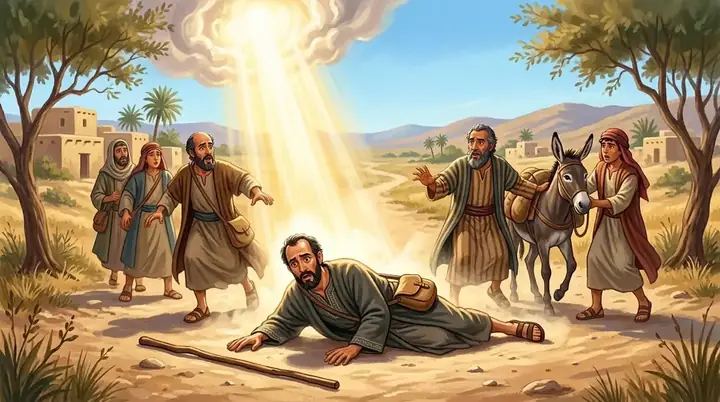
On his way to arrest Christians in Damascus, a light from heaven threw him to the ground and a voice said, "Saul, Saul, why persecutest thou me?" It was Jesus (Acts 9:3–6). Blinded, he was led into the city, where Ananias laid hands on him, his sight returned and he was baptised. Within days he was preaching in the synagogues that Jesus is the Son of God. He never got over it. Years later he still called himself the least of the apostles, "because I persecuted the church of God" (1 Corinthians 15:9).
The apostle to the Gentiles
After some quiet years, Barnabas fetched him to help the church at Antioch (Acts 11:25–26). From there the Spirit sent the two of them out, and Paul spent the rest of his life on the road. On three great journeys he crossed Cyprus, Asia Minor, Macedonia and Greece, preaching first in the synagogue of each town and then to anyone who would listen. He was stoned at Lystra, beaten and jailed at Philippi, laughed at in Athens, and at Ephesus a riot broke out against him. He listed it himself: shipwrecks, floggings, hunger, cold, "in perils" of every kind (2 Corinthians 11:23–28). Yet everywhere churches sprang up, mostly of Gentiles, and Paul fought for their right to belong to Christ by faith alone, without becoming Jews first (Acts 15; Galatians 2).
Arrested in Jerusalem, he spent two years in prison at Caesarea, appealed to Caesar, survived a shipwreck on Malta and reached Rome in chains (Acts 27–28). There Acts leaves him, preaching freely under guard. Early Christian writers say he was released, travelled again, and was finally beheaded under Nero.
His letters
From the road and from prison Paul wrote to the churches he had founded and to his helpers Timothy and Titus. His thirteen letters explain the gospel more fully than any other part of the Bible: that all have sinned, that Christ died for our sins and rose again, and that we are put right with God by faith, not by what we do (Romans 3:21–28; Ephesians 2:8–9). They are also full of warmth, tears and practical advice about marriage, work, money and getting along.
What to learn
Paul's life shows that no one is beyond God's reach. The church's worst enemy became its greatest missionary, and he always put it down to grace: "by the grace of God I am what I am" (1 Corinthians 15:10). Facing death, he could say he had fought a good fight and finished his course (2 Timothy 4:7).
Key verses
- Acts 9:3–6
And as he journeyed, he came near Damascus: and suddenly there shined round about him a light from heaven: And he fell to the earth, and heard a voice saying unto him, Saul, Saul, why persecutest thou me? And he said, Who art thou, Lord? And the Lord said, I am Jesus whom thou persecutest: it is hard for thee to kick against the pricks. …
- Acts 13:2
As they ministered to the Lord, and fasted, the Holy Ghost said, Separate me Barnabas and Saul for the work whereunto I have called them.
- Acts 26:16–18
But rise, and stand upon thy feet: for I have appeared unto thee for this purpose, to make thee a minister and a witness both of these things which thou hast seen, and of those things in the which I will appear unto thee; Delivering thee from the people, and from the Gentiles, unto whom now I send thee, To open their eyes, and to turn them from darkness to light, and from the power of Satan unto God, that they may receive forgiveness of sins, and inheritance among them which are sanctified by faith that is in me.
- Romans 1:16
For I am not ashamed of the gospel of Christ: for it is the power of God unto salvation to every one that believeth; to the Jew first, and also to the Greek.
- 1 Corinthians 15:9–10
For I am the least of the apostles, that am not meet to be called an apostle, because I persecuted the church of God. But by the grace of God I am what I am: and his grace which was bestowed upon me was not in vain; but I laboured more abundantly than they all: yet not I, but the grace of God which was with me.
- 2 Timothy 4:7
I have fought a good fight, I have finished my course, I have kept the faith:
On the map
Mentioned in 182 verses
- Acts 152
- Romans 1
- 1 Corinthians 7
- 2 Corinthians 2
- Galatians 2
- Ephesians 2
- Philippians 1
- Colossians 3
- 1 Thessalonians 2
- 2 Thessalonians 2
- 1 Timothy 1
- 2 Timothy 2
- Titus 1
- Philemon 3
- 2 Peter 1
Read next
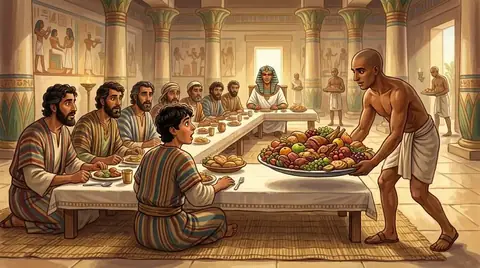 PersonBenjaminJacob's youngest son, whose mother Rachel died bearing him. Joseph's only full brother, he was the centre of the…
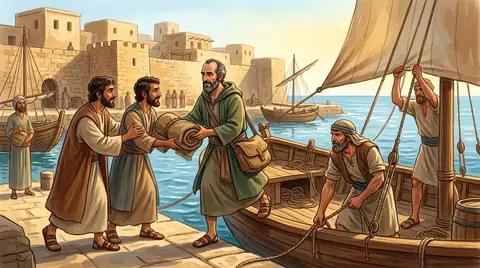 PlaceTarsusA rich, learned city in the south-east of Asia Minor and the home town of the apostle Paul, who called it "no mean…
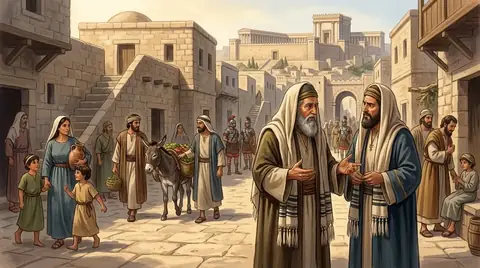 GroupPhariseesThe most exacting of the Jewish religious parties in Jesus' day, devoted to keeping the Law and the traditions added to…
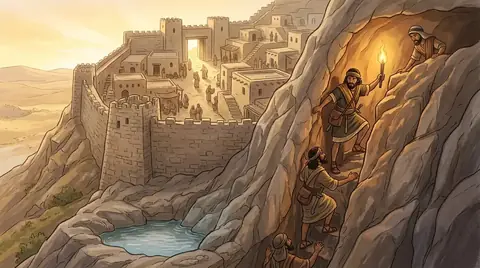 PlaceJerusalemThe city David made his capital and where Solomon built the temple. Jesus died and rose there and the church began…
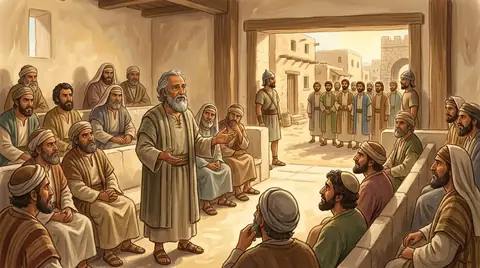 PersonGamalielThe most respected rabbi of his day, Paul's teacher, who persuaded the Jewish council not to kill the apostles: if…
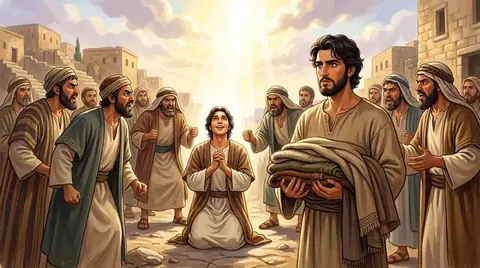 PersonStephenOne of the seven men chosen to care for the widows of the Jerusalem church. Full of faith and the Holy Spirit, he…
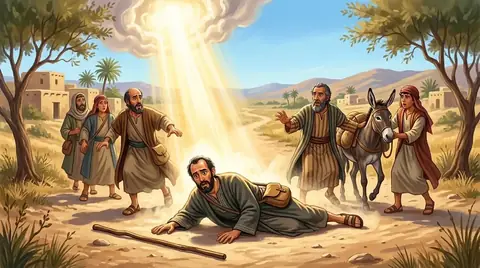 Place · CityDamascusThe ancient capital of Syria, 130 miles north of Jerusalem, for centuries Israel's rival and enemy. On the road to…
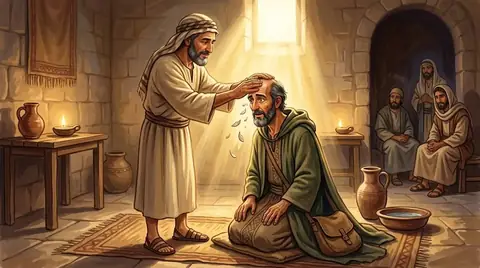 PersonAnaniasThree men in Acts: the believer in Damascus who prayed for Saul and baptised him, the man who lied about his gift and…
Written for this app in its own words, from the Bible, with the facts checked against Bible dictionaries and encyclopedias: Easton's, Smith's, Fausset's, ISBE, Holman, the New Bible Dictionary, Vine's and the Thompson Chain topics. Also: Eusebius, Church History; 1 Clement. People and places: STEPBible.org (TIPNR), CC BY 4.0; where a place is today and its photo: OpenBible.info, CC BY 4.0.
