
Person
Rebekah
Old Testament · about 2000 BC · also spelled Rebecca
Isaac's wife, found for him at a well far away in Abraham's homeland. She was told before her twins were born that the elder of them would serve the younger, and later tricked Isaac into blessing Jacob.
- Family
- Daughter of Bethuel, sister of Laban, wife of Isaac, mother of Esau and Jacob
- Known for
- Watering the camels; the stolen blessing
- Buried
- In the cave of Machpelah with Isaac (Genesis 49:31)
Her story
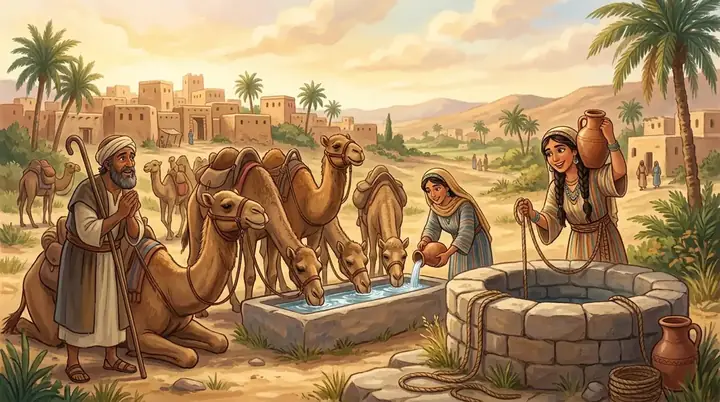
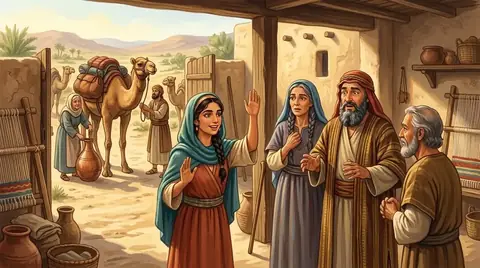
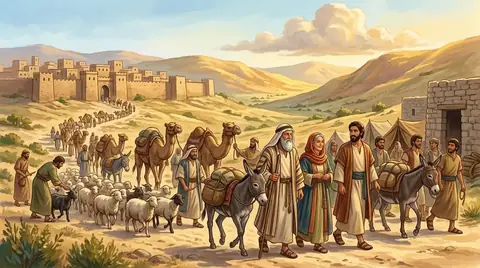
Abraham, old and living among the Canaanites, sent his servant back to his relatives in Haran to find a wife for Isaac. The servant prayed at the town well for a sign: the right girl would offer to water his camels too. Before he had finished praying, Rebekah came with her jar, gave him a drink, and drew water for all ten camels (Genesis 24:12–20). When her family heard the story, they agreed that the matter came from the LORD. Asked whether she would go with this stranger, Rebekah answered simply, "I will go" (Genesis 24:58). Isaac was walking in the field at evening when the camels appeared; he took her into his mother's tent and loved her (Genesis 24:63–67).
For twenty years she had no children. Isaac prayed, and she conceived twins who struggled inside her. When she asked the LORD why, he told her two peoples were struggling in her womb and that "the elder shall serve the younger" (Genesis 25:21–23). Esau was born first, red and hairy; Jacob came out holding his heel. Isaac loved Esau, but Rebekah loved Jacob (Genesis 25:28). Once, in Gerar, Isaac passed her off as his sister, as his father had done with Sarah, until the king saw them together (Genesis 26:7–9).
What went wrong
When the old, blind Isaac prepared to bless Esau, Rebekah overheard. She dressed Jacob in Esau's clothes, covered his hands and neck with goatskins, cooked the meal, and sent him in to claim the blessing (Genesis 27:5–17). It worked, but Esau vowed to kill his brother, and Rebekah had to send Jacob away to her brother Laban. She said it would be for a few days; as far as the Bible tells, she never saw him again (Genesis 27:41–45). God had already promised that Jacob would be the heir. Her scheming gained nothing that faith would not have received, and it split her family.
What to learn
Rebekah's early faith is as striking as her later failure: a young woman ready to leave everything on the strength of God's leading. Her story warns that favouritism in a family does lasting harm, and that God's promises do not need our tricks to come true. Paul later used her twins to show that God's choice rests on his call, not on anything they had done (Romans 9:10–12).
Key verses
- Genesis 24:58–67
And they called Rebekah, and said unto her, Wilt thou go with this man? And she said, I will go. And they sent away Rebekah their sister, and her nurse, and Abraham’s servant, and his men. And they blessed Rebekah, and said unto her, Thou art our sister, be thou the mother of thousands of millions, and let thy seed possess the gate of those which hate them. …
- Genesis 25:21–23
And Isaac intreated the Lord for his wife, because she was barren: and the Lord was intreated of him, and Rebekah his wife conceived. And the children struggled together within her; and she said, If it be so, why am I thus? And she went to enquire of the Lord. And the Lord said unto her, Two nations are in thy womb, and two manner of people shall be separated from thy bowels; and the one people shall be stronger than the other people; and the elder shall serve the younger.
- Genesis 27:5–10
And Rebekah heard when Isaac spake to Esau his son. And Esau went to the field to hunt for venison, and to bring it. And Rebekah spake unto Jacob her son, saying, Behold, I heard thy father speak unto Esau thy brother, saying, Bring me venison, and make me savoury meat, that I may eat, and bless thee before the Lord before my death. …
- Romans 9:10–12
And not only this; but when Rebecca also had conceived by one, even by our father Isaac; (For the children being not yet born, neither having done any good or evil, that the purpose of God according to election might stand, not of works, but of him that calleth;) It was said unto her, The elder shall serve the younger.
On the map
Family
- Parents
- Bethuel
- Brothers and sisters
- Laban
- Married to
- Isaac
- Children
- Esau, Israel
Mentioned in 30 verses
- Genesis 29
- Romans 1
Read next
 PersonBethuelAbraham's nephew in Mesopotamia, the father of Rebekah and Laban. When Abraham's servant came looking for a wife for…
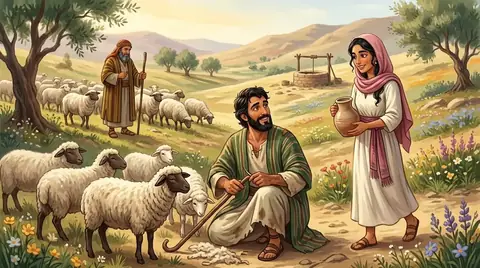 PersonLabanRebekah's brother in Haran, the father of Leah and Rachel. He took Jacob in, tricked him into marrying both daughters…
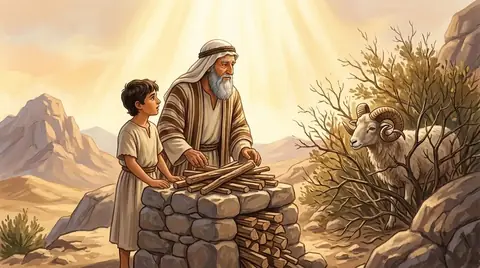 PersonIsaacThe son God promised to Abraham and Sarah when they were far too old for children, offered on Mount Moriah and spared.…
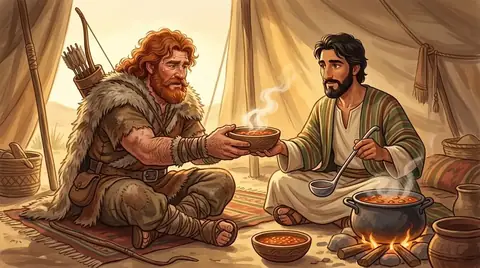 PersonEsauIsaac's elder twin, a hunter who traded away his birthright for a meal and lost his father's blessing to Jacob's trick.…
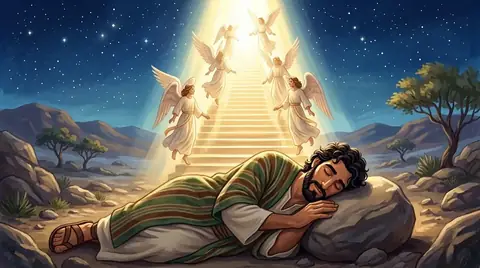 PersonJacobIsaac's younger twin son, who won his brother's birthright and blessing by cunning, was changed by God, and was renamed…
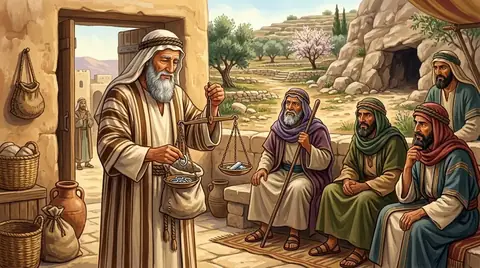 PlaceMachpelahThe cave near Hebron that Abraham bought as a grave for Sarah. Abraham, Isaac, Rebekah, Jacob and Leah were all buried…
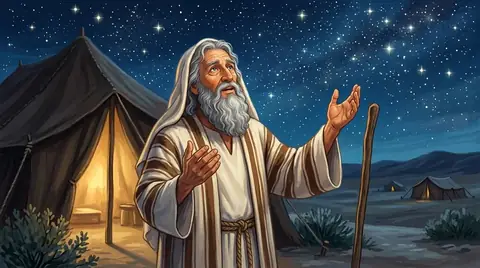 PersonAbrahamThe man God called out of Ur to a land he had never seen, promising him a people and a blessing for the whole world. He…
 PlaceHaranThe city in northern Mesopotamia where Abraham's family stopped on the way from Ur to Canaan, where Terah died, and…
Written for this app in its own words, from the Bible, with the facts checked against Bible dictionaries and encyclopedias: Easton's, Smith's, Fausset's, ISBE, Holman, the New Bible Dictionary, Vine's and the Thompson Chain topics. People and places: STEPBible.org (TIPNR), CC BY 4.0; where a place is today and its photo: OpenBible.info, CC BY 4.0.
