
Thing · Trade
Spices
Sweet-smelling gums, barks and oils · costly imports
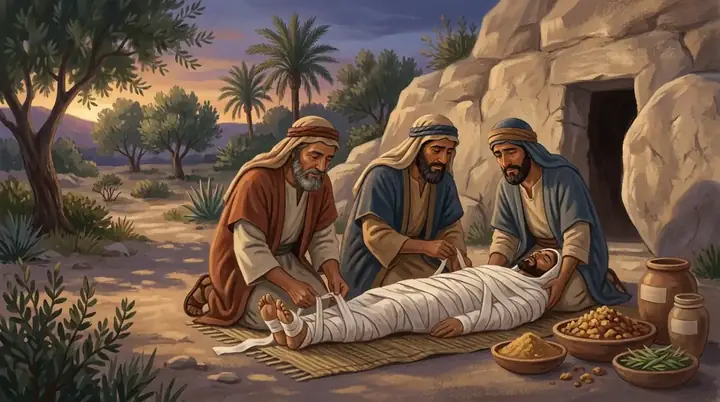
Fragrant gums, barks and oils, mostly brought from Arabia and the East, used in the holy anointing oil and incense, as perfume, as gifts between kings, and to wrap a body for burial.
- Used for
- The anointing oil and incense; perfume; royal gifts; preparing the dead for burial
- Came from
- Arabia, Sheba, Gilead, India, carried by camel caravan
- Examples
- Myrrh, frankincense, cinnamon, cassia, calamus, spikenard
What they were
Spices in the Bible are not mainly for cooking. They are the sweet-smelling resins, barks and roots that gave scent to oils and perfumes. Most of them grew far away, in southern Arabia and beyond, and reached Israel by camel caravan at a high price. Joseph's brothers sold him to Ishmaelites carrying spices, balm and myrrh down to Egypt (Genesis 37:25), and Jacob later sent a little of the same to the ruler of Egypt as a present (Genesis 43:11). The queen of Sheba brought Solomon a great store of them, and the merchants of Sheba traded them in Tyre (1 Kings 10:2; Ezekiel 27:22).
How they were used
God gave Moses an exact recipe for the holy anointing oil, blended from myrrh, cinnamon, calamus, cassia and olive oil, and another for the incense burned on the golden altar (Exodus 30:22–38). The people gave spices for both when the tabernacle was built (Exodus 35:8), and certain priests were in charge of mixing them (1 Chronicles 9:29–30). King Hezekiah kept spices in his treasury alongside his silver and gold, and foolishly showed them to the envoys from Babylon (2 Kings 20:13).
Spices were also used to prepare a body for burial, wrapped in the linen cloths to sweeten the tomb. King Asa was laid on a bed filled with them (2 Chronicles 16:14). Nicodemus brought about a hundred pounds (45 kg) of myrrh and aloes for the body of Jesus (John 19:39–40), and the women who had followed him prepared more, which they carried to the tomb on Easter morning and never needed (Luke 23:56; Luke 24:1).
Key verses
- Exodus 30:23–25
Take thou also unto thee principal spices, of pure myrrh five hundred shekels, and of sweet cinnamon half so much, even two hundred and fifty shekels, and of sweet calamus two hundred and fifty shekels, And of cassia five hundred shekels, after the shekel of the sanctuary, and of oil olive an hin: And thou shalt make it an oil of holy ointment, an ointment compound after the art of the apothecary: it shall be an holy anointing oil.
- 1 Kings 10:2
And she came to Jerusalem with a very great train, with camels that bare spices, and very much gold, and precious stones: and when she was come to Solomon, she communed with him of all that was in her heart.
- 2 Kings 20:13
And Hezekiah hearkened unto them, and shewed them all the house of his precious things, the silver, and the gold, and the spices, and the precious ointment, and all the house of his armour, and all that was found in his treasures: there was nothing in his house, nor in all his dominion, that Hezekiah shewed them not.
- John 19:39–40
And there came also Nicodemus, which at the first came to Jesus by night, and brought a mixture of myrrh and aloes, about an hundred pound weight. Then took they the body of Jesus, and wound it in linen clothes with the spices, as the manner of the Jews is to bury.
- Luke 24:1
Now upon the first day of the week, very early in the morning, they came unto the sepulchre, bringing the spices which they had prepared, and certain others with them.
Read next
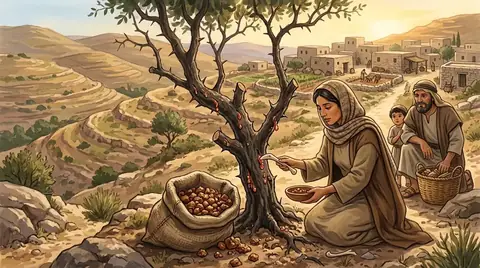 Plant · SpiceMyrrhA bitter, sweet-smelling gum from a thorny desert tree, costly and prized as perfume, medicine and for burial. The wise…
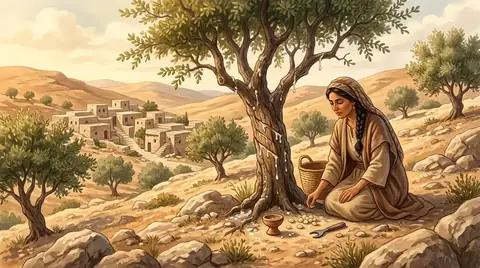 Plant · WorshipFrankincenseA sweet-smelling white resin from a desert tree, burned as incense in the tabernacle and temple and sprinkled on the…PlantCinnamonA sweet spice from the inner bark of a tree that grows far to the east, in Ceylon and India. It went into the holy…PlantCassiaA sweet spice from the bark of a tree like the cinnamon, probably brought from India. It went into the holy anointing…PlantCalamusA fragrant reed, probably a sweet-smelling grass from India or Arabia, whose dried stalk was ground into perfume. It…
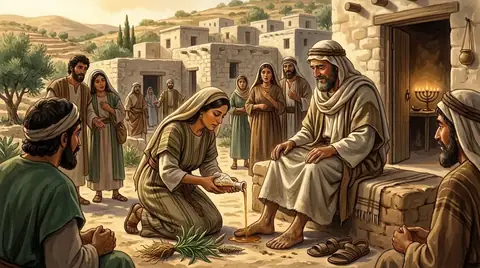 Plant · PerfumeSpikenard (nard)A sweet, very costly perfumed oil pressed from the root of a plant that grows high in the mountains of India. Mary of…NationThe IshmaelitesThe desert tribes of northern Arabia descended from Ishmael, Abraham's son by Hagar. Camel traders among them carried…Plant · MedicineBalm of GileadThe healing resin for which Gilead, east of the Jordan, was famous. Jeremiah's cry, "Is there no balm in Gilead?", asks…
Written for this app in its own words, from the Bible, with the facts checked against Bible dictionaries and encyclopedias: Easton's, Smith's, Fausset's, ISBE, Holman, the New Bible Dictionary, Vine's and the Thompson Chain topics.
