
Person · King
Hezekiah
hez-e-KY-ahKing of Judah · reigned about 715–686 BC · called Ezekias in Matt 1:9
One of Judah's best kings. He cleansed the temple, smashed the idols, trusted God when Assyria besieged Jerusalem, and was given fifteen more years of life when he prayed on his deathbed.
- Family
- Son of Ahaz; his mother Abi, daughter of Zechariah. Father of Manasseh.
- Reigned
- 29 years in Jerusalem, from the age of 25 (2 Kings 18:2)
- Known for
- His reforms, the deliverance from Sennacherib, the sun's shadow going back, his tunnel
- Meaning
- "The LORD strengthens"
- Died
- Buried with honour among the kings (2 Chronicles 32:33)
His reforms
Hezekiah came to the throne after his father Ahaz had shut the temple and filled the land with idols. In his very first month he opened the temple doors, had the priests clean it out, and restored the sacrifices and the singing (2 Chronicles 29). He invited all Israel, north and south, to a great Passover, the biggest since Solomon's day (2 Chronicles 30). He tore down the high places, broke the sacred pillars, and even smashed the bronze serpent Moses had made, because people were burning incense to it (2 Kings 18:4). The writer sums him up: he trusted in the LORD as no king of Judah before or after him (2 Kings 18:5).
Assyria at the gates
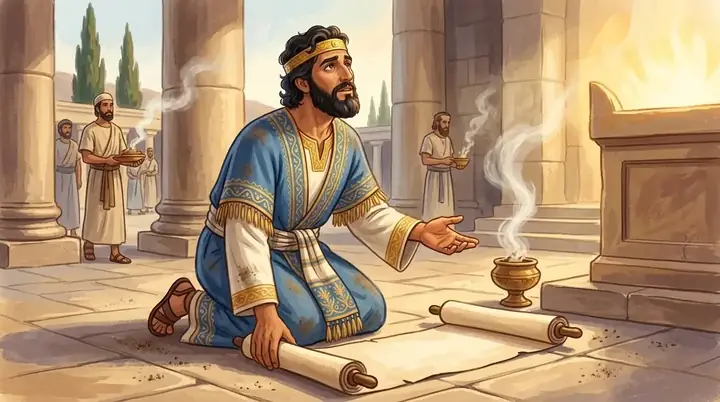
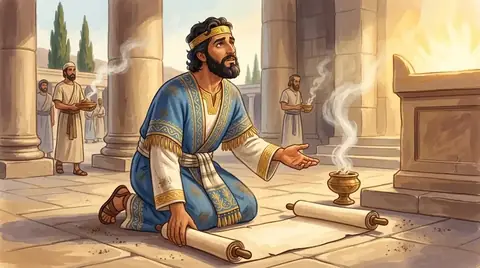
In his fourteenth year Sennacherib of Assyria invaded Judah, took its fortified cities and demanded Jerusalem's surrender. His officer stood outside the wall and shouted to the people in Hebrew that no god had ever saved a city from Assyria (2 Kings 18:28–35). Hezekiah had prepared well, blocking the springs outside the city and cutting a tunnel 1,750 feet (533 m) long through solid rock to bring the water of Gihon inside the walls (2 Chronicles 32:30); the tunnel can still be walked through today. But his real defence was prayer. He took the Assyrian letter into the temple, spread it out before the LORD, and asked him to save the city so that the world would know he alone is God (2 Kings 19:14–19). Isaiah promised that the king would not even shoot an arrow into the city. During that night God's angel struck down 185,000 men in the Assyrian camp, and Sennacherib went home to be murdered by his own sons (2 Kings 19:35–37).
Sickness and pride
About the same time Hezekiah fell deathly ill and Isaiah told him to set his house in order. He turned his face to the wall and wept, and God sent Isaiah back with the promise of fifteen more years, and a sign: the shadow on the sundial of Ahaz went back ten steps (2 Kings 20:1–11; Isaiah 38). But when envoys came from Babylon to congratulate him, Hezekiah proudly showed them all his treasures. Isaiah told him that one day everything he had shown would be carried off to Babylon, and his descendants with it (2 Kings 20:12–18). Hezekiah humbled himself, and the judgment was delayed (2 Chronicles 32:26).
What to learn
Hezekiah's strength was that he took his troubles straight to God, whether a letter from an enemy or a word that he was dying. His weakness showed when things were going well. Even a good king needed to be kept humble.
Key verses
- 2 Kings 18:5–6
He trusted in the Lord God of Israel; so that after him was none like him among all the kings of Judah, nor any that were before him. For he clave to the Lord, and departed not from following him, but kept his commandments, which the Lord commanded Moses.
- 2 Kings 19:14–19
And Hezekiah received the letter of the hand of the messengers, and read it: and Hezekiah went up into the house of the Lord, and spread it before the Lord. And Hezekiah prayed before the Lord, and said, O Lord God of Israel, which dwellest between the cherubims, thou art the God, even thou alone, of all the kingdoms of the earth; thou hast made heaven and earth. Lord, bow down thine ear, and hear: open, Lord, thine eyes, and see: and hear the words of Sennacherib, which hath sent him to reproach the living God. …
- 2 Kings 19:35
And it came to pass that night, that the angel of the Lord went out, and smote in the camp of the Assyrians an hundred fourscore and five thousand: and when they arose early in the morning, behold, they were all dead corpses.
- 2 Kings 20:5–6
Turn again, and tell Hezekiah the captain of my people, Thus saith the Lord, the God of David thy father, I have heard thy prayer, I have seen thy tears: behold, I will heal thee: on the third day thou shalt go up unto the house of the Lord. And I will add unto thy days fifteen years; and I will deliver thee and this city out of the hand of the king of Assyria; and I will defend this city for mine own sake, and for my servant David’s sake.
- Isaiah 38:17
Behold, for peace I had great bitterness: but thou hast in love to my soul delivered it from the pit of corruption: for thou hast cast all my sins behind thy back.
On the map
Family
- Parents
- Ahaz, Abi
- Brothers and sisters
- Maaseiah
- Married to
- Hephzibah
- Children
- Manasseh
Mentioned in 116 verses
- 2 Kings 38
- 1 Chronicles 2
- 2 Chronicles 38
- Proverbs 1
- Isaiah 30
- Jeremiah 3
- Hosea 1
- Micah 1
- Matthew 2
Read next
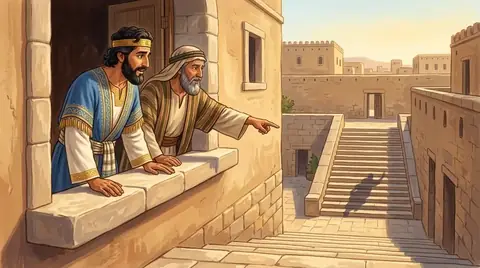 Person · KingAhazA wicked king of Judah who sacrificed his own son, shut the temple, and paid Assyria for help instead of trusting God.…
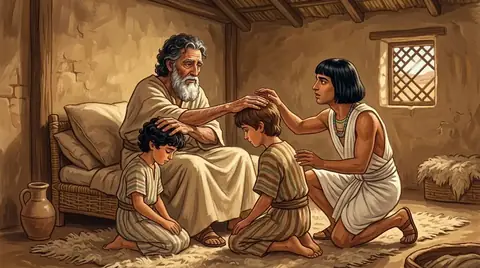 Person · TribeManassehJoseph's elder son, adopted by Jacob as a tribe of Israel, whose land straddled the Jordan. Also the longest-reigning…
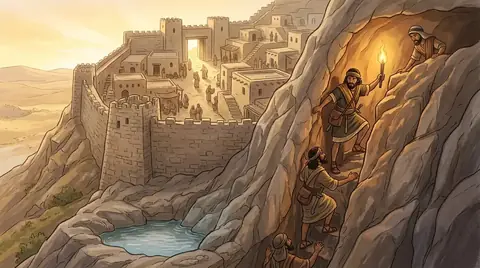 PlaceJerusalemThe city David made his capital and where Solomon built the temple. Jesus died and rose there and the church began…
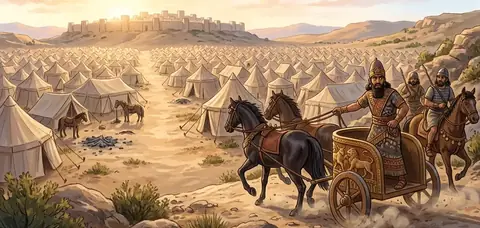 PersonSennacheribThe king of Assyria who invaded Judah in Hezekiah's reign and threatened Jerusalem. God answered Hezekiah's prayer…
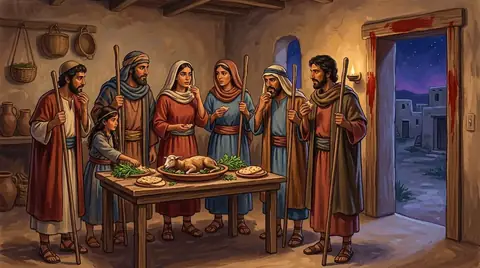 FeastPassoverThe yearly feast remembering the night God rescued Israel from Egypt, when death passed over every house marked with a…
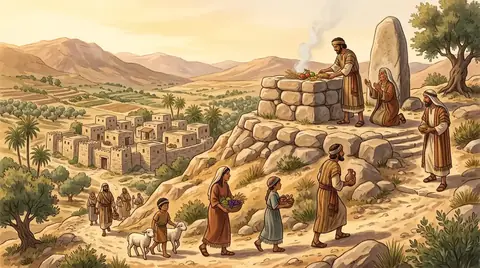 Custom · WorshipHigh placesHilltop shrines with an altar and often a sacred pillar or pole. The Canaanites worshipped their gods there; Israel…
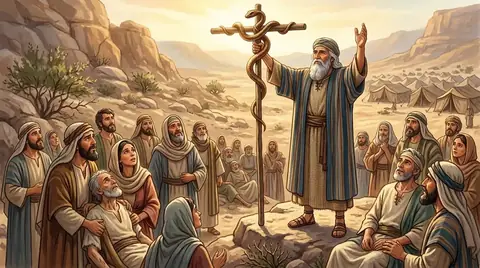 SymbolThe bronze serpentWhen poisonous snakes were killing the Israelites in the desert, God had Moses lift a bronze snake up on a pole: all…
 Place · EmpireAssyriaThe land and empire on the upper Tigris whose capital was Nineveh. Assyria crushed the northern kingdom of Israel in…
Written for this app in its own words, from the Bible, with the facts checked against Bible dictionaries and encyclopedias: Easton's, Smith's, Fausset's, ISBE, Holman, the New Bible Dictionary, Vine's and the Thompson Chain topics. People and places: STEPBible.org (TIPNR), CC BY 4.0; where a place is today and its photo: OpenBible.info, CC BY 4.0.
