
Plant · Worship
Frankincense
FRANK-in-sens
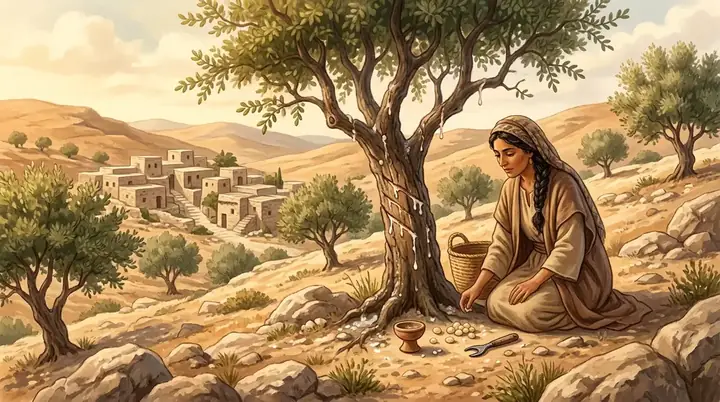
A sweet-smelling white resin from a desert tree, burned as incense in the tabernacle and temple and sprinkled on the grain offerings. The wise men brought it to the child Jesus, and the Bible makes incense a picture of prayer rising to God.
- Hebrew
- lebonah, "white"; Greek libanos
- From
- The Boswellia tree of southern Arabia and Somalia; cut bark weeps a milky gum that hardens into beads (Isaiah 60:6; Jeremiah 6:20)
- Used in
- The holy incense (Exodus 30:34); the grain offering (Leviticus 2:1); on the showbread (Leviticus 24:7)
What it was
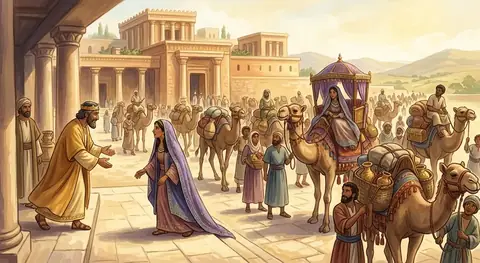
Frankincense comes from scrubby trees that grow in the dry hills of southern Arabia and across the water in Africa. The bark is cut and the milky sap that runs out hardens into pale lumps; the name means "white". Burned on hot coals it gives a clean, sweet smoke. It was costly, carried by camel caravan up the trade routes from Sheba (Isaiah 60:6; Jeremiah 6:20), and Revelation lists it among the luxuries of Babylon (Revelation 18:13).
In worship
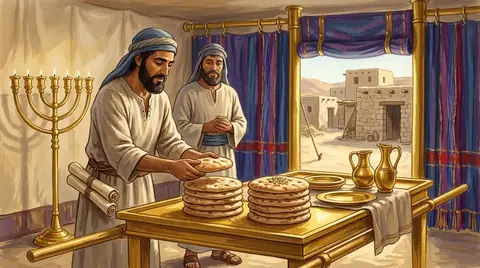
Frankincense was one of the four spices in the holy incense burned on the golden altar before the veil, which no one might copy for his own use (Exodus 30:34–38). A handful of it went on every grain offering and was burned with the memorial portion on the altar (Leviticus 2:1–2, 15–16); the poor man's sin offering of flour had none, for it was no sweet occasion (Leviticus 5:11). Pure frankincense was set on the two rows of showbread each Sabbath (Leviticus 24:7).
What it means
The smoke of incense rising is the Bible's picture of prayer: "Let my prayer be set forth before thee as incense" (Psalms 141:2). In Revelation the prayers of the saints are offered with incense on the golden altar before God (Revelation 5:8; Revelation 8:3–4). The wise men brought the child Jesus gold, frankincense and myrrh (Matthew 2:11), and Christians have long read the frankincense as a gift fit for God and for a priest.
Key verses
- Exodus 30:34
And the Lord said unto Moses, Take unto thee sweet spices, stacte, and onycha, and galbanum; these sweet spices with pure frankincense: of each shall there be a like weight:
- Leviticus 2:1–2
And when any will offer a meat offering unto the Lord, his offering shall be of fine flour; and he shall pour oil upon it, and put frankincense thereon: And he shall bring it to Aaron’s sons the priests: and he shall take thereout his handful of the flour thereof, and of the oil thereof, with all the frankincense thereof; and the priest shall burn the memorial of it upon the altar, to be an offering made by fire, of a sweet savour unto the Lord:
- Psalms 141:2
Let my prayer be set forth before thee as incense; and the lifting up of my hands as the evening sacrifice.
- Matthew 2:11
And when they were come into the house, they saw the young child with Mary his mother, and fell down, and worshipped him: and when they had opened their treasures, they presented unto him gifts; gold, and frankincense, and myrrh.
- Revelation 8:3–4
And another angel came and stood at the altar, having a golden censer; and there was given unto him much incense, that he should offer it with the prayers of all saints upon the golden altar which was before the throne. And the smoke of the incense, which came with the prayers of the saints, ascended up before God out of the angel’s hand.
Read next
Written for this app in its own words, from the Bible, with the facts checked against Bible dictionaries and encyclopedias: Easton's, Smith's, Fausset's, ISBE, Holman, the New Bible Dictionary, Vine's and the Thompson Chain topics.
