
Plant
Cassia
KASH-a
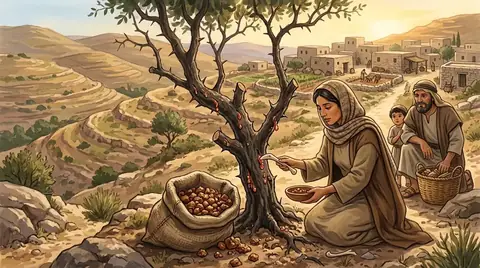
A sweet spice from the bark of a tree like the cinnamon, probably brought from India. It went into the holy anointing oil, scented royal robes, and was traded through Tyre.
- What
- Bark of a tree related to cinnamon
- Used in
- The holy anointing oil (Exodus 30:24); scenting clothes (Psalms 45:8)
- Hebrew
- qiddah, "stripped off"; qetsioth in Psalms 45:8
What it was
Cassia is the dried inner bark of a tree much like the cinnamon tree, with a warm, sweet smell. It was imported from far to the east. Ezekiel lists it among the goods brought to the markets of Tyre (Ezekiel 27:19).
In the Bible
God told Moses to make the holy anointing oil from myrrh, sweet cinnamon, sweet calamus, cassia and olive oil. With it the tabernacle, its furniture, and Aaron and his sons were anointed and set apart, and no one was allowed to copy it for ordinary use (Exodus 30:22–33). In Psalm 45 the king's robes smell of myrrh, aloes and cassia on his wedding day (Psalms 45:8), a psalm the New Testament applies to Christ (Hebrews 1:8–9).
Key verses
- Exodus 30:24
And of cassia five hundred shekels, after the shekel of the sanctuary, and of oil olive an hin:
- Psalms 45:8
All thy garments smell of myrrh, and aloes, and cassia, out of the ivory palaces, whereby they have made thee glad.
- Ezekiel 27:19
Dan also and Javan going to and fro occupied in thy fairs: bright iron, cassia, and calamus, were in thy market.
Read next
 Place · CityTyreThe great trading port of Phoenicia, on the coast north of Israel. Its king Hiram helped build Solomon's temple; later…
 PersonMosesThe man God used to bring Israel out of Egypt, give them his Law at Sinai, and lead them for forty years in the…
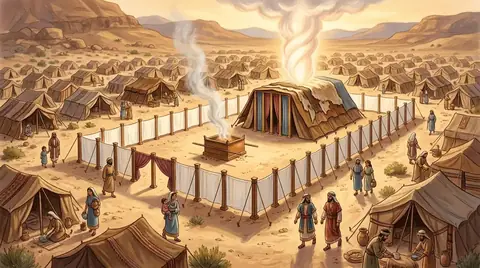 Thing · WorshipThe tabernacleThe holy tent Israel built in the wilderness, by God's own pattern, so that he could dwell in the middle of his people.…
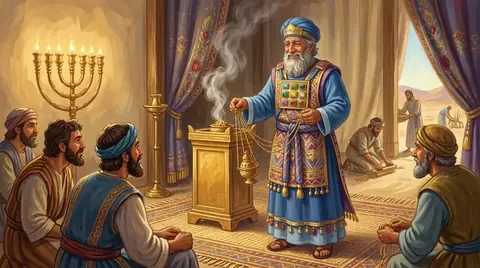 PersonAaronMoses' older brother and Israel's first high priest. He spoke for Moses before Pharaoh and served God at the tabernacle…
 Plant · SpiceMyrrhA bitter, sweet-smelling gum from a thorny desert tree, costly and prized as perfume, medicine and for burial. The wise…Plant · PerfumeAloesA costly, sweet-smelling wood from India and the Far East, used in perfumes and for wrapping the dead. Nicodemus…
Written for this app in its own words, from the Bible, with the facts checked against Bible dictionaries and encyclopedias: Easton's, Smith's, Fausset's, ISBE, Holman, the New Bible Dictionary, Vine's and the Thompson Chain topics.
