
Thing · Worship
Incense
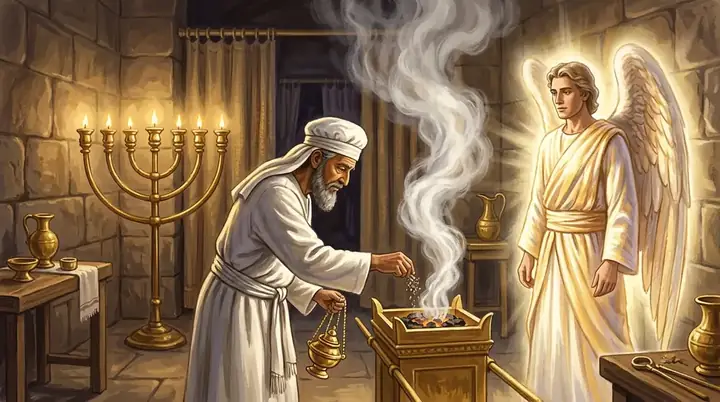
A holy blend of sweet spices that the priest burned on the golden altar of the tabernacle at dawn and at dusk. Its smoke rising before the veil was a picture of prayer going up to God.
- Made of
- Four spices, including frankincense, pounded fine and salted (Exodus 30:34–35)
- Burned
- On the altar of incense, at dawn and dusk (Exodus 30:7–8); in the Most Holy Place on the Day of Atonement (Leviticus 16:12–13)
- Forbidden
- Any other recipe, "strange incense", or any other use (Exodus 30:9; Exodus 30:37–38)
What it was
God gave Moses the recipe: equal parts of stacte, onycha, galbanum and pure frankincense, ground to powder, salted and set apart as holy (Exodus 30:34–36). The same mixture was never to be made for private enjoyment; it belonged to God alone (Exodus 30:37–38). Bezaleel compounded the first batch (Exodus 37:29), and later a family of priests had charge of it (1 Chronicles 9:30). Incense also went on every grain offering (Leviticus 2:1), and the wise men brought frankincense to the child Jesus (Matthew 2:11).
How it was used
A small gold-covered altar stood in the Holy Place, just in front of the veil. Every morning when the priest trimmed the lamps, and every evening when he lit them, he burned incense there, so that it rose "a perpetual incense before the LORD" (Exodus 30:7–8). In the temple the priest for each day was chosen by lot; Zacharias was burning incense when the angel Gabriel stood by the altar and announced the birth of John the Baptist, while the people prayed outside (Luke 1:9–11). On the Day of Atonement the high priest carried a censer of coals and two handfuls of incense behind the veil, so that the cloud covered the mercy seat and he did not die (Leviticus 16:12–13). When a plague broke out after Korah's rebellion, Aaron ran into the crowd with a censer of incense and stood between the dead and the living (Numbers 16:46–48).
When it went wrong
Nadab and Abihu, Aaron's sons, offered "strange fire" with their incense and were struck dead (Leviticus 10:1–2). Korah and his 250 men took censers that were not theirs to take, and fire from the LORD consumed them (Numbers 16:16–35). King Uzziah went into the temple to burn incense himself and was struck with leprosy at the altar (2 Chronicles 26:16–21). The lesson was the same each time: drawing near to God is on his terms, not ours.
What it meant
David prayed, "Let my prayer be set forth before thee as incense" (Psalms 141:2). In Revelation the golden bowls of incense "are the prayers of saints", and an angel mixes incense with their prayers at the altar before the throne (Revelation 5:8; Revelation 8:3–4). See Incense as prayer.
Key verses
- Exodus 30:7–8
And Aaron shall burn thereon sweet incense every morning: when he dresseth the lamps, he shall burn incense upon it. And when Aaron lighteth the lamps at even, he shall burn incense upon it, a perpetual incense before the Lord throughout your generations.
- Exodus 30:34–38
And the Lord said unto Moses, Take unto thee sweet spices, stacte, and onycha, and galbanum; these sweet spices with pure frankincense: of each shall there be a like weight: And thou shalt make it a perfume, a confection after the art of the apothecary, tempered together, pure and holy: And thou shalt beat some of it very small, and put of it before the testimony in the tabernacle of the congregation, where I will meet with thee: it shall be unto you most holy. …
- Leviticus 16:12–13
And he shall take a censer full of burning coals of fire from off the altar before the Lord, and his hands full of sweet incense beaten small, and bring it within the vail: And he shall put the incense upon the fire before the Lord, that the cloud of the incense may cover the mercy seat that is upon the testimony, that he die not:
- Luke 1:9–11
According to the custom of the priest’s office, his lot was to burn incense when he went into the temple of the Lord. And the whole multitude of the people were praying without at the time of incense. And there appeared unto him an angel of the Lord standing on the right side of the altar of incense.
- Revelation 8:3–4
And another angel came and stood at the altar, having a golden censer; and there was given unto him much incense, that he should offer it with the prayers of all saints upon the golden altar which was before the throne. And the smoke of the incense, which came with the prayers of the saints, ascended up before God out of the angel’s hand.
Read next
 PersonMosesThe man God used to bring Israel out of Egypt, give them his Law at Sinai, and lead them for forty years in the…
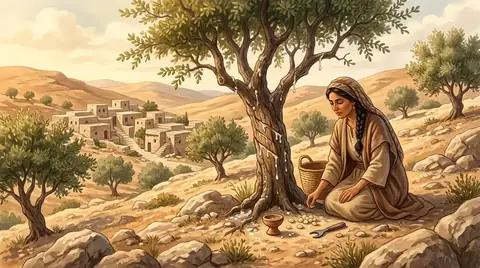 Plant · WorshipFrankincenseA sweet-smelling white resin from a desert tree, burned as incense in the tabernacle and temple and sprinkled on the…
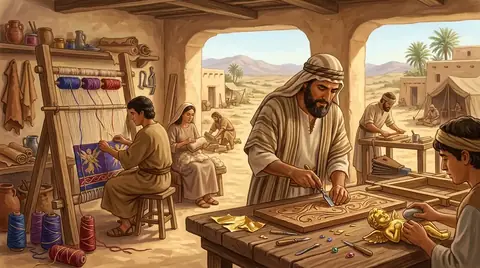 PersonBezalelThe craftsman from Judah whom God filled with his Spirit to make the tabernacle and everything in it, from the ark of…
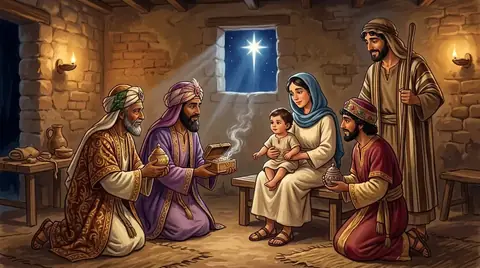 Group · PeopleThe wise men (magi)Learned men from the east who followed a star to find the new-born king of the Jews, and worshipped him with gold…
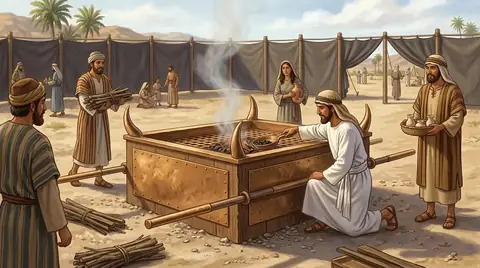 Thing · WorshipThe altarA raised structure of earth, stone or bronze on which sacrifices were offered to God. The big bronze altar stood in the…
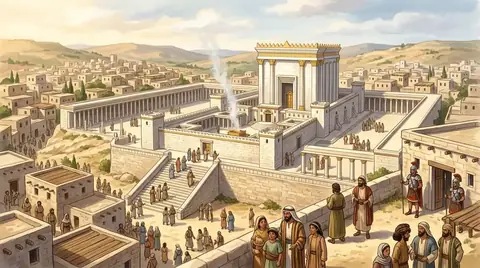 Thing · WorshipThe TempleGod's house in Jerusalem, where he was worshipped and the sacrifices offered. Solomon built it, Babylon burned it, the…
 PersonZechariahThe prophet who, with Haggai, urged the returned exiles to rebuild the temple, and whose book foretells the humble King…
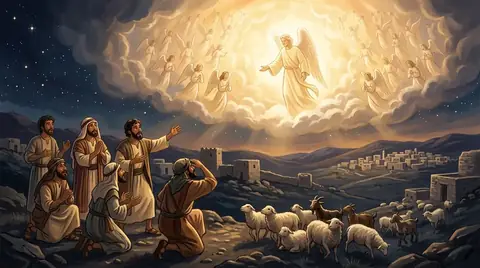 HeavenAngelsSpirits created by God to serve him and bring his messages; the word itself means "messenger". They are many, mighty…
Written for this app in its own words, from the Bible, with the facts checked against Bible dictionaries and encyclopedias: Easton's, Smith's, Fausset's, ISBE, Holman, the New Bible Dictionary, Vine's and the Thompson Chain topics.
