
Plant · Spice
Myrrh
MUR
A bitter, sweet-smelling gum from a thorny desert tree, costly and prized as perfume, medicine and for burial. The wise men gave it to the infant Jesus.
- Hebrew
- mor, from a word for bitter
- Used for
- The anointing oil, perfume, deadening pain, embalming the dead
- Where it grew
- Arabia and east Africa; traded through Canaan
- In Jesus' life
- A gift at his birth, refused on the cross, wrapped round his body
What it was
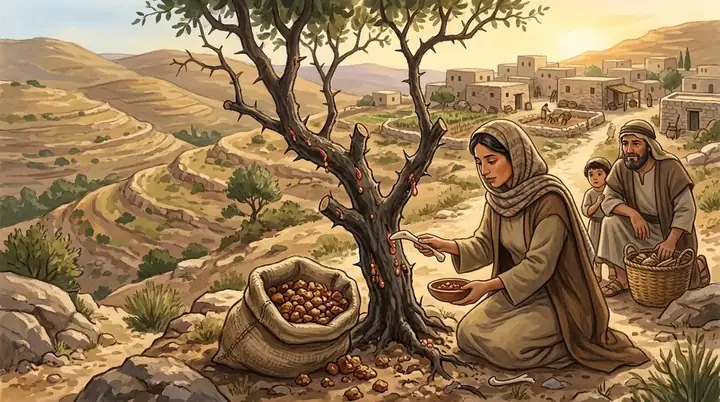
Myrrh is the sticky sap that oozes from cuts in the bark of a low, thorny tree of Arabia and east Africa. It hardens into reddish-brown lumps that smell sweet and taste bitter. Traders carried it by camel to Egypt and Canaan; the Ishmaelites who bought Joseph were carrying "balm and myrrh" to Egypt (Genesis 37:25), though the Hebrew word there may name a different gum, and Jacob sent some as a gift to Egypt's governor, not knowing it was his son (Genesis 43:11).
How it was used
God named myrrh first among the spices of the holy anointing oil that set the tabernacle and its priests apart (Exodus 30:23). It was a perfume for the wealthy: Esther was treated with oil of myrrh for six months before she met the king (Esther 2:12), the king's robes in Psalm 45 smell of it, and the bride in the Song of Solomon wears a little bag of myrrh at her breast (Song of Songs 1:13). Mixed with wine it dulled pain, and it was packed into the wrappings of the dead to slow decay.
In the life of Jesus
The wise men opened their treasures and gave the child gold, frankincense and myrrh (Matthew 2:11). Christians have long seen a meaning in each: gold for a king, frankincense for God, myrrh for the one who would die. On the cross the soldiers offered Jesus wine mixed with myrrh to deaden his pain, "but he received it not" (Mark 15:23); he chose to bear it all. After his death Nicodemus brought about a hundred pounds (45 kg) of myrrh and aloes, a king's quantity, to wrap his body (John 19:39).
Key verses
- Exodus 30:23
Take thou also unto thee principal spices, of pure myrrh five hundred shekels, and of sweet cinnamon half so much, even two hundred and fifty shekels, and of sweet calamus two hundred and fifty shekels,
- Matthew 2:11
And when they were come into the house, they saw the young child with Mary his mother, and fell down, and worshipped him: and when they had opened their treasures, they presented unto him gifts; gold, and frankincense, and myrrh.
- Mark 15:23
And they gave him to drink wine mingled with myrrh: but he received it not.
- John 19:39
And there came also Nicodemus, which at the first came to Jesus by night, and brought a mixture of myrrh and aloes, about an hundred pound weight.
Read next
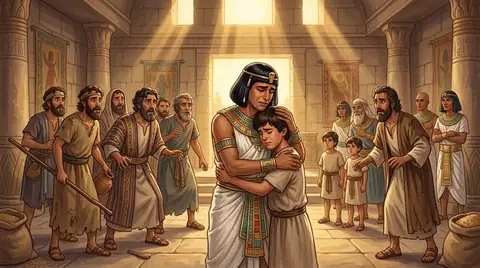 PersonJosephJacob's favourite son, sold by his brothers into Egypt, where he rose from prison to rule the land and saved his family…
 PersonJacobIsaac's younger twin son, who won his brother's birthright and blessing by cunning, was changed by God, and was renamed…
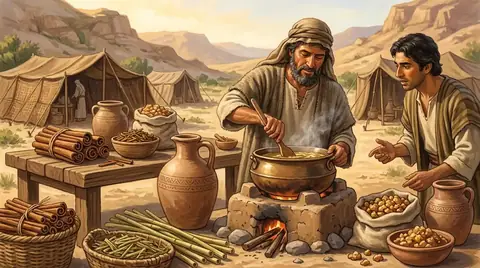 Thing · WorshipAnointing OilThe holy oil God told Moses to blend from myrrh, cinnamon, calamus, cassia and olive oil. It was used only to anoint…
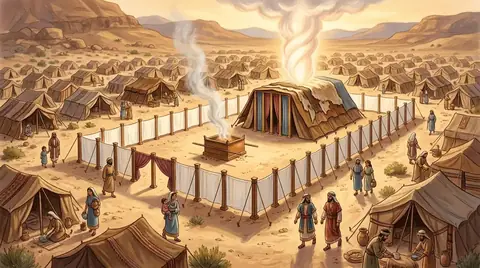 Thing · WorshipThe tabernacleThe holy tent Israel built in the wilderness, by God's own pattern, so that he could dwell in the middle of his people.…
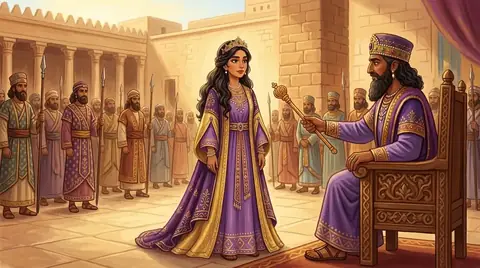 PersonEstherA Jewish orphan who became queen of Persia and risked her life to stop Haman's plan to kill every Jew in the empire.…
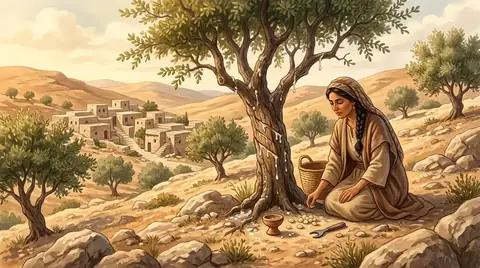 Plant · WorshipFrankincenseA sweet-smelling white resin from a desert tree, burned as incense in the tabernacle and temple and sprinkled on the…
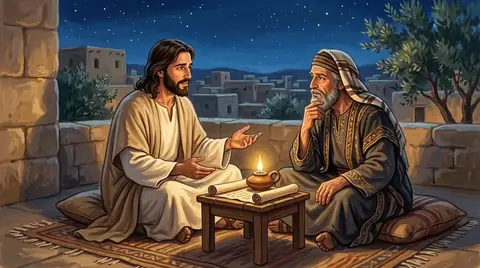 PersonNicodemusThe Pharisee who came to Jesus by night and was told he must be born again. He later spoke up for Jesus in the council…
Written for this app in its own words, from the Bible, with the facts checked against Bible dictionaries and encyclopedias: Easton's, Smith's, Fausset's, ISBE, Holman, the New Bible Dictionary, Vine's and the Thompson Chain topics.
