
Custom · Worship
The peace offering
Also called the fellowship offering
A sacrifice that ended in a shared meal. The fat was burned for God, the priest took a portion, and the worshipper ate the rest with family and friends, rejoicing before the LORD.
- Offered for
- Thanksgiving, a vow, or simply as a freewill gift
- The animal
- A bull, cow, sheep or goat without blemish, male or female
- Who ate it
- God (the fat, on the altar), the priests (breast and right shoulder) and the worshipper's household
- Rules in
- Leviticus 3; Leviticus 7:11–34
What it was
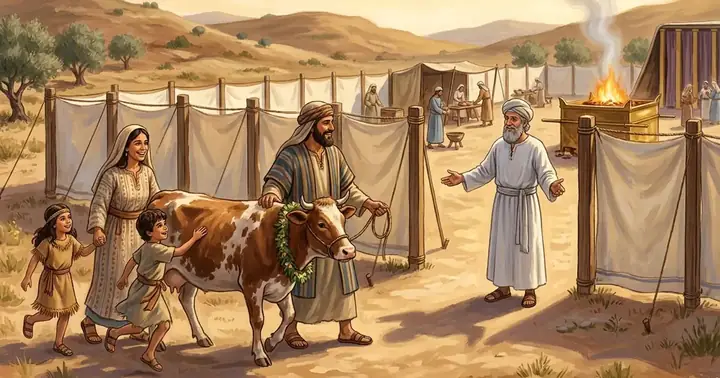
Of all the offerings of the Law, the peace offering was the happy one. The burnt offering went up entirely to God; the sin offering dealt with guilt. But the peace offering was a feast. The worshipper brought an animal from the herd or flock, laid his hand on its head and killed it at the door of the tabernacle. The priest sprinkled the blood on the altar and burned the fat and kidneys there (Leviticus 3). The breast and the right shoulder went to the priests (Leviticus 7:31–34), and everything else came back to the worshipper, to be eaten that day or the next with his family, his servants and the Levites of his town (Deuteronomy 12:17–18).
It could be brought for three reasons: to give thanks for some blessing, to pay a vow, or as a freewill gift out of sheer gladness (Leviticus 7:12–16). Unleavened cakes went with it, and a thanksgiving offering had to be eaten the same day.
When it was offered
Peace offerings marked the great days of Israel's life. They sealed the covenant at Mount Sinai (Exodus 24:5), crowned Saul king at Gilgal (1 Samuel 11:15), welcomed the ark of the covenant to Jerusalem (2 Samuel 6:17), and at the dedication of Solomon's temple 120,000 sheep were offered and the whole nation ate together for two weeks (1 Kings 8:63–66).
What it meant
The Hebrew name comes from shalom, peace or wholeness. To eat a meal with someone was to be at peace with them, and here the meal was shared with God himself. Sin had been dealt with by the blood; now the worshipper sat down, as it were, at God's table. The New Testament says Jesus "is our peace" and that through his blood we have been made near (Ephesians 2:13–14). The Lord's Supper, a meal eaten together in his presence, carries on the thought.
Key verses
- Leviticus 3:1–5
And if his oblation be a sacrifice of peace offering, if he offer it of the herd; whether it be a male or female, he shall offer it without blemish before the Lord. And he shall lay his hand upon the head of his offering, and kill it at the door of the tabernacle of the congregation: and Aaron’s sons the priests shall sprinkle the blood upon the altar round about. And he shall offer of the sacrifice of the peace offering an offering made by fire unto the Lord; the fat that covereth the inwards, and all the fat that is upon the inwards, …
- Leviticus 7:11–15
And this is the law of the sacrifice of peace offerings, which he shall offer unto the Lord. If he offer it for a thanksgiving, then he shall offer with the sacrifice of thanksgiving unleavened cakes mingled with oil, and unleavened wafers anointed with oil, and cakes mingled with oil, of fine flour, fried. Besides the cakes, he shall offer for his offering leavened bread with the sacrifice of thanksgiving of his peace offerings. …
- Exodus 24:5
And he sent young men of the children of Israel, which offered burnt offerings, and sacrificed peace offerings of oxen unto the Lord.
- 1 Kings 8:63
And Solomon offered a sacrifice of peace offerings, which he offered unto the Lord, two and twenty thousand oxen, and an hundred and twenty thousand sheep. So the king and all the children of Israel dedicated the house of the Lord.
- Ephesians 2:13–14
But now in Christ Jesus ye who sometimes were far off are made nigh by the blood of Christ. For he is our peace, who hath made both one, and hath broken down the middle wall of partition between us;
Read next
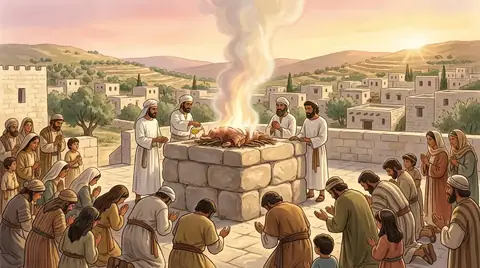 Custom · WorshipThe burnt offeringA sacrifice burned whole on the altar, with nothing held back: a picture of giving oneself completely to God. A lamb…
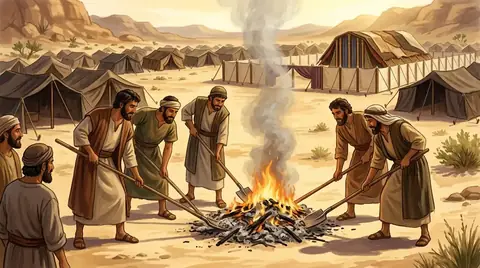 Custom · WorshipThe sin offeringThe sacrifice that dealt with sin: a bull, goat or lamb whose blood was put on the altar, with the animal burned…
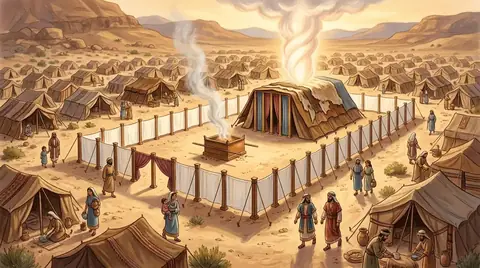 Thing · WorshipThe tabernacleThe holy tent Israel built in the wilderness, by God's own pattern, so that he could dwell in the middle of his people.…
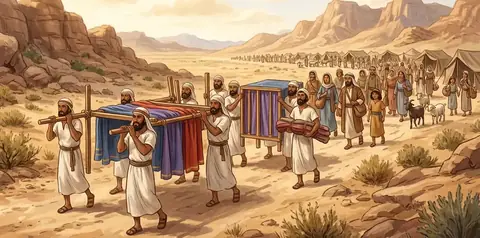 Group · WorshipThe LevitesThe men of the tribe of Levi, chosen to serve God instead of Israel's firstborn sons. They carried the tabernacle…
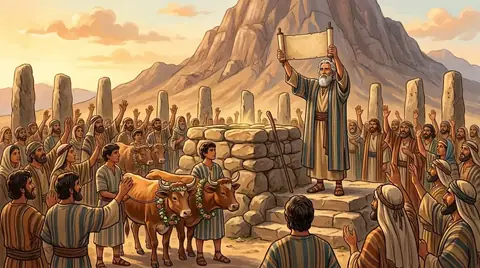 TeachingCovenantA solemn, binding agreement. God made covenants with Noah, Abraham, Israel and David, each with a promise and a sign…
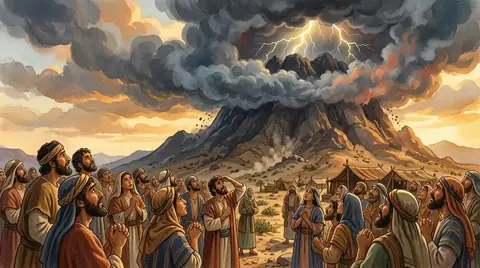 Place · MountainSinaiThe mountain where God came down in fire and smoke, spoke the Ten Commandments, and made his covenant with Israel. The…
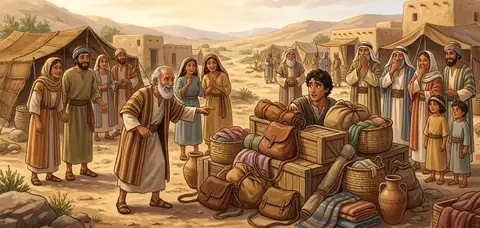 Person · KingSaulIsrael's first king, a tall Benjamite chosen when the people demanded a king like the nations. He began humbly and won…
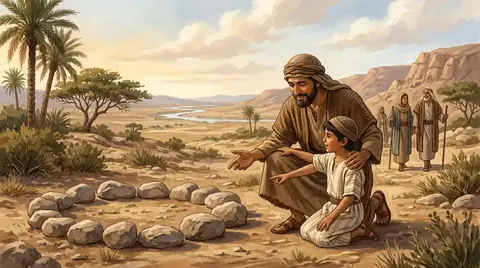 Place · CampGilgalIsrael's first camp in the promised land, where the twelve stones from the Jordan were set up and the reproach of Egypt…
Written for this app in its own words, from the Bible, with the facts checked against Bible dictionaries and encyclopedias: Easton's, Smith's, Fausset's, ISBE, Holman, the New Bible Dictionary, Vine's and the Thompson Chain topics. Also: Edersheim, The Temple.
