
Place · Camp
Gilgal
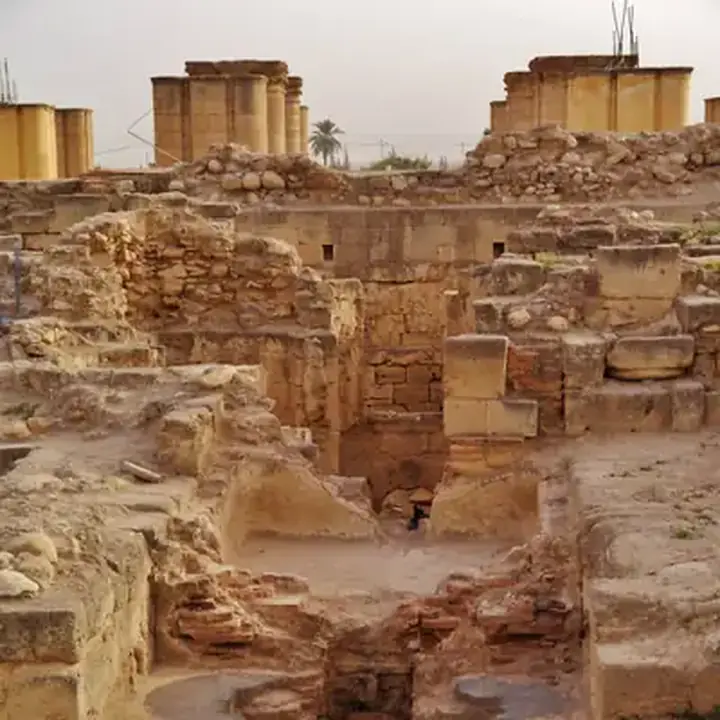
GIL-galThe name means "rolling" · near Jericho · today probably Khirbet el-Mefjir, in the Jordan valley
Israel's first camp in the promised land, where the twelve stones from the Jordan were set up and the reproach of Egypt was "rolled away". Later it was Samuel's court and the place Saul was made king.
- Where
- In the plain of the Jordan, east of Jericho
- Known for
- The twelve stones; the first Passover in the land; Saul crowned; Agag killed
- Where
- Joshua 4:19–24; Joshua 5:2–12; 1 Samuel 11:14–15; 1 Samuel 13:8–14; 1 Samuel 15:33; Hosea 4:15; Amos 4:4
Joshua's camp
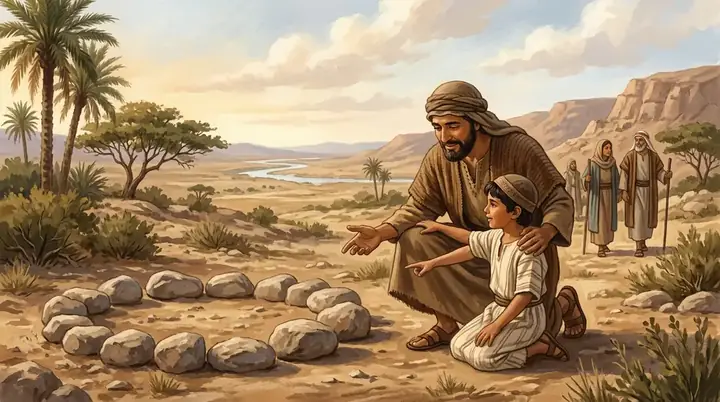
When Israel crossed the Jordan on dry ground, Joshua had twelve men carry twelve stones out of the river bed and set them up at the first camp, so that when children asked, "What mean these stones?" their fathers could tell them (Joshua 4:19–24). There the men born in the wilderness were circumcised, and God said, "This day have I rolled away the reproach of Egypt from off you", which is why the place was called Gilgal (Joshua 5:2–9). They kept the Passover, ate the grain of the land, and the next day the manna stopped (Joshua 5:10–12). Near here the captain of the LORD's host appeared to Joshua with drawn sword (Joshua 5:13–15). Gilgal remained the base for the whole conquest: the Gibeonites came there to make their treaty, Joshua marched from it to save them, and the armies returned there after each campaign (Joshua 9:6; Joshua 10:6–9; Joshua 10:43). Caleb asked for Hebron there (Joshua 14:6), and the land was divided from there.
Samuel and Saul
Gilgal was one of the three towns where Samuel judged Israel each year (1 Samuel 7:16). After Saul's victory at Jabesh, all Israel gathered at Gilgal and "made Saul king before the LORD" with sacrifices and rejoicing (1 Samuel 11:14–15). Here too Saul lost the kingdom. Told to wait seven days for Samuel, he grew anxious as his men melted away and offered the sacrifice himself, and Samuel told him his throne would not last (1 Samuel 13:8–14). After the war with Amalek, Samuel cut Agag in pieces "before the LORD in Gilgal" (1 Samuel 15:33). Judah came to Gilgal to bring David back over the Jordan after Absalom's revolt (2 Samuel 19:15).
A warning
A place so holy became a place of empty religion. Hosea and Amos name Gilgal with Bethel as centres of worship God hated: "Come to Bethel, and transgress; at Gilgal multiply transgression" (Amos 4:4; Amos 5:5; Hosea 4:15; Hosea 9:15). The stones still stood; the hearts had moved.
Others with this name
A second Gilgal in the hills north of Bethel was home to a company of prophets; Elijah and Elisha set out from it on Elijah's last journey, and Elisha purified the poisoned stew there (2 Kings 2:1; 2 Kings 4:38–41). A king of "the nations of Gilgal" was among those Joshua defeated (Joshua 12:23).
Key verses
- Joshua 4:20–24
And those twelve stones, which they took out of Jordan, did Joshua pitch in Gilgal. And he spake unto the children of Israel, saying, When your children shall ask their fathers in time to come, saying, What mean these stones? Then ye shall let your children know, saying, Israel came over this Jordan on dry land. …
- Joshua 5:9
And the Lord said unto Joshua, This day have I rolled away the reproach of Egypt from off you. Wherefore the name of the place is called Gilgal unto this day.
- 1 Samuel 11:15
And all the people went to Gilgal; and there they made Saul king before the Lord in Gilgal; and there they sacrificed sacrifices of peace offerings before the Lord; and there Saul and all the men of Israel rejoiced greatly.
- 1 Samuel 13:13–14
And Samuel said to Saul, Thou hast done foolishly: thou hast not kept the commandment of the Lord thy God, which he commanded thee: for now would the Lord have established thy kingdom upon Israel for ever. But now thy kingdom shall not continue: the Lord hath sought him a man after his own heart, and the Lord hath commanded him to be captain over his people, because thou hast not kept that which the Lord commanded thee.
- Amos 4:4
Come to Beth–el, and transgress; at Gilgal multiply transgression; and bring your sacrifices every morning, and your tithes after three years:
On the map
Mentioned in 38 verses
- Deuteronomy 1
- Joshua 14
- Judges 2
- 1 Samuel 12
- 2 Samuel 2
- Nehemiah 1
- Hosea 3
- Amos 2
- Micah 1
Read next
 PlaceJerichoThe walled city in the Jordan valley whose walls fell flat when Israel marched round it. Called the city of palm trees…
 PersonJoshuaMoses' helper who took over from him and led Israel across the Jordan into the Promised Land. He fought the wars of…
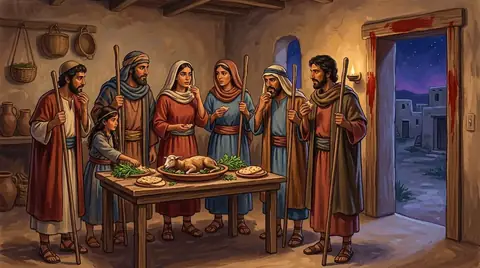 FeastPassoverThe yearly feast remembering the night God rescued Israel from Egypt, when death passed over every house marked with a…
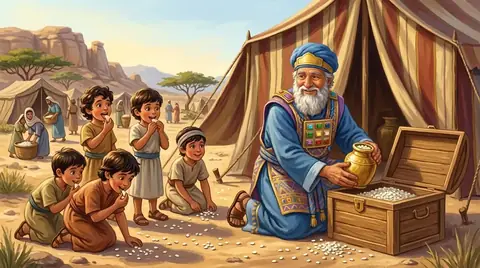 Thing · SymbolMannaThe food God sent every morning to feed Israel in the desert for forty years. Jesus called himself the true bread from…
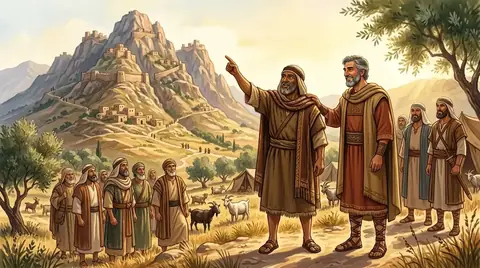 PersonCalebOne of the twelve spies Moses sent into Canaan, and with Joshua the only one who trusted God to give them the land.…
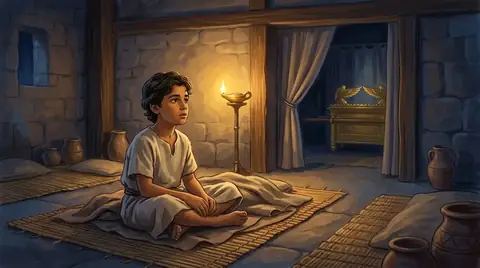 Person · Prophet and judgeSamuelThe prophet who led Israel from the time of the judges into the time of the kings. Given to God by his mother Hannah…
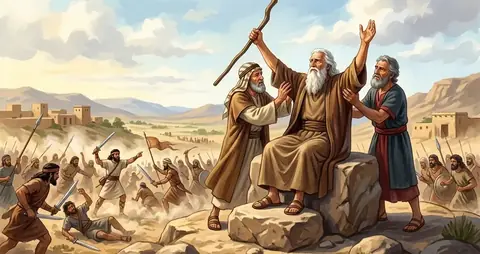 Person · NationAmalekThe grandson of Esau and the desert tribe descended from him, Israel's bitter enemy. The Amalekites attacked Israel on…
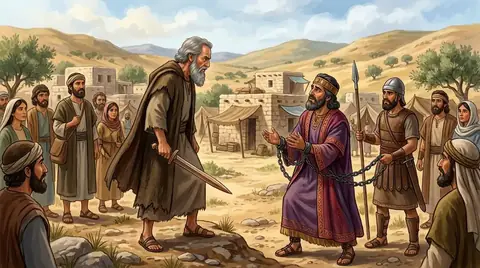 PersonAgagThe king of the Amalekites whom Saul captured and spared against God's command. Samuel killed him himself, and Saul's…
Written for this app in its own words, from the Bible, with the facts checked against Bible dictionaries and encyclopedias: Easton's, Smith's, Fausset's, ISBE, Holman, the New Bible Dictionary, Vine's and the Thompson Chain topics. People and places: STEPBible.org (TIPNR), CC BY 4.0; where a place is today and its photo: OpenBible.info, CC BY 4.0.
