
Custom · Worship
The sin offering
Hebrew hattath · Leviticus 4-5
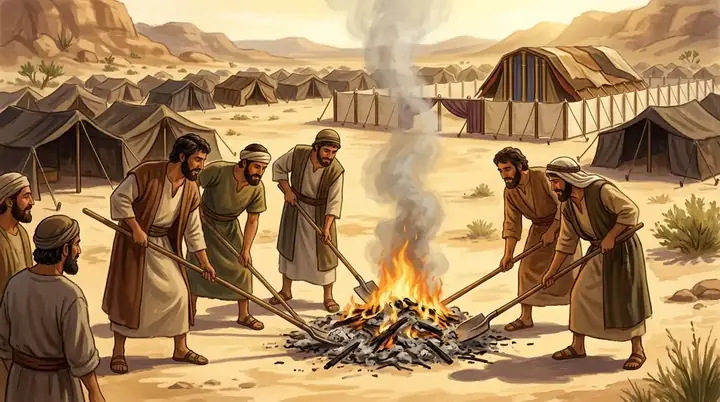
The sacrifice that dealt with sin: a bull, goat or lamb whose blood was put on the altar, with the animal burned outside the camp for the sins of a priest or the whole nation. Hebrews says Jesus died outside the gate as our sin offering.
- For
- Sins done unknowingly or in weakness, and ritual uncleanness; not for defiant sin (Numbers 15:30)
- The animal
- A bull for the high priest or the whole people; a male goat for a ruler; a female goat or lamb for anyone else; two birds or flour for the poor
- Where
- Leviticus 4:1–5:13; Leviticus 6:24–30; Leviticus 16; Numbers 15:22–31; Hebrews 13:11–12
What it was
Every Israelite would sin, often without meaning to or without even noticing, and sin cut a person off from a holy God. The sin offering was God's own provision for this. The worshipper brought the animal, laid a hand on its head to say "this stands for me", and killed it. The priest took the blood: for an ordinary person he smeared it on the horns of the bronze altar; for a priest or for the whole people he carried it into the holy place, sprinkled it seven times before the veil and put it on the horns of the altar of incense (Leviticus 4). The fat was burned on the altar. Then, if the offering had been for a priest or the nation, the whole carcass was carried outside the camp and burned on a clean ash heap (Leviticus 4:11–12). Other sin offerings were eaten by the priests in the holy place (Leviticus 6:26).
When it was offered
Sin offerings were required when a sin came to light (Leviticus 4:14; Leviticus 4:28), after childbirth and after certain diseases (Leviticus 12:6; Leviticus 14:19), at the end of a Nazirite vow (Numbers 6:14), at every feast and new moon (Numbers 28–29), and above all on the Day of Atonement, when the high priest took the blood of a goat right into the Most Holy Place (Leviticus 16). Someone who could not afford a lamb could bring two doves, and the very poor a little flour (Leviticus 5:7–11): no one was shut out for being poor. There was no sin offering for a person who sinned "with an high hand", openly defying God (Numbers 15:30–31).
What it meant
The sin offering taught that sin costs a life, that blood must be shed for forgiveness (Hebrews 9:22), and that the sinner can be covered by a substitute. But it had to be repeated endlessly, and "it is not possible that the blood of bulls and of goats should take away sins" (Hebrews 10:4).
Points to Christ
Paul says God "made him to be sin for us, who knew no sin" (2 Corinthians 5:21), using the very idea of the sin offering. Hebrews draws out the detail: the bodies of the sin offerings were burned outside the camp, "wherefore Jesus also, that he might sanctify the people with his own blood, suffered without the gate" (Hebrews 13:11–12). Calvary was outside the city wall. His one offering did what thousands of bulls and goats pointed to.
Key verses
- Leviticus 4:27–31
And if any one of the common people sin through ignorance, while he doeth somewhat against any of the commandments of the Lord concerning things which ought not to be done, and be guilty; Or if his sin, which he hath sinned, come to his knowledge: then he shall bring his offering, a kid of the goats, a female without blemish, for his sin which he hath sinned. And he shall lay his hand upon the head of the sin offering, and slay the sin offering in the place of the burnt offering. …
- Leviticus 6:30
And no sin offering, whereof any of the blood is brought into the tabernacle of the congregation to reconcile withal in the holy place, shall be eaten: it shall be burnt in the fire.
- Hebrews 10:4
For it is not possible that the blood of bulls and of goats should take away sins.
- 2 Corinthians 5:21
For he hath made him to be sin for us, who knew no sin; that we might be made the righteousness of God in him.
- Hebrews 13:11–12
For the bodies of those beasts, whose blood is brought into the sanctuary by the high priest for sin, are burned without the camp. Wherefore Jesus also, that he might sanctify the people with his own blood, suffered without the gate.
Read next
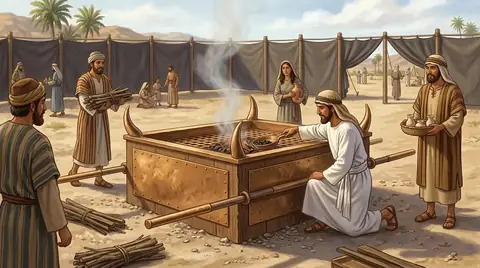 Thing · WorshipThe altarA raised structure of earth, stone or bronze on which sacrifices were offered to God. The big bronze altar stood in the…
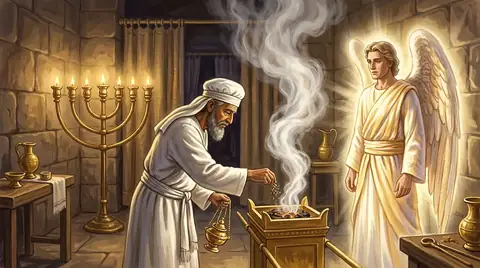 Thing · WorshipIncenseA holy blend of sweet spices that the priest burned on the golden altar of the tabernacle at dawn and at dusk. Its…
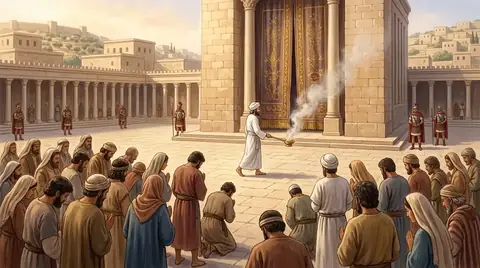 Feast · FastThe Day of AtonementThe one day in the year when the high priest went behind the veil with blood to atone for all Israel's sins, while a…
Written for this app in its own words, from the Bible, with the facts checked against Bible dictionaries and encyclopedias: Easton's, Smith's, Fausset's, ISBE, Holman, the New Bible Dictionary, Vine's and the Thompson Chain topics.
