
Person · King
Saul
1 Samuel 9–31 · reigned about 1050–1010 BC · the name means "asked for"
Israel's first king, a tall Benjamite chosen when the people demanded a king like the nations. He began humbly and won battles, but disobeyed God, grew jealous of David, and died by his own sword on Mount Gilboa.
- Family
- Son of Kish, of the tribe of Benjamin, from Gibeah; father of Jonathan, Michal and Ish-bosheth
- Known for
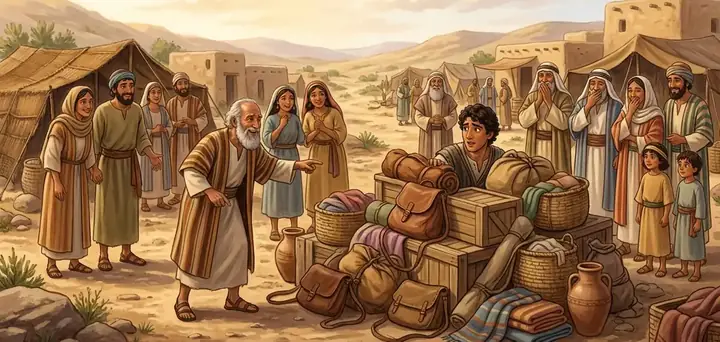
- Hiding among the baggage; sparing Agag; hunting David; the witch of Endor
- Died
- On Mount Gilboa, falling on his sword after the Philistines wounded him (1 Samuel 31:4)
His rise
Saul was a farmer's son, a head taller than anyone in Israel, and he was out looking for his father's lost donkeys when he met Samuel. God had told the prophet the day before that this was the man, and Samuel anointed him in private (1 Samuel 9–10). When the tribes gathered to choose a king by lot and it fell on Saul, he was found hiding among the baggage (1 Samuel 10:22). He proved himself at once by raising an army to rescue Jabesh-gilead from the Ammonites, and after that the whole nation crowned him at Gilgal (1 Samuel 11). With Jonathan at his side he drove the Philistines back and fought Israel's enemies on every border.
His fall
Two acts of disobedience undid him. Waiting for Samuel at Gilgal with his army melting away, he offered the sacrifice himself, and was told the kingdom would not last (1 Samuel 13:8–14). Sent to destroy the Amalekites completely, he spared King Agag and the best of the flocks, and then excused it; Samuel answered, "to obey is better than sacrifice ... Because thou hast rejected the word of the LORD, he hath also rejected thee from being king" (1 Samuel 15:22–23). The Spirit of the LORD left him and an evil spirit troubled him, soothed only by a young harpist named David (1 Samuel 16:14–23).
When the women sang that Saul had killed his thousands and David his ten thousands, jealousy took hold of him (1 Samuel 18:7–9). He threw his spear at David, used his daughter Michal as bait, and spent years chasing him through the wilderness. He had eighty-five priests of Nob killed for helping him (1 Samuel 22:18). Twice David could have killed Saul and would not, and twice Saul wept and admitted David was the better man, but nothing changed (1 Samuel 24; 1 Samuel 26). On the eve of his last battle, with God silent, he went in disguise to a medium at Endor and heard his doom from Samuel's spirit (1 Samuel 28). The next day the Philistines killed his three sons on Mount Gilboa, and Saul, badly wounded, fell on his own sword (1 Samuel 31). The men of Jabesh-gilead, remembering, came by night and gave him a decent burial.
What to learn
Saul had every gift: looks, courage, God's Spirit, a loyal son and a faithful prophet. What he lacked was a heart that would obey. David's lament over him and Jonathan, "How are the mighty fallen!", is one of the saddest songs in the Bible (2 Samuel 1:19–27). The Chronicler sums up: Saul died "for his transgression ... and enquired not of the LORD" (1 Chronicles 10:13–14).
Others with this name
An early king of Edom was named Saul, or Shaul (Genesis 36:37–38). And Saul of Tarsus, the persecutor who became the apostle Paul, was from the same tribe of Benjamin and probably named after the king (Acts 13:9).
Key verses
- 1 Samuel 10:1
Then Samuel took a vial of oil, and poured it upon his head, and kissed him, and said, Is it not because the Lord hath anointed thee to be captain over his inheritance?
- 1 Samuel 13:14
But now thy kingdom shall not continue: the Lord hath sought him a man after his own heart, and the Lord hath commanded him to be captain over his people, because thou hast not kept that which the Lord commanded thee.
- 1 Samuel 15:22–23
And Samuel said, Hath the Lord as great delight in burnt offerings and sacrifices, as in obeying the voice of the Lord? Behold, to obey is better than sacrifice, and to hearken than the fat of rams. For rebellion is as the sin of witchcraft, and stubbornness is as iniquity and idolatry. Because thou hast rejected the word of the Lord, he hath also rejected thee from being king.
- 1 Samuel 31:4
Then said Saul unto his armourbearer, Draw thy sword, and thrust me through therewith; lest these uncircumcised come and thrust me through, and abuse me. But his armourbearer would not; for he was sore afraid. Therefore Saul took a sword, and fell upon it.
- 1 Chronicles 10:13–14
So Saul died for his transgression which he committed against the Lord, even against the word of the Lord, which he kept not, and also for asking counsel of one that had a familiar spirit, to enquire of it; And enquired not of the Lord: therefore he slew him, and turned the kingdom unto David the son of Jesse.
On the map
Family
- Parents
- Kish
- Married to
- Ahinoam, Rizpah
- Children
- Jonathan, Abinadab, Malchi-shua, Merab, Michal, Ish-bosheth, Armoni, Mephibosheth
Mentioned in 327 verses
- 1 Samuel 241
- 2 Samuel 57
- 1 Chronicles 22
- Psalms 5
- Isaiah 1
- Acts 1
Read next
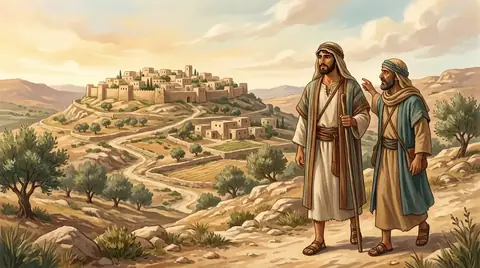 PersonKishA wealthy Benjamite whose lost donkeys sent his son Saul to the prophet Samuel, and so to the throne of Israel. Several…
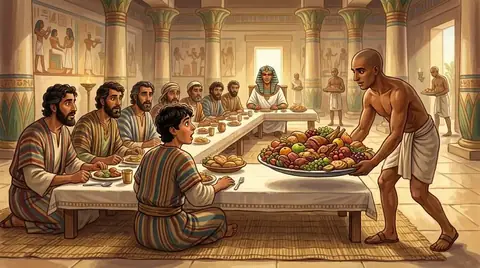 PersonBenjaminJacob's youngest son, whose mother Rachel died bearing him. Joseph's only full brother, he was the centre of the…
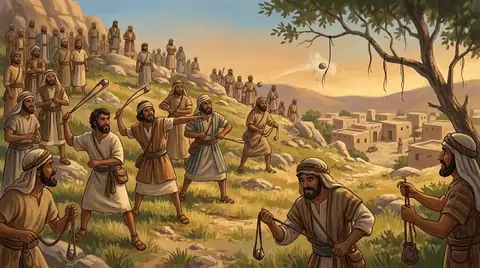 Place · TownGibeahSaul's home town in Benjamin, and his capital as king. Long before that it was the scene of the crime against a…
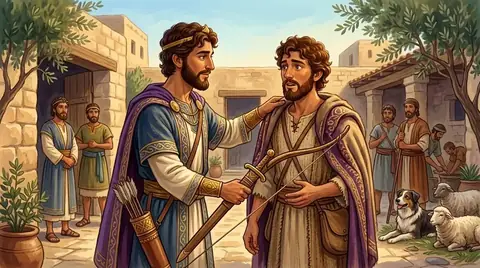 PersonJonathanSaul's eldest son and David's closest friend. A brave soldier who climbed a cliff to rout the Philistines, he gave up…
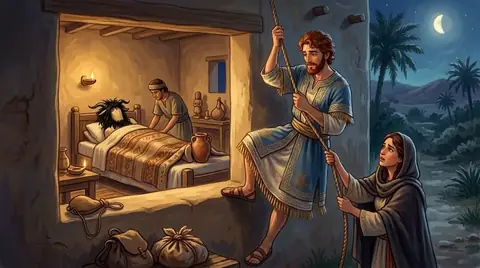 PersonMichalKing Saul's younger daughter and David's first wife. She loved him and saved his life, but years later she despised him…
 PersonIsh-boshethSaul's surviving son, made king over the northern tribes by Abner after Saul's death while David ruled Judah. He…
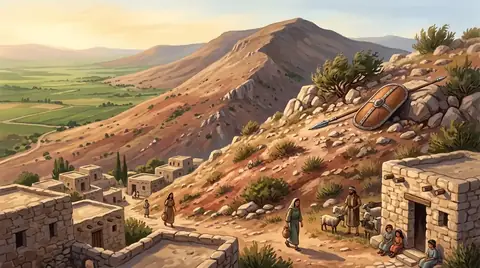 Place · MountainMount GilboaThe hill ridge overlooking the valley of Jezreel where Saul fell fighting the Philistines and three of his sons…
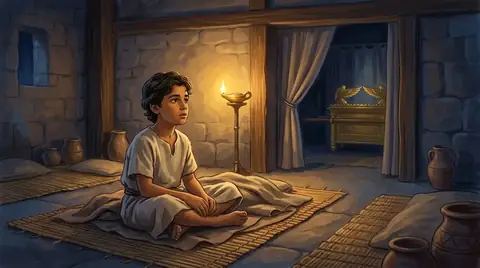 Person · Prophet and judgeSamuelThe prophet who led Israel from the time of the judges into the time of the kings. Given to God by his mother Hannah…
Written for this app in its own words, from the Bible, with the facts checked against Bible dictionaries and encyclopedias: Easton's, Smith's, Fausset's, ISBE, Holman, the New Bible Dictionary, Vine's and the Thompson Chain topics. People and places: STEPBible.org (TIPNR), CC BY 4.0; where a place is today and its photo: OpenBible.info, CC BY 4.0.
