
Nation
The Medes and Persians
the empire that took Babylon in 539 BC
Two peoples of the land now called Iran, joined under Cyrus into one empire. They conquered Babylon, sent the Jews home to rebuild the temple, and ruled them for two centuries.
- Kings in the Bible
- Darius the Mede, Cyrus, Darius, Ahasuerus (Xerxes), Artaxerxes
- Known for
- Taking Babylon; Cyrus' decree; the lions' den; Esther; the unchangeable law
- Ended
- Conquered by Alexander the Great, 331 BC (foretold in Daniel 8:20–21)
Who they were
The Medes lived in the mountains south of the Caspian Sea, the Persians further south towards the Gulf. Both are listed among the sons of Japheth (Genesis 10:2, "Madai"). The Medes rose first; the "cities of the Medes" received exiles from Israel when Assyria destroyed Samaria in 722 BC (2 Kings 17:6). Then Cyrus the Persian united the two peoples under himself, and the Persians became the leading partner. The Bible speaks of them as one: the kingdom of "the Medes and Persians", with its law that no king could alter (Daniel 6:8; Esther 1:19).
In the Bible
Isaiah named Cyrus as God's "shepherd" a century and a half before he was born, and foretold that the Medes would overthrow Babylon (Isaiah 13:17; Isaiah 44:28–45:1). On the night of Belshazzar's feast, Daniel read the writing on the wall: the kingdom was "divided, and given to the Medes and Persians" (Daniel 5:28). That same night the city fell (Daniel 5:31). In Daniel's vision the empire is a ram with two horns, the higher one rising last, which the Greek goat would shatter (Daniel 8:3–7, 20).
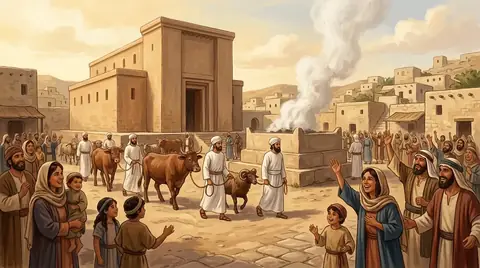
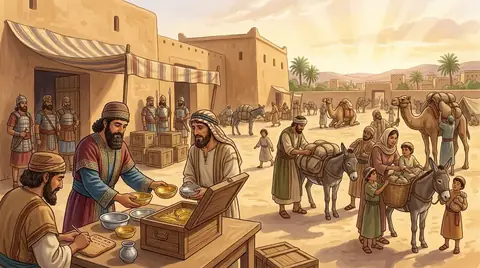
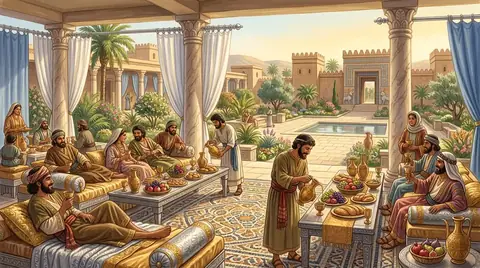
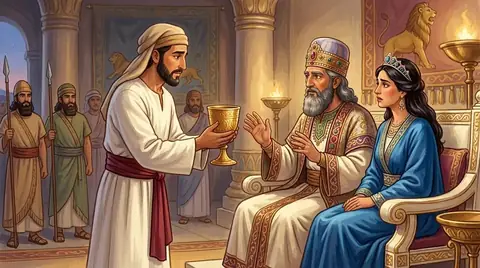
Under Darius the Mede, Daniel was thrown to the lions because the law of the Medes and Persians could not be undone, and God shut the lions' mouths (Daniel 6). In his first year Cyrus decreed that the Jews could go home and rebuild the temple (Ezra 1:1–4; 2 Chronicles 36:22–23). Later kings confirmed it: Darius ordered the work finished (Ezra 6), Artaxerxes sent Ezra and then Nehemiah (Ezra 7; Nehemiah 2). At the court of Ahasuerus in Shushan, Esther became queen and saved her people from Haman. Medes and Persians were among the crowd at Pentecost (Acts 2:9).
What to learn
The empire that seemed to rule the world was a tool in God's hand, raised up to free his people and build his house, exactly as he had said. Kings pass, "but the word of our God shall stand for ever" (Isaiah 40:8).
Key verses
- Isaiah 45:1
Thus saith the Lord to his anointed, to Cyrus, whose right hand I have holden, to subdue nations before him; and I will loose the loins of kings, to open before him the two leaved gates; and the gates shall not be shut;
- Daniel 5:28
PERES; Thy kingdom is divided, and given to the Medes and Persians.
- Daniel 6:8–12
Now, O king, establish the decree, and sign the writing, that it be not changed, according to the law of the Medes and Persians, which altereth not. Wherefore king Darius signed the writing and the decree. Now when Daniel knew that the writing was signed, he went into his house; and his windows being open in his chamber toward Jerusalem, he kneeled upon his knees three times a day, and prayed, and gave thanks before his God, as he did aforetime. …
- Ezra 1:1–4
Now in the first year of Cyrus king of Persia, that the word of the Lord by the mouth of Jeremiah might be fulfilled, the Lord stirred up the spirit of Cyrus king of Persia, that he made a proclamation throughout all his kingdom, and put it also in writing, saying, Thus saith Cyrus king of Persia, The Lord God of heaven hath given me all the kingdoms of the earth; and he hath charged me to build him an house at Jerusalem, which is in Judah. Who is there among you of all his people? his God be with him, and let him go up to Jerusalem, which is in Judah, and build the house of the Lord God of Israel, (he is the God,) which is in Jerusalem. …
- Esther 1:19
If it please the king, let there go a royal commandment from him, and let it be written among the laws of the Persians and the Medes, that it be not altered, That Vashti come no more before king Ahasuerus; and let the king give her royal estate unto another that is better than she.
On the map
Read next
 Person · KingDariusThe name of three kings in the Bible. Darius the Mede ruled Babylon when Daniel was thrown to the lions; Darius I of…
 Person · King of PersiaCyrusThe Persian king who conquered Babylon and, in his first year there, let the Jews go home to rebuild the temple. Isaiah…
 Person · KingAhasuerusThe king of Persia in the book of Esther, who put away Queen Vashti, made Esther his queen, and was tricked by Haman…
 PersonArtaxerxesThe Persian king who sent Ezra to Jerusalem with the law in his seventh year and let his cupbearer Nehemiah go and…PersonAlexander the GreatThe young king of Macedonia who conquered the Persian Empire and spread Greek rule from Egypt to India. Daniel foresaw…
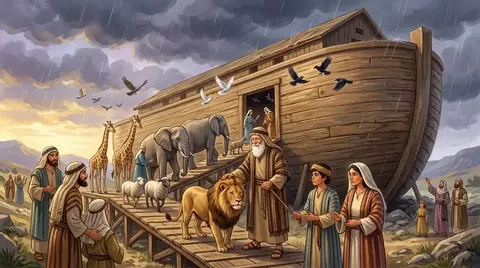 PersonJaphethOne of Noah's three sons, saved in the ark with his wife. Noah blessed him, and his descendants spread out to become…
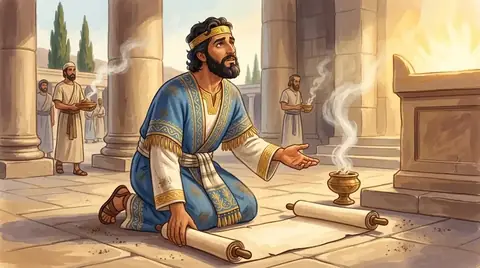 Place · EmpireAssyriaThe land and empire on the upper Tigris whose capital was Nineveh. Assyria crushed the northern kingdom of Israel in…
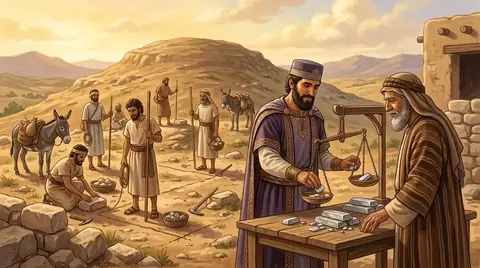 Place · City and regionSamariaThe hill city Omri built as capital of the northern kingdom of Israel. It saw Ahab and Jezebel, Elijah and Elisha…
Written for this app in its own words, from the Bible, with the facts checked against Bible dictionaries and encyclopedias: Easton's, Smith's, Fausset's, ISBE, Holman, the New Bible Dictionary, Vine's and the Thompson Chain topics.
