
Person · King
Ahasuerus
a-haz-yoo-EE-rusKing of Persia · reigned 486–465 BC · usually identified with Xerxes I
The king of Persia in the book of Esther, who put away Queen Vashti, made Esther his queen, and was tricked by Haman into ordering the death of the Jews before Esther won them a reprieve.
- Family
- Son of Darius I. Husband of Vashti and then of Esther.
- Ruled
- 127 provinces, from India to Ethiopia (Esther 1:1)
- Known for
- The great feast, choosing Esther, Haman's plot, the first Purim
- Also called
- Xerxes, his Greek name
Who he was
Ahasuerus is the Hebrew form of the name of the great Persian king known to the Greeks as Xerxes, who ruled an empire stretching from India to Africa. His capital at Shushan (Susa) is where the book of Esther is set. Outside the Bible he is remembered for his huge invasion of Greece, which ended in defeat at sea at Salamis. The events of Esther fit the years after he came home.
In the book of Esther
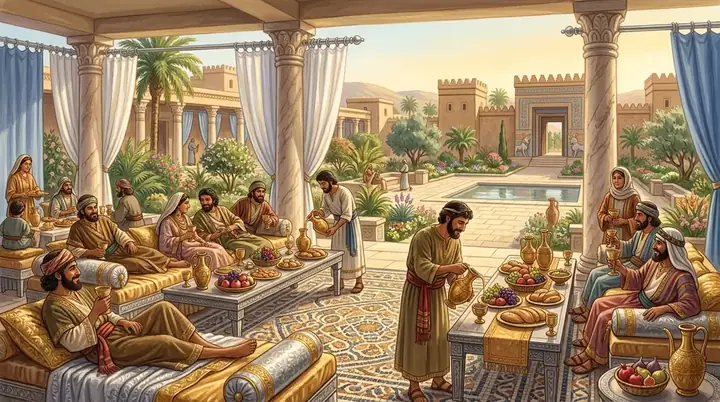
Three years into his reign he threw a feast lasting 180 days, then a seven-day party in the palace garden. When he sent for Queen Vashti to show off her beauty and she refused, he deposed her on the advice of his wise men (Esther 1). A search for a new queen across the empire brought a young Jewish woman named Esther to the palace, and the king loved her best of all (Esther 2:17). Soon after, her cousin Mordecai uncovered a plot to kill the king, and it was written in the royal records.
The king then raised Haman above every other prince. When Mordecai would not bow to Haman, Haman persuaded the king to sign a decree to wipe out all the Jews in one day, and Ahasuerus gave him his ring without a second thought (Esther 3). It was Esther who risked her life by going to the king uninvited, won his favour, and at a second banquet named Haman as the enemy who had sold her people. The king had Haman hanged on the gallows he had built for Mordecai (Esther 7). Because a Persian law could not be cancelled, Ahasuerus issued a new decree letting the Jews defend themselves, and they did. Mordecai became the king's chief minister, and the feast of Purim was born (Esther 9–10).
What to learn
Ahasuerus is a picture of worldly power: rich, moody, easily flattered, signing away lives over a cup of wine. God's name is never mentioned in Esther, yet the king's sleepless night, the record read aloud, and the timing of each event show God quietly ruling the greatest ruler on earth (Proverbs 21:1).
Others with this name
Ezra 4:6 mentions a letter sent against Jerusalem in the reign of an Ahasuerus, most likely the same king. Daniel 9:1 names an Ahasuerus whose son was Darius the Mede; who that was isn't certain.
Key verses
- Esther 1:1–3
Now it came to pass in the days of Ahasuerus, (this is Ahasuerus which reigned, from India even unto Ethiopia, over an hundred and seven and twenty provinces:) That in those days, when the king Ahasuerus sat on the throne of his kingdom, which was in Shushan the palace, In the third year of his reign, he made a feast unto all his princes and his servants; the power of Persia and Media, the nobles and princes of the provinces, being before him:
- Esther 2:17
And the king loved Esther above all the women, and she obtained grace and favour in his sight more than all the virgins; so that he set the royal crown upon her head, and made her queen instead of Vashti.
- Esther 3:8–11
And Haman said unto king Ahasuerus, There is a certain people scattered abroad and dispersed among the people in all the provinces of thy kingdom; and their laws are diverse from all people; neither keep they the king’s laws: therefore it is not for the king’s profit to suffer them. If it please the king, let it be written that they may be destroyed: and I will pay ten thousand talents of silver to the hands of those that have the charge of the business, to bring it into the king’s treasuries. And the king took his ring from his hand, and gave it unto Haman the son of Hammedatha the Agagite, the Jews’ enemy. …
- Esther 7:1–10
So the king and Haman came to banquet with Esther the queen. And the king said again unto Esther on the second day at the banquet of wine, What is thy petition, queen Esther? and it shall be granted thee: and what is thy request? and it shall be performed, even to the half of the kingdom. Then Esther the queen answered and said, If I have found favour in thy sight, O king, and if it please the king, let my life be given me at my petition, and my people at my request: …
- Ezra 4:6
And in the reign of Ahasuerus, in the beginning of his reign, wrote they unto him an accusation against the inhabitants of Judah and Jerusalem.
Family
- Parents
- Darius
- Married to
- Vashti
- Children
- Artaxerxes, Darius
Mentioned in 30 verses
- Ezra 1
- Esther 28
- Daniel 1
Read next
 PersonVashtiThe queen of the Persian king Ahasuerus (Xerxes). When she refused to come and show her beauty to his drunken guests…
 PersonEstherA Jewish orphan who became queen of Persia and risked her life to stop Haman's plan to kill every Jew in the empire.…
 Place · CitySusaThe winter capital of the Persian kings, east of Babylon. The story of Esther is set in its palace, Nehemiah served the…
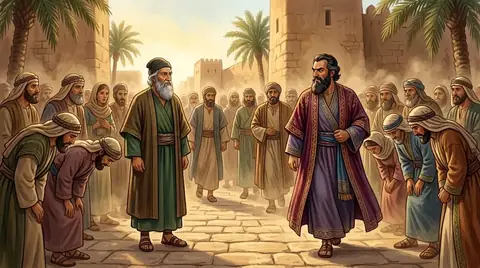 PersonMordecaiThe Jew who raised his cousin Esther, refused to bow to Haman, and with Esther saved the Jews of Persia from being…
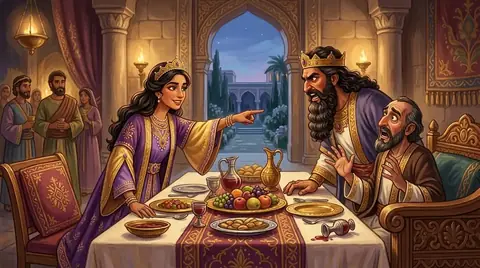 PersonHamanThe proud prime minister of King Ahasuerus of Persia, who plotted to kill every Jew in the empire because Mordecai…
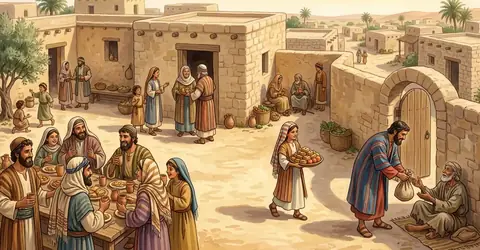 FeastPurimThe feast that remembers how the Jews of Persia escaped Haman's plot, the story the book of Esther tells. Named after…
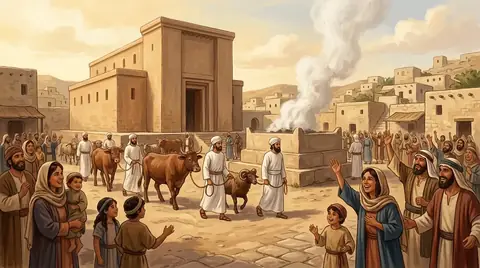 Person · KingDariusThe name of three kings in the Bible. Darius the Mede ruled Babylon when Daniel was thrown to the lions; Darius I of…
 PersonArtaxerxesThe Persian king who sent Ezra to Jerusalem with the law in his seventh year and let his cupbearer Nehemiah go and…
Written for this app in its own words, from the Bible, with the facts checked against Bible dictionaries and encyclopedias: Easton's, Smith's, Fausset's, ISBE, Holman, the New Bible Dictionary, Vine's and the Thompson Chain topics. People and places: STEPBible.org (TIPNR), CC BY 4.0; where a place is today and its photo: OpenBible.info, CC BY 4.0.
