
Person
Ezra
EZ-ruhOld Testament · about 458–430 BC
A priest and scribe who led a second group of exiles back from Babylon, taught the people God's law and read it to them in Jerusalem. He wrote the book that bears his name.
- Family
- A priest descended from Aaron through Phinehas; son (or grandson) of Seraiah, the high priest killed in 586 BC (Ezra 7:1–5)
- Known for
- Leading exiles home, the mixed marriages, reading the law (Nehemiah 8)
- Meaning
- "Help"
- Wrote
- The book of Ezra; by tradition also Chronicles
His life
Ezra grew up in Babylon, where he had "prepared his heart to seek the law of the LORD, and to do it, and to teach" it (Ezra 7:10). In the seventh year of King Artaxerxes, 458 BC, about eighty years after Zerubbabel's first return, he was given leave to lead a second group home. The king gave him silver and gold for the temple and authority to appoint judges and teach the law (Ezra 7:12–26).
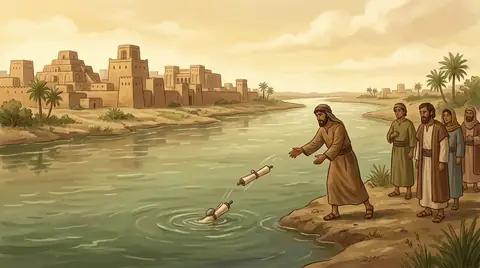
Ezra gathered his party at the river Ahava. Ashamed to ask for soldiers after telling the king that God protects those who seek him, he called a fast instead, and God brought them safely through the four-month journey (Ezra 8:21–32). Some 1,500 men went with him, with their families, Levites and temple servants.
The mixed marriages
In Jerusalem he learned that many Jews, priests among them, had married women from the idol-worshipping peoples around them. Ezra tore his clothes, sat stunned until the evening sacrifice, and then prayed a long confession, treating the people's sin as his own (Ezra 9). The people wept with him, and in a cold rainstorm the whole assembly agreed to put the foreign wives away (Ezra 10:9–12). It was a hard remedy for a sin that had destroyed the nation before.
Reading the law
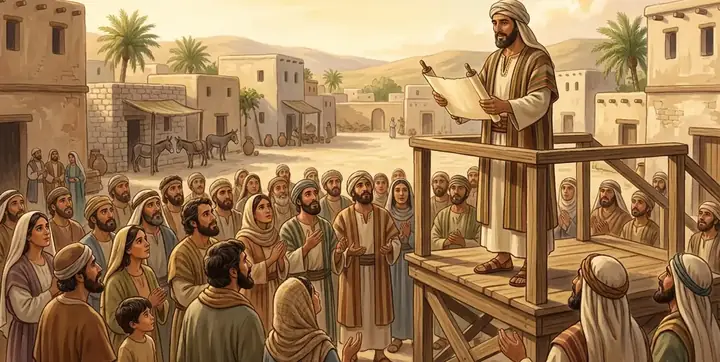
Thirteen years later Nehemiah arrived to rebuild the walls. When they were finished, the people asked Ezra to bring out the book of the law. He read it from a wooden platform from dawn till midday, while the Levites explained it, and the people wept as they understood (Nehemiah 8:1–9). Ezra and Nehemiah told them that the day was holy and to rejoice: "the joy of the LORD is your strength" (Nehemiah 8:10). The next day they found the command about the Feast of Tabernacles and kept it as it had not been kept since Joshua's time (Nehemiah 8:17). Ezra then helped lead the people into a renewed covenant (Nehemiah 9–10) and walked at the head of one of the two choirs at the dedication of the wall (Nehemiah 12:36).
What to learn
Ezra studied the word, lived it and then taught it, in that order (Ezra 7:10). He is the first of a long line of teachers who have given their lives to understanding the Scriptures and explaining them to God's people.
Others with this name
A priest called Ezra came back from Babylon with Zerubbabel in 538 BC and headed a priestly family (Nehemiah 12:1, 13). An Ezra (Ezrah) of the tribe of Judah is named in the family lists (1 Chronicles 4:17).
Key verses
- Ezra 7:10
For Ezra had prepared his heart to seek the law of the Lord, and to do it, and to teach in Israel statutes and judgments.
- Ezra 8:21–23
Then I proclaimed a fast there, at the river of Ahava, that we might afflict ourselves before our God, to seek of him a right way for us, and for our little ones, and for all our substance. For I was ashamed to require of the king a band of soldiers and horsemen to help us against the enemy in the way: because we had spoken unto the king, saying, The hand of our God is upon all them for good that seek him; but his power and his wrath is against all them that forsake him. So we fasted and besought our God for this: and he was intreated of us.
- Ezra 9:5–6
And at the evening sacrifice I arose up from my heaviness; and having rent my garment and my mantle, I fell upon my knees, and spread out my hands unto the Lord my God, And said, O my God, I am ashamed and blush to lift up my face to thee, my God: for our iniquities are increased over our head, and our trespass is grown up unto the heavens.
- Nehemiah 8:8–10
So they read in the book in the law of God distinctly, and gave the sense, and caused them to understand the reading. And Nehemiah, which is the Tirshatha, and Ezra the priest the scribe, and the Levites that taught the people, said unto all the people, This day is holy unto the Lord your God; mourn not, nor weep. For all the people wept, when they heard the words of the law. Then he said unto them, Go your way, eat the fat, and drink the sweet, and send portions unto them for whom nothing is prepared: for this day is holy unto our Lord: neither be ye sorry; for the joy of the Lord is your strength.
- Nehemiah 12:36
And his brethren, Shemaiah, and Azarael, Milalai, Gilalai, Maai, Nethaneel, and Judah, Hanani, with the musical instruments of David the man of God, and Ezra the scribe before them.
On the map
Family
- Parents
- Seraiah
- Brothers and sisters
- Jehozadak
Mentioned in 22 verses
- Ezra 13
- Nehemiah 9
Read next
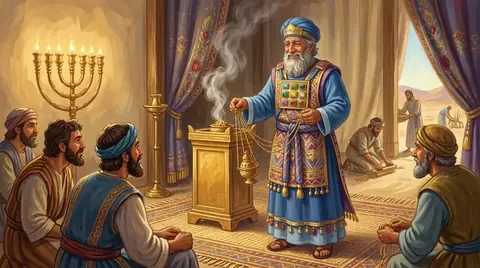 PersonAaronMoses' older brother and Israel's first high priest. He spoke for Moses before Pharaoh and served God at the tabernacle…PersonPhinehasThe grandson of Aaron whose zeal for God stopped a plague at Shittim. God rewarded him with an everlasting priesthood.…
 PersonSeraiahThe last chief priest of Solomon's temple, put to death by the Babylonians when Jerusalem fell. More than ten other men…
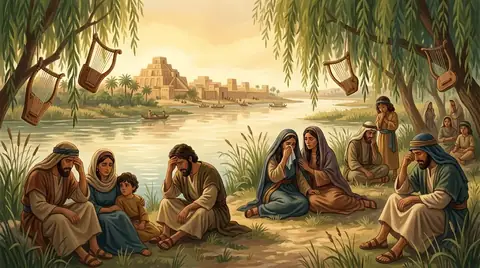 Place · CityBabylonThe great city on the Euphrates where the tower of Babel was built. Under Nebuchadnezzar it ruled the world, destroyed…
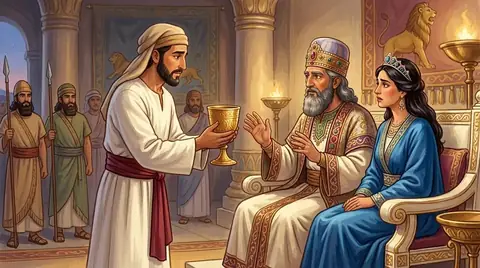 PersonArtaxerxesThe Persian king who sent Ezra to Jerusalem with the law in his seventh year and let his cupbearer Nehemiah go and…
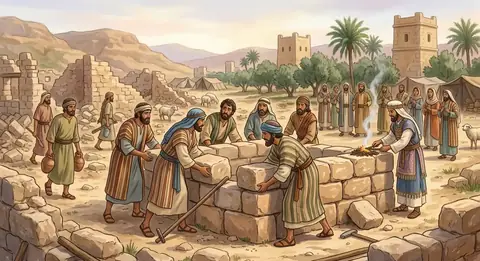 PersonZerubbabelThe prince of David's line who led the first exiles home from Babylon and rebuilt the temple in Jerusalem, finishing it…
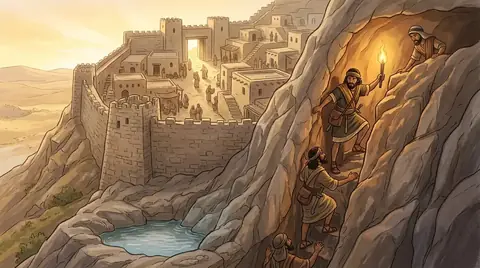 PlaceJerusalemThe city David made his capital and where Solomon built the temple. Jesus died and rose there and the church began…
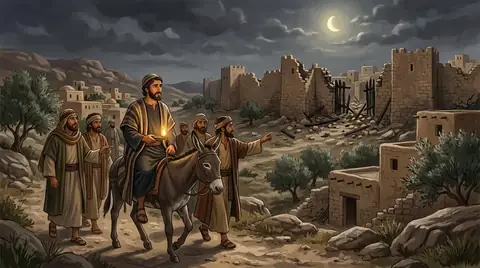 PersonNehemiahThe king of Persia's cupbearer who got leave to go to Jerusalem and rebuilt its broken walls in fifty-two days, despite…
Written for this app in its own words, from the Bible, with the facts checked against Bible dictionaries and encyclopedias: Easton's, Smith's, Fausset's, ISBE, Holman, the New Bible Dictionary, Vine's and the Thompson Chain topics. People and places: STEPBible.org (TIPNR), CC BY 4.0; where a place is today and its photo: OpenBible.info, CC BY 4.0.
