
Custom
Hospitality
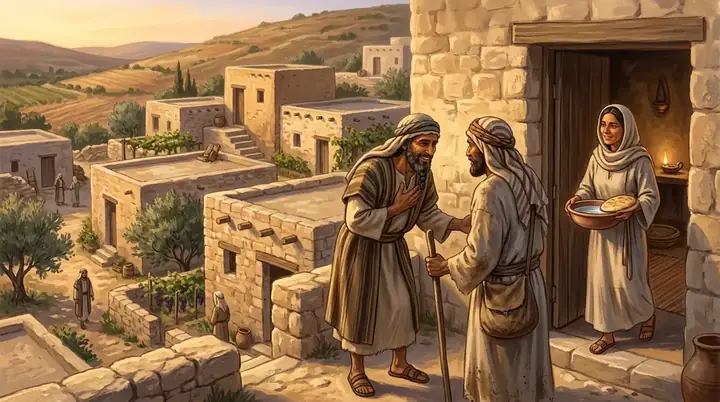
Welcoming the traveller and the stranger into your home. In the Bible's world there were few inns, so every household owed the passing stranger water for his feet, a meal and a bed for the night, and a grace God commands.
- The host's duties
- Washing the guest's feet, feeding him, giving him a bed and keeping him safe
- Famous hosts
- Abraham (Genesis 18), Lot (Genesis 19), the Shunammite (2 Kings 4), Martha (Luke 10), Lydia (Acts 16)
- Commanded
- Romans 12:13; 1 Timothy 3:2; Hebrews 13:2; 1 Peter 4:9
The custom
A traveller in Bible lands could not count on finding an inn. He counted on people. A host ran to meet a stranger, offered water for dusty feet, killed a kid or a calf, baked fresh bread and set the food before the guest while he himself stood and served (Genesis 18:2–8). While the guest was under the roof he was safe; Lot was ready to go to terrible lengths to protect his visitors (Genesis 19:8). To refuse a stranger was shameful, and Job could say in his own defence that no traveller had ever slept in his street (Job 31:32).
The law told Israel to love the stranger, remembering that they had been strangers in Egypt (Leviticus 19:34; Deuteronomy 10:19).
In the Old Testament
Abraham welcomed three men by his tent at Mamre and found he had fed the LORD and two angels (Genesis 18:1–8). Rebekah watered a stranger's ten camels (Genesis 24:18–20). Jethro told his daughters to bring the stranger Moses home to eat (Exodus 2:20). The widow of Zarephath fed Elijah with her last handful of meal, and the Shunammite built Elisha a room on the roof (1 Kings 17:10–16; 2 Kings 4:8–10). Rahab hid the spies and was saved for it (Joshua 6:25).
In the New Testament
Jesus depended on hospitality all through his ministry, and Mary and Martha's house at Bethany was open to him (Luke 10:38). He noticed when a host left out the usual courtesies (Luke 7:44–46). He sent out his disciples to stay in whatever house received them (Luke 10:5–7), and said that welcoming a stranger was welcoming him (Matthew 25:35). Lydia insisted that Paul stay with her (Acts 16:15); Gaius put up travelling preachers (3 John 1:5–8). Church leaders must be "given to hospitality" (1 Timothy 3:2), and everyone is to practise it "without grudging" (1 Peter 4:9). "Be not forgetful to entertain strangers: for thereby some have entertained angels unawares" (Hebrews 13:2).
Key verses
- Genesis 18:1–8
And the Lord appeared unto him in the plains of Mamre: and he sat in the tent door in the heat of the day; And he lift up his eyes and looked, and, lo, three men stood by him: and when he saw them, he ran to meet them from the tent door, and bowed himself toward the ground, And said, My Lord, if now I have found favour in thy sight, pass not away, I pray thee, from thy servant: …
- Leviticus 19:34
But the stranger that dwelleth with you shall be unto you as one born among you, and thou shalt love him as thyself; for ye were strangers in the land of Egypt: I am the Lord your God.
- Luke 10:38
Now it came to pass, as they went, that he entered into a certain village: and a certain woman named Martha received him into her house.
- Romans 12:13
Distributing to the necessity of saints; given to hospitality.
- Hebrews 13:2
Be not forgetful to entertain strangers: for thereby some have entertained angels unawares.
- 1 Peter 4:9
Use hospitality one to another without grudging.
Read next
 Custom · Daily lifeInnA stopping place for travellers. In Old Testament times it was just a camping ground; by Jesus' day there were walled…
 PersonLotAbraham's nephew, who chose the rich plain of Jordan and settled in Sodom. Angels dragged him out before the city…
 PersonJobA rich and godly man who lost his children, his wealth and his health in a single stroke, and would not curse God. His…
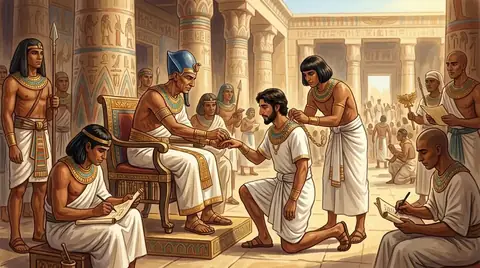 Place · NationEgyptThe great kingdom of the Nile, where Israel grew from a family into a nation and was then enslaved. The Exodus from…
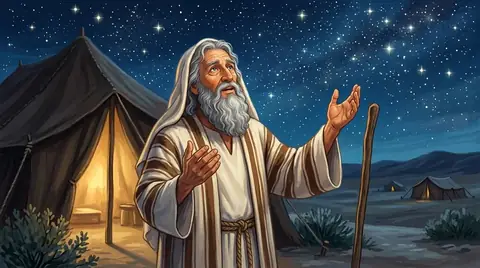 PersonAbrahamThe man God called out of Ur to a land he had never seen, promising him a people and a blessing for the whole world. He…
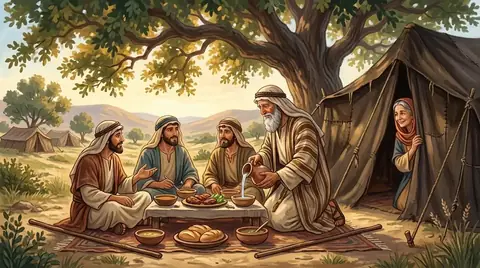 PlaceMamreThe oak grove near Hebron where Abraham pitched his tent, built an altar, and welcomed three visitors who told him…
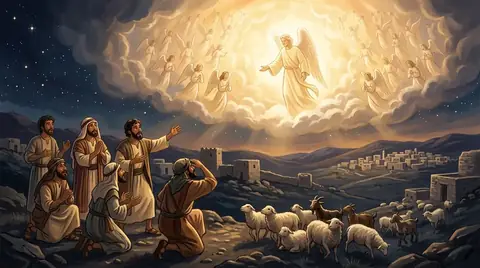 HeavenAngelsSpirits created by God to serve him and bring his messages; the word itself means "messenger". They are many, mighty…
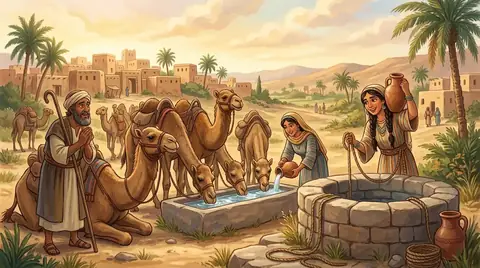 PersonRebekahIsaac's wife, found for him at a well far away in Abraham's homeland. She was told before her twins were born that the…
Written for this app in its own words, from the Bible, with the facts checked against Bible dictionaries and encyclopedias: Easton's, Smith's, Fausset's, ISBE, Holman, the New Bible Dictionary, Vine's and the Thompson Chain topics.
