
Custom · Daily life
Inn
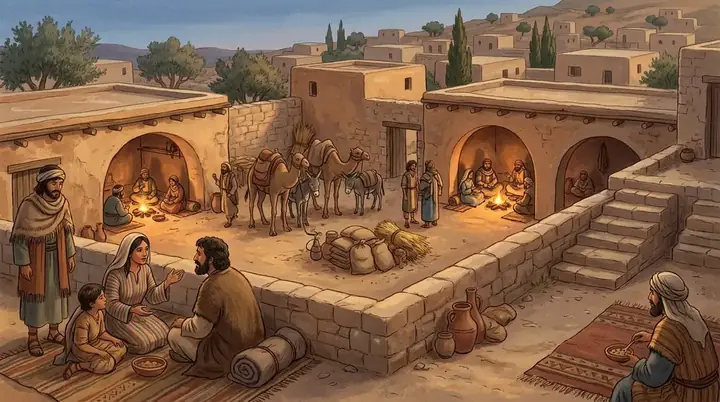
A stopping place for travellers. In Old Testament times it was just a camping ground; by Jesus' day there were walled yards with rooms around them, like the inn at Bethlehem that had no room and the one where the good Samaritan paid for a wounded man.
- Where
- Genesis 42:27; Exodus 4:24; Luke 2:7; Luke 10:34–35
- Two Greek words
- A lodging or guest room (Luke 2:7; Luke 22:11); a public inn with a keeper (Luke 10:34)
In the Old Testament
When Joseph's brothers stopped at "the inn" on the way home and found their money in the sacks (Genesis 42:27), and when the LORD met Moses "in the inn" on the road to Egypt (Exodus 4:24), the word means a night's halting place, probably no more than a spot by a well where caravans camped.
In the New Testament
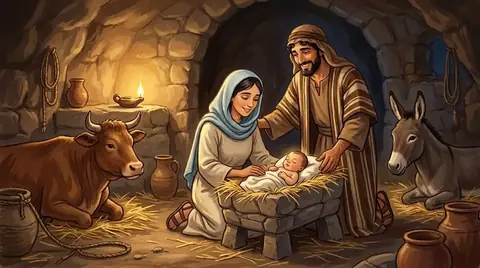
By the time of Jesus the roads had khans: a walled square with a well in the middle, where animals were tied in the open court and travellers slept in bare rooms or arches round the sides, bringing their own food and bedding. The "inn" at Bethlehem that had no room for Mary and Joseph (Luke 2:7) is the same word used for the "guestchamber" where Jesus ate the Passover (Luke 22:11): a lodging place, full because of the census, so that the baby was laid in a manger. The inn on the Jericho road, where the Samaritan left the beaten man with two pence for the innkeeper (Luke 10:34–35), uses a different word, meaning a public house that took in all comers for payment.
Because inns were few and rough, hospitality in private homes mattered all the more.
Key verses
- Genesis 42:27
And as one of them opened his sack to give his ass provender in the inn, he espied his money; for, behold, it was in his sack’s mouth.
- Luke 2:7
And she brought forth her firstborn son, and wrapped him in swaddling clothes, and laid him in a manger; because there was no room for them in the inn.
- Luke 10:34–35
And went to him, and bound up his wounds, pouring in oil and wine, and set him on his own beast, and brought him to an inn, and took care of him. And on the morrow when he departed, he took out two pence, and gave them to the host, and said unto him, Take care of him; and whatsoever thou spendest more, when I come again, I will repay thee.
Read next
 PersonMosesThe man God used to bring Israel out of Egypt, give them his Law at Sinai, and lead them for forty years in the…
 PlaceBethlehemA small town in the hills of Judah, five miles south of Jerusalem. It was the home of Ruth and Boaz, the birthplace of…
 PersonMaryThe young woman of Nazareth chosen to be the mother of Jesus. She believed the angel's word, bore God's Son, and stood…
 PersonJosephJacob's favourite son, sold by his brothers into Egypt, where he rose from prison to rule the land and saved his family…
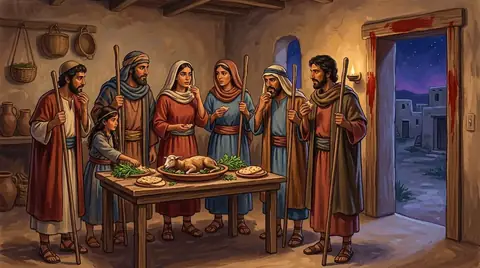 FeastPassoverThe yearly feast remembering the night God rescued Israel from Egypt, when death passed over every house marked with a…
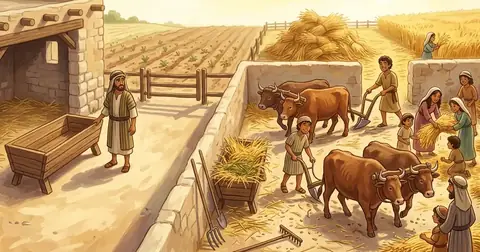 Thing · Daily lifeMangerA feeding trough for animals. The newborn Jesus was laid in one at Bethlehem because there was no room for the family…
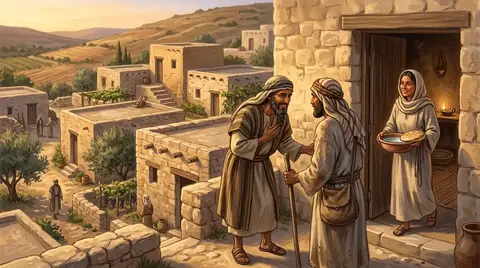 CustomHospitalityWelcoming the traveller and the stranger into your home. In the Bible's world there were few inns, so every household…
Written for this app in its own words, from the Bible, with the facts checked against Bible dictionaries and encyclopedias: Easton's, Smith's, Fausset's, ISBE, Holman, the New Bible Dictionary, Vine's and the Thompson Chain topics.
