
Person · Custom
Widow
A woman whose husband has died. In Bible times she was often poor and without protection, so God's law commanded care for widows, and God calls himself their defender.
- God's care
- "A judge of the widows, is God in his holy habitation" (Psalms 68:5)
- Some widows
- Naomi, Ruth, the widow of Zarephath, Anna, the widow of Nain, the widow with two mites
- In the church
- Widows cared for daily (Acts 6:1); Paul's rules for their support (1 Timothy 5:3–16)
Why she needed help
In Israel land and income passed through men. A woman who lost her husband, especially with no grown son, could quickly fall into poverty or be cheated. So God put widows, with orphans and strangers, under his special protection. "Ye shall not afflict any widow, or fatherless child", the law said, warning that God would hear their cry (Exodus 22:22–24).
What the law required
Every third year a tithe was stored in the towns for the Levite, the stranger, the fatherless and the widow (Deuteronomy 14:28–29). Farmers left the last of the grain, olives and grapes for them to gather (Deuteronomy 24:19–21), and a widow's garment could not be taken as a pledge (Deuteronomy 24:17). The prophets condemned those who robbed widows (Isaiah 1:17; Isaiah 10:1–2), and Jesus warned scribes who "devour widows' houses" (Mark 12:40).
Widows in the story
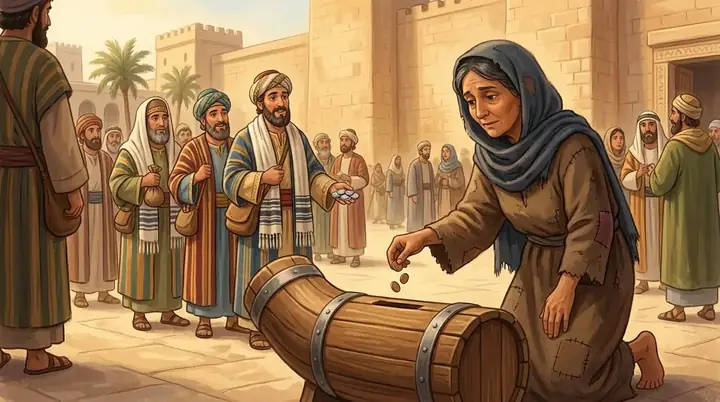
Naomi and Ruth came home as widows, and God provided through Boaz (Ruth 1–4). The widow of Zarephath shared her last flour with Elijah, and her jar did not run out (1 Kings 17:8–16). Elisha saved another widow's sons from slavery with a jar of oil (2 Kings 4:1–7). Anna, a widow for many years, served God in the temple and saw the infant Jesus (Luke 2:36–38). Jesus raised the only son of the widow of Nain (Luke 7:11–15), praised the poor widow who gave her two mites (Mark 12:41–44), and from the cross gave his own widowed mother into John's care (John 19:26–27).
For us
The first quarrel in the church was about widows, and it was solved by appointing men to serve them (Acts 6:1–6). Paul told families to support their own widows and the church to honour those truly alone (1 Timothy 5:3–16). James sums it up: pure religion is "to visit the fatherless and widows in their affliction" (James 1:27).
Key verses
- Exodus 22:22–24
Ye shall not afflict any widow, or fatherless child. If thou afflict them in any wise, and they cry at all unto me, I will surely hear their cry; And my wrath shall wax hot, and I will kill you with the sword; and your wives shall be widows, and your children fatherless.
- Deuteronomy 24:19
When thou cuttest down thine harvest in thy field, and hast forgot a sheaf in the field, thou shalt not go again to fetch it: it shall be for the stranger, for the fatherless, and for the widow: that the Lord thy God may bless thee in all the work of thine hands.
- Psalms 68:5
A father of the fatherless, and a judge of the widows, is God in his holy habitation.
- Mark 12:41–44
And Jesus sat over against the treasury, and beheld how the people cast money into the treasury: and many that were rich cast in much. And there came a certain poor widow, and she threw in two mites, which make a farthing. And he called unto him his disciples, and saith unto them, Verily I say unto you, That this poor widow hath cast more in, than all they which have cast into the treasury: …
- James 1:27
Pure religion and undefiled before God and the Father is this, To visit the fatherless and widows in their affliction, and to keep himself unspotted from the world.
Read next
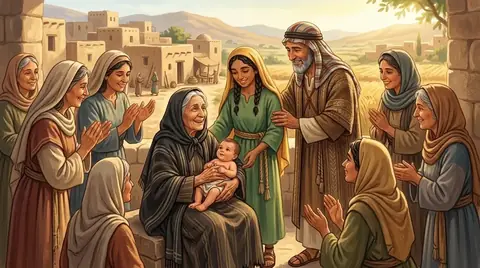 PersonNaomiA widow of Bethlehem who lost her husband and both sons in Moab, came home bitter and empty, and found through her…
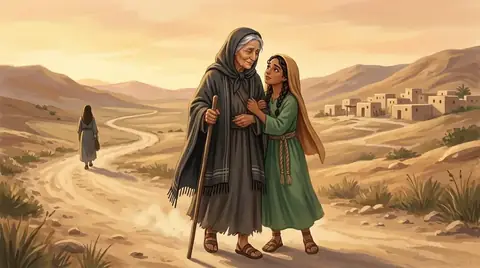 PersonRuthA young widow from Moab who left her own land to stay with her mother-in-law Naomi and trust Israel's God. She married…
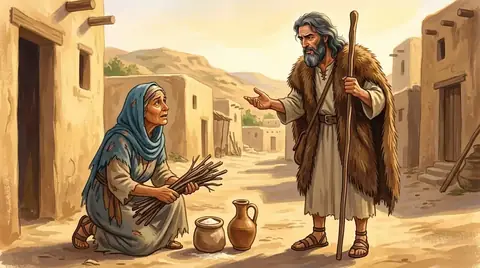 Place · TownZarephathA town on the Phoenician coast near Sidon. In a great famine God sent Elijah to a poor widow there; her flour and oil…
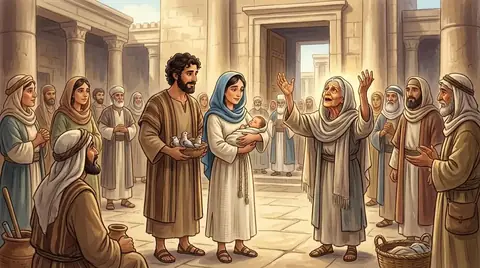 Person · ProphetessAnnaAn aged prophetess, a widow of the tribe of Asher, who worshipped day and night in the temple. When Mary and Joseph…
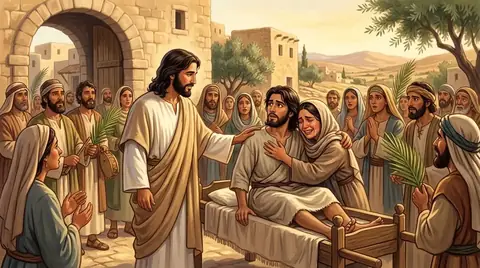 Place · TownNainA small town in Galilee where Jesus met a funeral at the gate, and raised to life the only son of a widow.
Written for this app in its own words, from the Bible, with the facts checked against Bible dictionaries and encyclopedias: Easton's, Smith's, Fausset's, ISBE, Holman, the New Bible Dictionary, Vine's and the Thompson Chain topics.
