
Custom · Leadership
Elders
Also called presbyters; in the church also overseers or bishops
The senior men who led Israel's families, towns and nation, judged disputes and spoke for the people. In the church, elders are the men appointed to lead each congregation and care for it.
- In Israel
- Heads of families who sat in the town gate as judges (Deuteronomy 21:19; Ruth 4:2); seventy elders helped Moses (Numbers 11:16–25)
- In Jesus' day
- Part of the Sanhedrin with the chief priests and scribes (Matthew 16:21)
- In the church
- Appointed in every congregation (Acts 14:23); the same men are called overseers (Acts 20:17, 28)
- In heaven
- Twenty-four elders round God's throne (Revelation 4:4)
In Israel
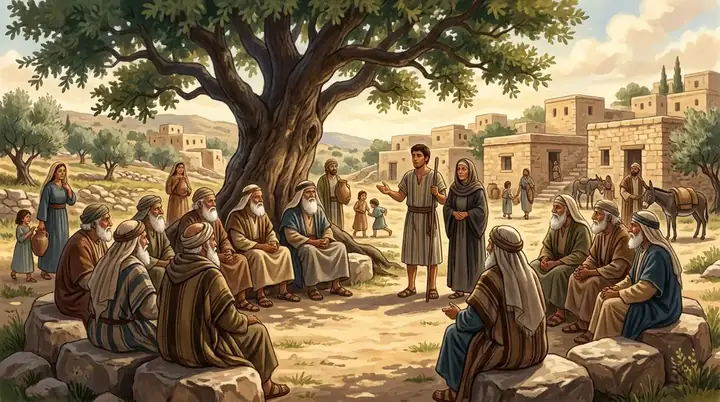
In a world of families and clans the natural leaders were the older men, the fathers and grandfathers. "Elder" was their title. When God sent Moses back to Egypt, he told him first to gather the elders of Israel (Exodus 3:16). Seventy of them went up Mount Sinai and ate before God (Exodus 24:9–11), and seventy were given a share of Moses' spirit to help him carry the people (Numbers 11:16–25). In every town the elders sat in the gate, where they settled quarrels, witnessed sales and judged cases (Deuteronomy 21:19; Deuteronomy 22:15; Ruth 4:1–11). The elders of the nation asked Samuel for a king (1 Samuel 8:4) and made David king at Hebron (2 Samuel 5:3).
In Jesus' day
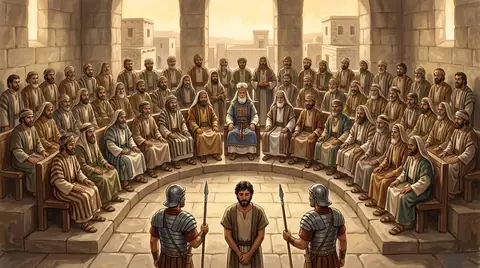
By the time of Jesus "the elders" were the lay members of the great council in Jerusalem, the Sanhedrin, sitting with the chief priests and the scribes. Jesus warned that he would suffer at their hands (Matthew 16:21), and it was this council that condemned him and handed him to Pilate (Mark 15:1).
In the church
The apostles carried the office over into the church. Paul and Barnabas appointed elders in every church they founded (Acts 14:23); the elders of Jerusalem met with the apostles to decide about the Gentiles (Acts 15); and Paul said farewell to the elders of Ephesus, calling them overseers and telling them to feed God's flock (Acts 20:17–28). Elders and bishops, or overseers, are the same men under two names, one for their standing and one for their work (Titus 1:5–7). They were to be men of good character, able to teach, not greedy, ruling their own homes well (1 Timothy 3:1–7; Titus 1:6–9). They were to be paid and honoured, especially those who preached (1 Timothy 5:17), to pray for the sick (James 5:14), and to lead by example, not by force (1 Peter 5:1–4). Peter and John both called themselves elders.
Key verses
- Exodus 3:16
Go, and gather the elders of Israel together, and say unto them, The Lord God of your fathers, the God of Abraham, of Isaac, and of Jacob, appeared unto me, saying, I have surely visited you, and seen that which is done to you in Egypt:
- Numbers 11:16–17
And the Lord said unto Moses, Gather unto me seventy men of the elders of Israel, whom thou knowest to be the elders of the people, and officers over them; and bring them unto the tabernacle of the congregation, that they may stand there with thee. And I will come down and talk with thee there: and I will take of the spirit which is upon thee, and will put it upon them; and they shall bear the burden of the people with thee, that thou bear it not thyself alone.
- Ruth 4:2
And he took ten men of the elders of the city, and said, Sit ye down here. And they sat down.
- Acts 14:23
And when they had ordained them elders in every church, and had prayed with fasting, they commended them to the Lord, on whom they believed.
- Acts 20:28
Take heed therefore unto yourselves, and to all the flock, over the which the Holy Ghost hath made you overseers, to feed the church of God, which he hath purchased with his own blood.
- 1 Peter 5:1–4
The elders which are among you I exhort, who am also an elder, and a witness of the sufferings of Christ, and also a partaker of the glory that shall be revealed: Feed the flock of God which is among you, taking the oversight thereof, not by constraint, but willingly; not for filthy lucre, but of a ready mind; Neither as being lords over God’s heritage, but being ensamples to the flock. …
Read next
 GroupThe council (Sanhedrin)The supreme Jewish court in Jerusalem, seventy-one chief priests, elders and scribes under the high priest. It…
 PersonMosesThe man God used to bring Israel out of Egypt, give them his Law at Sinai, and lead them for forty years in the…
 Place · NationEgyptThe great kingdom of the Nile, where Israel grew from a family into a nation and was then enslaved. The Exodus from…
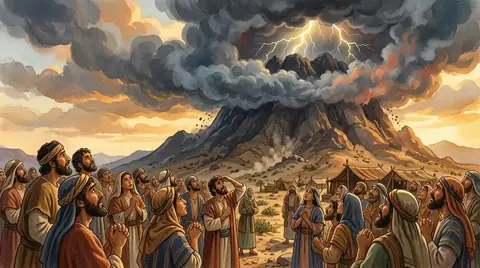 Place · MountainSinaiThe mountain where God came down in fire and smoke, spoke the Ten Commandments, and made his covenant with Israel. The…
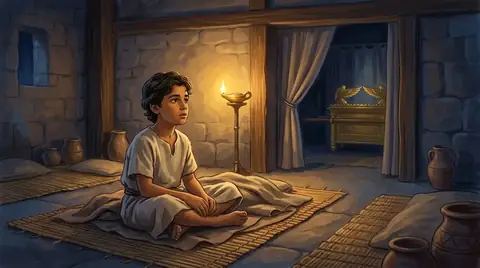 Person · Prophet and judgeSamuelThe prophet who led Israel from the time of the judges into the time of the kings. Given to God by his mother Hannah…
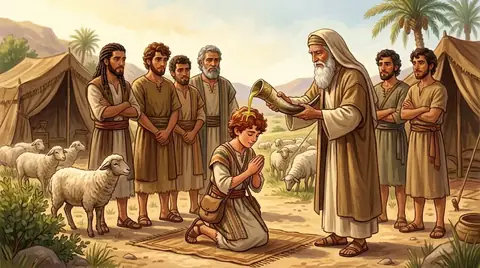 Person · KingDavidThe shepherd boy who killed Goliath and became Israel's greatest king, "a man after God's own heart". He wrote many…
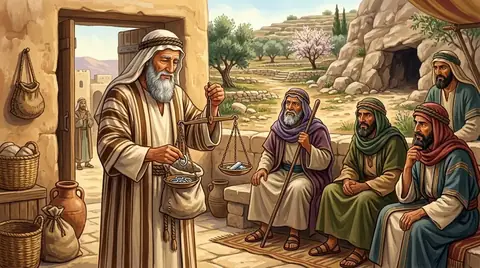 Place · CityHebronAn ancient city in the hills of Judah where Abraham lived and the patriarchs were buried in the cave of Machpelah.…
 Person · The Son of GodJesus ChristThe Son of God, born of the virgin Mary, who lived a sinless life, died on a cross for the sins of the world and rose…
Written for this app in its own words, from the Bible, with the facts checked against Bible dictionaries and encyclopedias: Easton's, Smith's, Fausset's, ISBE, Holman, the New Bible Dictionary, Vine's and the Thompson Chain topics.
