
Place · City
Hebron
HEE-brunAlso called Kirjath-arba · today Hebron, in the West Bank, 19 miles (30 km) south of Jerusalem
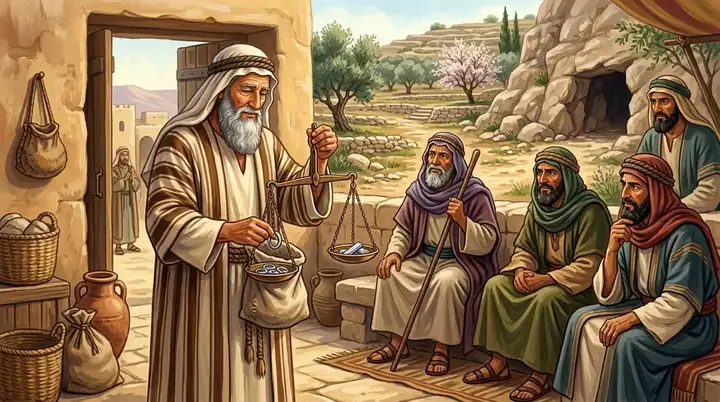
An ancient city in the hills of Judah where Abraham lived and the patriarchs were buried in the cave of Machpelah. Caleb won it from the giants, and David reigned there seven years before taking Jerusalem.
- Known for
- Where Abraham and the patriarchs were buried; Caleb's inheritance; David's first capital
- Buried here
- Sarah, Abraham, Isaac, Rebekah, Leah and Jacob, in the cave of Machpelah
- Height
- About 3,000 feet (900 m) above the sea, one of the highest towns in the land
- Meaning
- Fellowship, alliance
Where
Hebron sits high in the hill country of Judah, among vineyards and olive groves, on the road from Jerusalem south to Beersheba. The giant grapes the spies carried back came from the valley of Eshcol nearby (Numbers 13:22–23). It is one of the oldest cities in the world, "built seven years before Zoan in Egypt" (Numbers 13:22). Its earlier name, Kirjath-arba, "the city of Arba", came from the greatest of the Anakim, the giants who held it before Israel came (Joshua 14:15).
In the Old Testament
Abraham pitched his tent by the oaks of Mamre at Hebron and built an altar there (Genesis 13:18); there he welcomed three heavenly visitors, and there Sarah died. He bought the field and cave of Machpelah from Ephron the Hittite as a burying place, the only ground he ever owned in the land of promise (Genesis 23). Isaac, Rebekah, Leah, Jacob and Abraham himself were laid there too (Genesis 49:29–32; Genesis 50:13). Joseph set out from Hebron on the errand that ended in his being sold (Genesis 37:14).
Joshua took the city and killed its king (Joshua 10:36–37), and Caleb, at eighty-five, asked for "this mountain" and expelled the three giant sons of Anak from it (Joshua 14:12–15; Judges 1:20). Hebron became a priests' city and a city of refuge (Joshua 21:11–13). Samson carried the gates of Gaza to a hill facing it (Judges 16:3). After Saul's death David was anointed king of Judah at Hebron and reigned there seven and a half years; six of his sons were born there, including Amnon, Absalom and Adonijah; Abner was murdered and buried there; and there all Israel came to make David their king (2 Samuel 2:1–4; 2 Samuel 3:2–5, 27; 2 Samuel 5:1–5). Years later Absalom began his revolt from Hebron (2 Samuel 15:7–10). Rehoboam fortified it (2 Chronicles 11:10), and Jews lived there again after the exile (Nehemiah 11:25).
Today
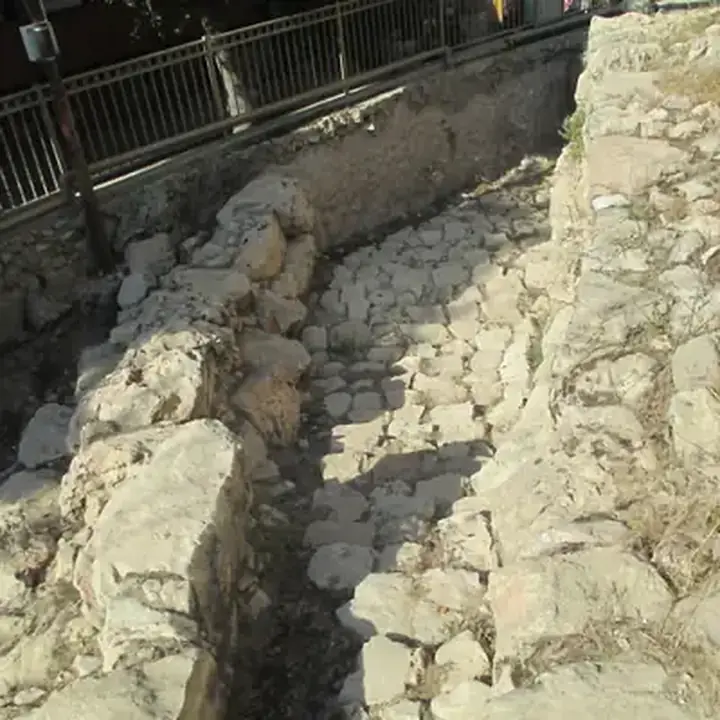
Hebron is a large city in the West Bank. Over the cave of Machpelah stands a great walled building begun by Herod, holy to Jews, Christians and Muslims as the tomb of Abraham.
Others with this name
Hebron the son of Kohath was a grandson of Levi and brother of Amram, Moses' father; his descendants, the Hebronites, served the tabernacle and later held offices under David (Exodus 6:18; 1 Chronicles 26:30–31). Another Hebron, of Caleb's family in Judah, is listed in 1 Chronicles 2:42–43.
Key verses
- Genesis 13:18
Then Abram removed his tent, and came and dwelt in the plain of Mamre, which is in Hebron, and built there an altar unto the Lord.
- Genesis 23:17–20
And the field of Ephron, which was in Machpelah, which was before Mamre, the field, and the cave which was therein, and all the trees that were in the field, that were in all the borders round about, were made sure Unto Abraham for a possession in the presence of the children of Heth, before all that went in at the gate of his city. And after this, Abraham buried Sarah his wife in the cave of the field of Machpelah before Mamre: the same is Hebron in the land of Canaan. …
- Joshua 14:13–15
And Joshua blessed him, and gave unto Caleb the son of Jephunneh Hebron for an inheritance. Hebron therefore became the inheritance of Caleb the son of Jephunneh the Kenezite unto this day, because that he wholly followed the Lord God of Israel. And the name of Hebron before was Kirjath–arba; which Arba was a great man among the Anakims. And the land had rest from war.
- 2 Samuel 2:1–4
And it came to pass after this, that David enquired of the Lord, saying, Shall I go up into any of the cities of Judah? And the Lord said unto him, Go up. And David said, Whither shall I go up? And he said, Unto Hebron. So David went up thither, and his two wives also, Ahinoam the Jezreelitess, and Abigail Nabal’s wife the Carmelite. And his men that were with him did David bring up, every man with his household: and they dwelt in the cities of Hebron. …
- 2 Samuel 5:1–5
Then came all the tribes of Israel to David unto Hebron, and spake, saying, Behold, we are thy bone and thy flesh. Also in time past, when Saul was king over us, thou wast he that leddest out and broughtest in Israel: and the Lord said to thee, Thou shalt feed my people Israel, and thou shalt be a captain over Israel. So all the elders of Israel came to the king to Hebron; and king David made a league with them in Hebron before the Lord: and they anointed David king over Israel. …
On the map
Mentioned in 57 verses
- Genesis 4
- Numbers 1
- Joshua 15
- Judges 3
- 1 Samuel 1
- 2 Samuel 21
- 1 Kings 1
- 1 Chronicles 9
- 2 Chronicles 1
- Nehemiah 1
Read next
 PersonCalebOne of the twelve spies Moses sent into Canaan, and with Joshua the only one who trusted God to give them the land.…
 PersonSarahAbraham's wife and the mother of Isaac. She waited past ninety for the son God had promised, laughed when she heard it…
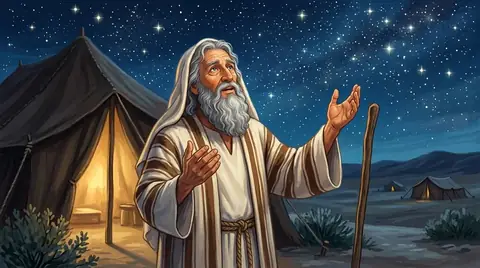 PersonAbrahamThe man God called out of Ur to a land he had never seen, promising him a people and a blessing for the whole world. He…
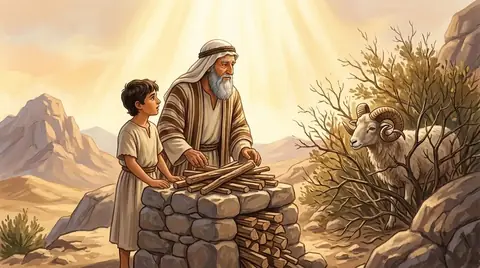 PersonIsaacThe son God promised to Abraham and Sarah when they were far too old for children, offered on Mount Moriah and spared.…
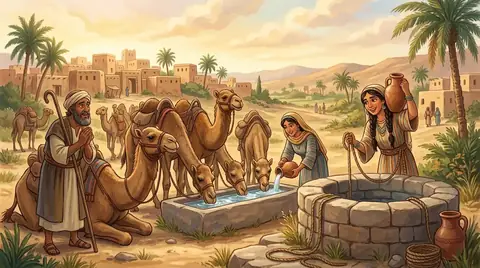 PersonRebekahIsaac's wife, found for him at a well far away in Abraham's homeland. She was told before her twins were born that the…
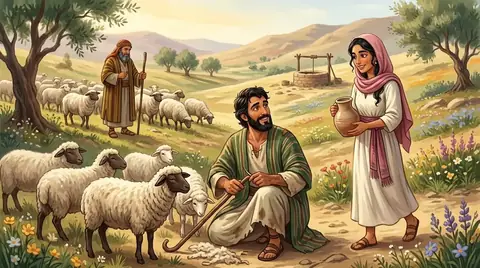 PersonLeahJacob's first wife, given to him by her father's trick in place of her sister Rachel. Less loved, she bore six of…
 PersonJacobIsaac's younger twin son, who won his brother's birthright and blessing by cunning, was changed by God, and was renamed…
 PlaceMachpelahThe cave near Hebron that Abraham bought as a grave for Sarah. Abraham, Isaac, Rebekah, Jacob and Leah were all buried…
Written for this app in its own words, from the Bible, with the facts checked against Bible dictionaries and encyclopedias: Easton's, Smith's, Fausset's, ISBE, Holman, the New Bible Dictionary, Vine's and the Thompson Chain topics. People and places: STEPBible.org (TIPNR), CC BY 4.0; where a place is today and its photo: OpenBible.info, CC BY 4.0.
