
Person
Pilate
PY-lutNew Testament · Roman governor of Judea AD 26–36 · Pontius Pilate
The Roman governor of Judea who tried Jesus. He said three times that he found no fault in him, yet handed him over to be crucified to keep the crowd quiet, and washed his hands of it.
- Office
- Governor (prefect) of Judea under the emperor Tiberius, based at Caesarea
- Known for
- The trial of Jesus; "What is truth?"; washing his hands
- Family
- His wife sent him a warning about "that just man" (Matthew 27:19)
Who he was
Pontius Pilate governed Judea for Rome for ten years. He lived at Caesarea on the coast and came up to Jerusalem at the feasts, when trouble was likely, bringing troops. The Jewish writers of the time paint him as hard and tactless: he brought the army's standards with the emperor's image into the city, took temple money for an aqueduct, and once had Galileans killed while they were sacrificing (Luke 13:1). Rome finally removed him for cruelty.
The trial of Jesus
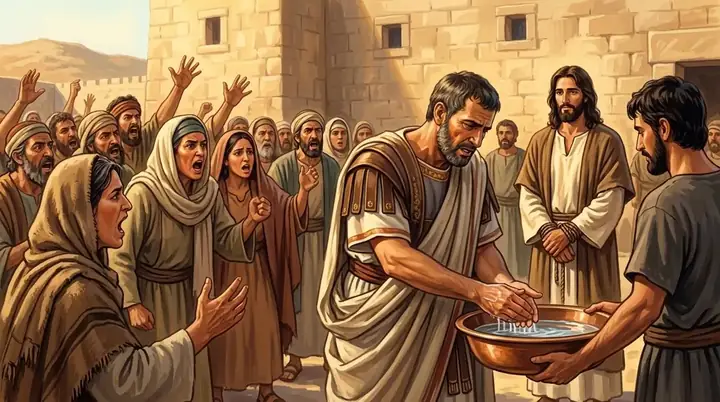
Early on the Friday of Passover week, the council brought Jesus to Pilate, because only Rome could carry out a death sentence. They accused him of stirring up rebellion and calling himself a king. Pilate questioned him inside the palace and heard that his kingdom was "not of this world"; "What is truth?" Pilate asked, and went out to declare, "I find in him no fault at all" (John 18:33–38). He tried every way to let him go. He sent him to Herod Antipas; he offered the crowd a choice between Jesus and the bandit Barabbas; he had him flogged and showed him to them, "Behold the man!" (John 19:5); his wife sent word of a troubling dream. But the chief priests had stirred the crowd to shout "Crucify him", and then came the threat that finished it: "If thou let this man go, thou art not Caesar's friend" (John 19:12). Pilate called for water, washed his hands before them all, and gave Jesus up to be crucified (Matthew 27:24–26).
He had the last word, in a way: the notice on the cross, "Jesus of Nazareth the King of the Jews", written in three languages, which he refused to change (John 19:19–22). That evening he let Joseph of Arimathea take the body, and the next day he gave the priests a guard for the tomb (Matthew 27:57–66).
What to learn
Pilate knew Jesus was innocent and said so. He was not malicious, only afraid for his position, and so he did what he knew was wrong. The early church named him in its preaching (Acts 4:27) and the creeds still say Jesus "suffered under Pontius Pilate": the Saviour's death was a real event, on a real day, under a real official who could have stopped it.
Key verses
- Luke 23:4
Then said Pilate to the chief priests and to the people, I find no fault in this man.
- John 18:37–38
Pilate therefore said unto him, Art thou a king then? Jesus answered, Thou sayest that I am a king. To this end was I born, and for this cause came I into the world, that I should bear witness unto the truth. Every one that is of the truth heareth my voice. Pilate saith unto him, What is truth? And when he had said this, he went out again unto the Jews, and saith unto them, I find in him no fault at all.
- John 19:12–16
And from thenceforth Pilate sought to release him: but the Jews cried out, saying, If thou let this man go, thou art not Cesar’s friend: whosoever maketh himself a king speaketh against Cesar. When Pilate therefore heard that saying, he brought Jesus forth, and sat down in the judgment seat in a place that is called the Pavement, but in the Hebrew, Gabbatha. And it was the preparation of the passover, and about the sixth hour: and he saith unto the Jews, Behold your King! …
- Matthew 27:24
When Pilate saw that he could prevail nothing, but that rather a tumult was made, he took water, and washed his hands before the multitude, saying, I am innocent of the blood of this just person: see ye to it.
- 1 Timothy 6:13
I give thee charge in the sight of God, who quickeneth all things, and before Christ Jesus, who before Pontius Pilate witnessed a good confession;
Mentioned in 53 verses
- Matthew 8
- Mark 10
- Luke 12
- John 19
- Acts 3
- 1 Timothy 1
Read next
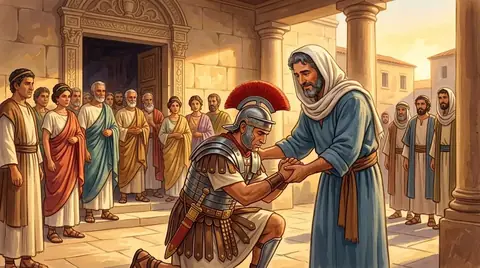 PlaceCaesareaThe Roman capital of Judea, a grand harbour city on the Mediterranean built by Herod the Great. Here Peter preached to…
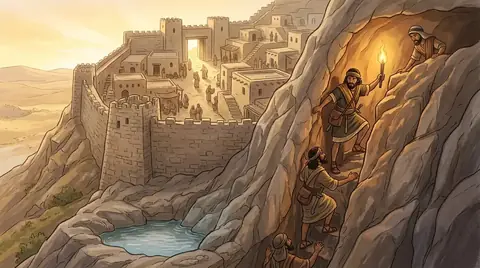 PlaceJerusalemThe city David made his capital and where Solomon built the temple. Jesus died and rose there and the church began…
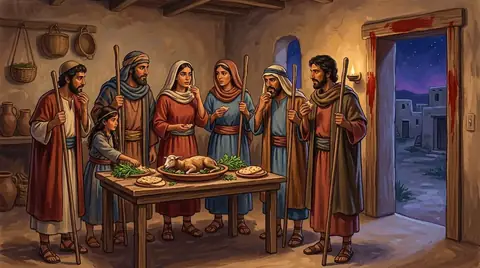 FeastPassoverThe yearly feast remembering the night God rescued Israel from Egypt, when death passed over every house marked with a…
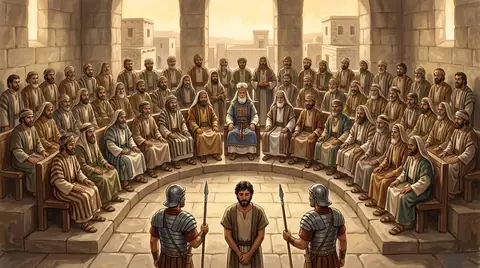 GroupThe council (Sanhedrin)The supreme Jewish court in Jerusalem, seventy-one chief priests, elders and scribes under the high priest. It…
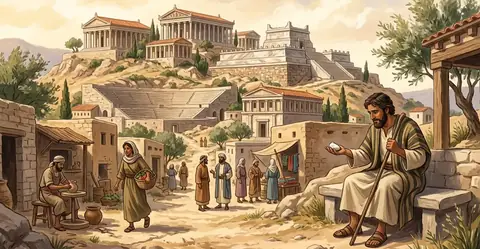 Person · MartyrAntipasA Christian of Pergamum whom the risen Jesus calls "my faithful martyr". He was killed for his faith in a city where…
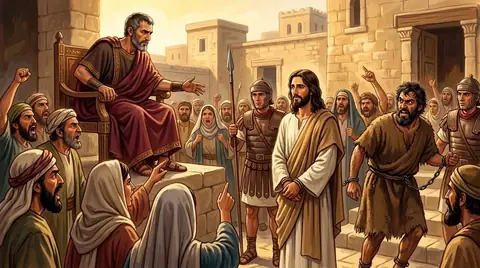 PersonBarabbasA rebel and murderer held in prison at the Passover when Jesus was tried. Pilate offered the crowd a choice, and the…
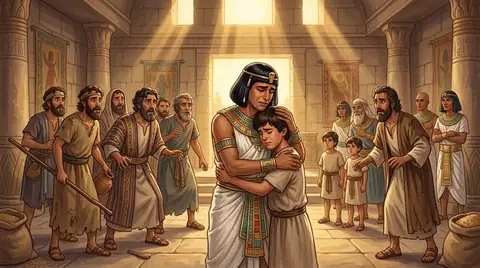 PersonJosephJacob's favourite son, sold by his brothers into Egypt, where he rose from prison to rule the land and saved his family…
Written for this app in its own words, from the Bible, with the facts checked against Bible dictionaries and encyclopedias: Easton's, Smith's, Fausset's, ISBE, Holman, the New Bible Dictionary, Vine's and the Thompson Chain topics. Also: Josephus, Antiquities and War; Philo. People and places: STEPBible.org (TIPNR), CC BY 4.0; where a place is today and its photo: OpenBible.info, CC BY 4.0.
