
Group
Gentiles
JEN-tilesThe Hebrew goyim and Greek ethne, "the nations"
Everyone who was not a Jew. Israel was kept apart from the nations, yet God had promised to bless them all through Abraham, and the gospel going to the Gentiles is the great story of the New Testament.
- Meaning
- "The nations", all peoples other than Israel
- Known for
- Blessed through Abraham (Genesis 12:3); the gospel to the nations (Acts 10–15)
- Where
- Isaiah 49:6; Matthew 28:19; Acts 10:45; Romans 1:16; Ephesians 2:11–22
Who they were
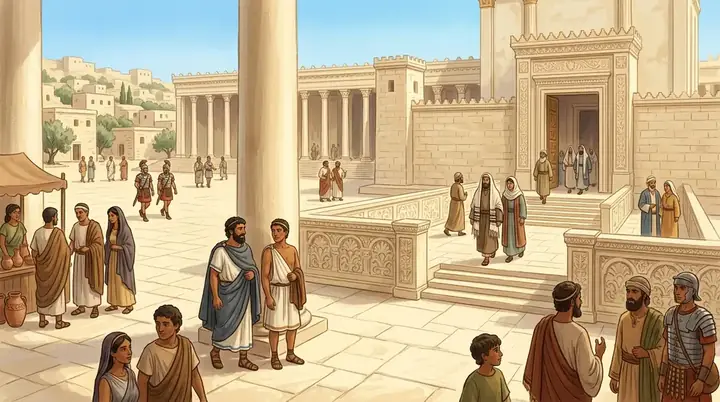
God chose Israel out of all the nations to be his own, and the law set them apart by circumcision, food rules and worship. In time "the nations" became a word for outsiders: idol-worshippers, unclean, not to be eaten with or married. By the time of Jesus a Gentile could enter only the outer court of the temple, the Court of the Gentiles, on pain of death (Acts 21:28–29).
In the Old Testament
Yet the separation was never the whole story. God told Abraham, "in thee shall all families of the earth be blessed" (Genesis 12:3). Gentiles keep turning up among God's people: Rahab of Jericho, Ruth of Moab, Naaman the Syrian, the sailors and city of Jonah's Nineveh. The prophets looked forward to the day when the nations would stream to Jerusalem to learn God's ways, and God's servant would be "a light to the Gentiles" (Isaiah 2:2–3; Isaiah 49:6).
In Jesus
Jesus was born "a light to lighten the Gentiles" (Luke 2:32), ministered in "Galilee of the Gentiles" (Matthew 4:15), and healed a Roman centurion's servant and a Canaanite woman's daughter, praising faith he had not found in Israel (Matthew 8:10–12; Matthew 15:28). His last command sent his disciples to "all nations" (Matthew 28:19).
In the church
It took a vision to get Peter into the house of the Gentile Cornelius, and when the Spirit fell on that household as on the Jews at Pentecost, the church had to admit "that God also to the Gentiles granted repentance unto life" (Acts 10:44–48; Acts 11:18). Paul became the apostle to the Gentiles, and the council at Jerusalem agreed they need not become Jews to be saved (Acts 15). Paul's letters explain it: the gospel is "to the Jew first, and also to the Greek" (Romans 1:16); Christ has broken down "the middle wall of partition" and made of the two "one new man" (Ephesians 2:14–15); Gentiles are wild branches grafted into Israel's olive tree, and should not boast over the natural ones (Romans 11:17–24).
For us
Most readers of this article are Gentiles. We are in God's family not by birth but by grace, "fellowheirs, and of the same body" (Ephesians 3:6).
Key verses
- Genesis 12:3
And I will bless them that bless thee, and curse him that curseth thee: and in thee shall all families of the earth be blessed.
- Isaiah 49:6
And he said, It is a light thing that thou shouldest be my servant to raise up the tribes of Jacob, and to restore the preserved of Israel: I will also give thee for a light to the Gentiles, that thou mayest be my salvation unto the end of the earth.
- Acts 10:45
And they of the circumcision which believed were astonished, as many as came with Peter, because that on the Gentiles also was poured out the gift of the Holy Ghost.
- Romans 1:16
For I am not ashamed of the gospel of Christ: for it is the power of God unto salvation to every one that believeth; to the Jew first, and also to the Greek.
- Ephesians 2:11–14
Wherefore remember, that ye being in time past Gentiles in the flesh, who are called Uncircumcision by that which is called the Circumcision in the flesh made by hands; That at that time ye were without Christ, being aliens from the commonwealth of Israel, and strangers from the covenants of promise, having no hope, and without God in the world: But now in Christ Jesus ye who sometimes were far off are made nigh by the blood of Christ. …
Read next
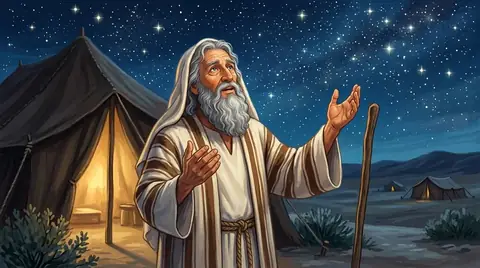 PersonAbrahamThe man God called out of Ur to a land he had never seen, promising him a people and a blessing for the whole world. He…
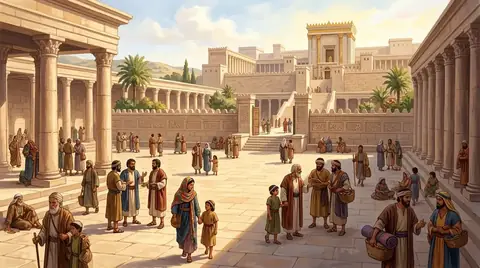 Place · WorshipThe Court of the GentilesThe huge outer court of Herod's temple, open to anyone. Jesus drove the traders out of it, and a wall with warning…
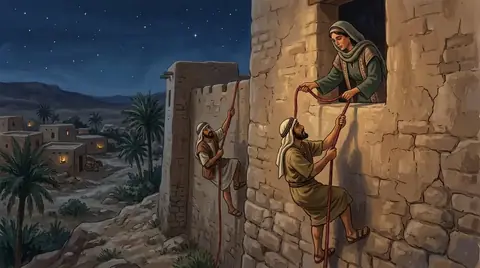 PersonRahabA woman of Jericho who hid Joshua's two spies because she believed in Israel's God. She and her family were spared when…
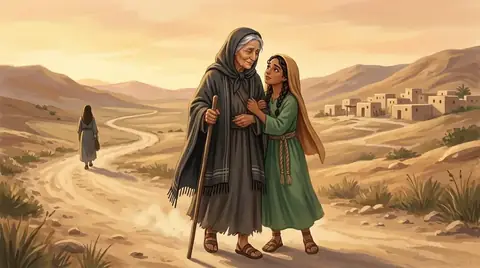 PersonRuthA young widow from Moab who left her own land to stay with her mother-in-law Naomi and trust Israel's God. She married…
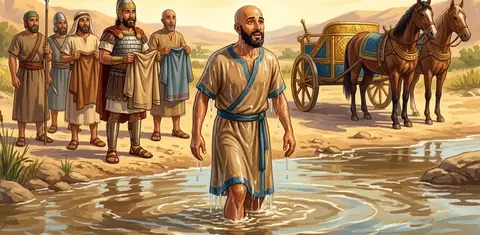 PersonNaamanThe Syrian general who had leprosy and was healed when he humbled himself and washed seven times in the Jordan at…
 PersonJonahThe prophet who ran from God's call to preach at Nineveh, was swallowed by a great fish, and then sulked when the city…
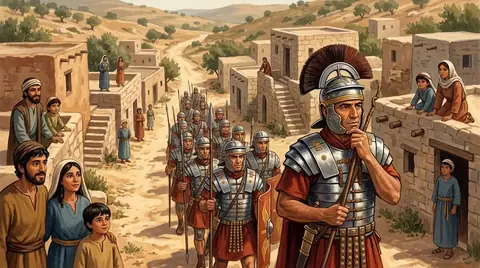 Group · RomeCenturionsRoman army officers, each commanding roughly a hundred men. Every centurion in the New Testament is shown in a good…
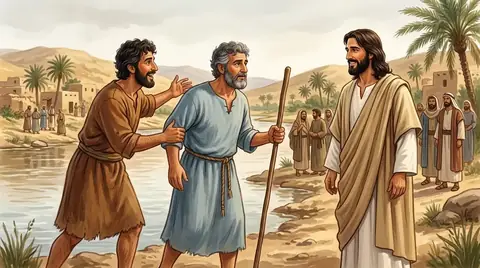 PersonPeterA Galilean fisherman who became the leader of the twelve apostles. Bold and impulsive, he confessed Jesus as the…
Written for this app in its own words, from the Bible, with the facts checked against Bible dictionaries and encyclopedias: Easton's, Smith's, Fausset's, ISBE, Holman, the New Bible Dictionary, Vine's and the Thompson Chain topics.
