
Name of God
Adonai (the Lord, my Master)
ad-oh-NYE
A Hebrew title for God meaning "my Lord" or "my Master". English Bibles print it as "Lord" in ordinary letters, while "LORD" in capitals stands for God's personal name.
- Meaning
- My Lord, my Master
- Where
- Genesis 15:2; Exodus 4:10; Psalms 110:1; Isaiah 6:1
- In English
- "Lord" (small letters); "LORD" is the name Yahweh
What it means
Adon is the ordinary Hebrew word for a master, the owner of a servant or the lord of a land. Adonai is a special form used of God: "my Lord", the one I belong to and obey. To call God Adonai is to say that he owns you and has the right to command you.
In the Bible
Abraham used it when he asked what God would give him, having no child (Genesis 15:2). Moses used it when he tried to get out of going to Pharaoh: "O my Lord, I am not eloquent" (Exodus 4:10). Isaiah saw "the Lord sitting upon a throne, high and lifted up" (Isaiah 6:1). The Jews came to treat God's own name, Yahweh, as too holy to pronounce, and read Adonai aloud in its place; that is why English Bibles print the name as "LORD" and Adonai as "Lord".
In Psalm 110 David writes, "The LORD said unto my Lord, Sit thou at my right hand" (Psalms 110:1): Yahweh speaks to someone David calls his Master. Jesus asked the Pharisees how the Messiah could be David's son if David called him Lord, and they had no answer (Matthew 22:41–46). The one who sits at God's right hand is both David's descendant and David's Lord.
For us
The first Christian confession was "Jesus is Lord" (Romans 10:9). It gives him the title the Old Testament gives to God, and it means what Adonai always meant: he is the Master, and we are his.
Key verses
- Genesis 15:2
And Abram said, Lord God, what wilt thou give me, seeing I go childless, and the steward of my house is this Eliezer of Damascus?
- Isaiah 6:1
In the year that king Uzziah died I saw also the Lord sitting upon a throne, high and lifted up, and his train filled the temple.
- Psalms 110:1
A Psalm of David. The Lord said unto my Lord, Sit thou at my right hand, until I make thine enemies thy footstool.
- Matthew 22:43–45
He saith unto them, How then doth David in spirit call him Lord, saying, The Lord said unto my Lord, Sit thou on my right hand, till I make thine enemies thy footstool? If David then call him Lord, how is he his son?
- Romans 10:9
That if thou shalt confess with thy mouth the Lord Jesus, and shalt believe in thine heart that God hath raised him from the dead, thou shalt be saved.
Read next
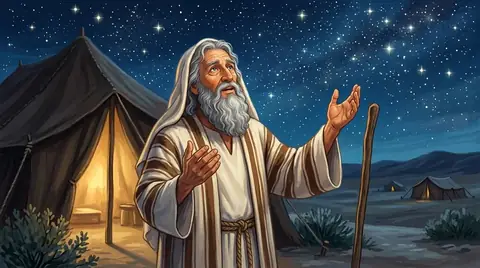 PersonAbrahamThe man God called out of Ur to a land he had never seen, promising him a people and a blessing for the whole world. He…
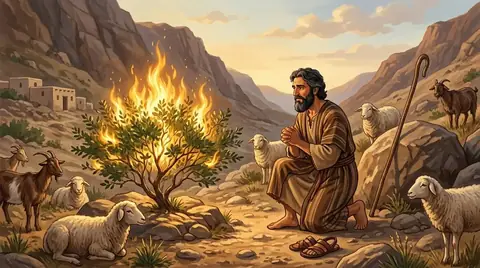 PersonMosesThe man God used to bring Israel out of Egypt, give them his Law at Sinai, and lead them for forty years in the…
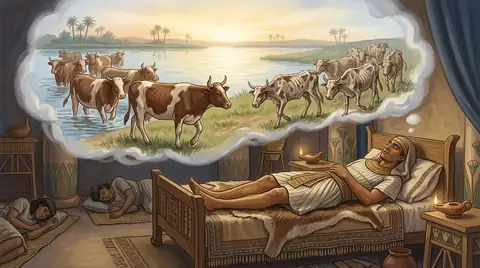 Title · RulerPharaohNot a personal name but the title borne by every king of Egypt, like "Caesar". The Bible names several, the best known…
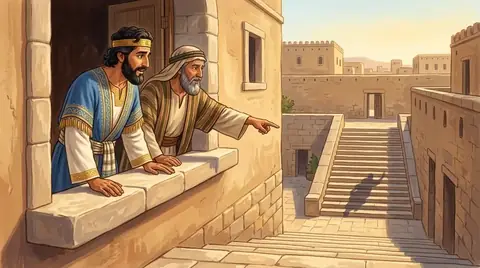 Person · ProphetIsaiahThe prophet of Jerusalem who served four kings, saw the LORD on his throne, and foretold the virgin's son, the…
 Name of GodThe LORD (God's own name)The personal name of God, YHWH, which English Bibles print as LORD in capital letters. God told it to Moses at the…
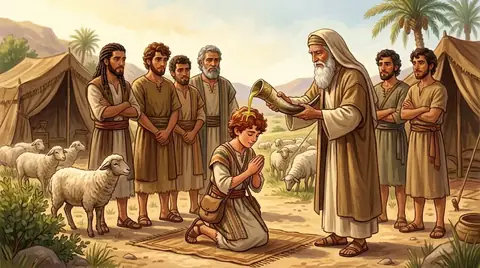 Person · KingDavidThe shepherd boy who killed Goliath and became Israel's greatest king, "a man after God's own heart". He wrote many…
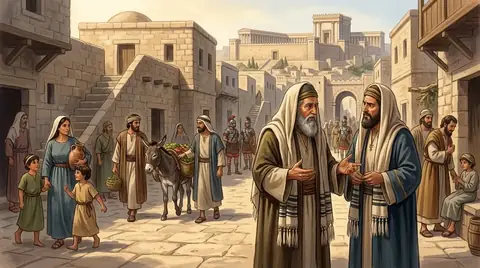 GroupPhariseesThe most exacting of the Jewish religious parties in Jesus' day, devoted to keeping the Law and the traditions added to…Teaching · Name of ChristMessiah"The Anointed One": the King, Prophet and Priest whom God promised to send to save his people. Jesus of Nazareth is the…
Written for this app in its own words, from the Bible, with the facts checked against Bible dictionaries and encyclopedias: Easton's, Smith's, Fausset's, ISBE, Holman, the New Bible Dictionary, Vine's and the Thompson Chain topics.
