

Name of God
The LORD (God's own name)
Hebrew YHWH, "Yahweh"; "Jehovah" in older Bibles · printed LORD in capitals
The personal name of God, YHWH, which English Bibles print as LORD in capital letters. God told it to Moses at the burning bush, linked to "I AM": the God who simply is and keeps his word.
- Hebrew
- YHWH, four letters; said "Yahweh"; "Jehovah" in old English Bibles
- In English
- LORD or GOD in capitals; "Lord" in small letters is Adonai, a title
- Linked to
- "I AM THAT I AM" (Exodus 3:14)
- Where
- Genesis 2:4; Exodus 3:13–15; Exodus 6:2–3; Exodus 34:5–7; Psalms 23:1
The name itself
Most of the time when an English Bible says "LORD" in small capital letters, the Hebrew has God's own name, four letters, YHWH. It appears nearly seven thousand times. Hebrew was written without vowels, and after the Old Testament period the Jews stopped saying the name aloud out of reverence, reading "Adonai", "my Lord", in its place. English Bibles have followed that custom. The form "Jehovah", found a few times in the KJV (Exodus 6:3; Psalms 83:18; Isaiah 26:4), comes from fitting the vowels of Adonai to the four letters; "Yahweh" is the way it was most likely said.
Given to Moses
At the burning bush Moses asked what he should say when the Israelites asked God's name. God answered, "I AM THAT I AM", and then, "The LORD God of your fathers… this is my name for ever" (Exodus 3:13–15). The name is tied to the Hebrew verb "to be": he is the one who is, who depends on nothing, who was there before Abraham and will be there at the end. God later told Moses that the patriarchs had known him as God Almighty, but by this name, in its full meaning, he had not been known to them (Exodus 6:2–3); now, in rescuing Israel from Egypt, he would show what the name meant.
What the name says
When Moses asked to see God's glory, God passed by and proclaimed his name: "The LORD, The LORD God, merciful and gracious, longsuffering, and abundant in goodness and truth" (Exodus 34:5–7). The name belongs to the God who makes covenants and keeps them, and he will not share it with idols: "I am the LORD: that is my name: and my glory will I not give to another" (Isaiah 42:8). Israel's creed begins with it: "Hear, O Israel: The LORD our God is one LORD" (Deuteronomy 6:4). So does its best-loved psalm: "The LORD is my shepherd" (Psalms 23:1).
In the New Testament
The Greek Old Testament translated the name as Kyrios, "Lord". When the first Christians called Jesus "Lord" they were giving him that title, and Paul quotes "whosoever shall call upon the name of the Lord shall be saved" of Jesus (Romans 10:13; Joel 2:32). Jesus himself said, "Before Abraham was, I am" (John 8:58), and his hearers picked up stones. See also Jehovah, Adonai and Lord of all.
Key verses
- Exodus 3:14–15
And God said unto Moses, I AM THAT I AM: and he said, Thus shalt thou say unto the children of Israel, I AM hath sent me unto you. And God said moreover unto Moses, Thus shalt thou say unto the children of Israel, The Lord God of your fathers, the God of Abraham, the God of Isaac, and the God of Jacob, hath sent me unto you: this is my name for ever, and this is my memorial unto all generations.
- Exodus 34:6–7
And the Lord passed by before him, and proclaimed, The Lord, The Lord God, merciful and gracious, longsuffering, and abundant in goodness and truth, Keeping mercy for thousands, forgiving iniquity and transgression and sin, and that will by no means clear the guilty; visiting the iniquity of the fathers upon the children, and upon the children’s children, unto the third and to the fourth generation.
- Deuteronomy 6:4
Hear, O Israel: The Lord our God is one Lord:
- Isaiah 42:8
I am the Lord: that is my name: and my glory will I not give to another, neither my praise to graven images.
- John 8:58
Jesus said unto them, Verily, verily, I say unto you, Before Abraham was, I am.
Read next
 PersonMosesThe man God used to bring Israel out of Egypt, give them his Law at Sinai, and lead them for forty years in the…
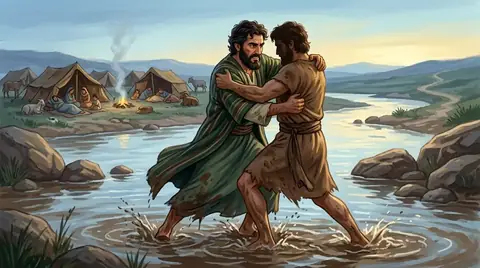 Person · NationIsraelThe new name God gave Jacob after he wrestled all night at Peniel, and from him the name of the whole nation of the…Teaching · Title of ChristLord of allPeter's words to Cornelius about Jesus. The risen Christ rules over Jew and Gentile, the living and the dead; "Jesus is…
Written for this app in its own words, from the Bible, with the facts checked against Bible dictionaries and encyclopedias: Easton's, Smith's, Fausset's, ISBE, Holman, the New Bible Dictionary, Vine's and the Thompson Chain topics.
