
Custom · Day of rest
The Sabbath
Hebrew shabbath, "to stop, to rest" · the seventh day of the week
The seventh day of the week, kept holy for rest and worship because God rested after creation. It was the sign of God's covenant with Israel; Jesus called himself its Lord.
- When
- Sunset on Friday to sunset on Saturday
- Commanded
- The fourth of the Ten Commandments (Exodus 20:8–11)
- Meaning
- Rest; a sign of the covenant; a memorial of creation and of the Exodus
- Also called
- The Lord's Day is the Christian first day, kept in its place
What it was
One day in every seven was set apart. Work stopped, for masters, servants, foreigners and even animals, and the day was "holy", belonging to God. The Sabbath begins at creation, when God finished his work and "rested on the seventh day" and blessed it (Genesis 2:2–3). Israel was reminded of it when the manna fell: a double portion came on the sixth day and none on the seventh (Exodus 16:23–30). Then at Mount Sinai it became the fourth of the Ten Commandments: "Remember the sabbath day, to keep it holy" (Exodus 20:8–11). Deuteronomy adds a second reason for it: Israel had been slaves in Egypt with no rest at all, and God had set them free (Deuteronomy 5:15).
How it was kept
No work was done, no fires lit, no loads carried, no trading. A man found gathering sticks on the Sabbath in the wilderness was put to death (Numbers 15:32–36). Extra sacrifices were offered at the tabernacle, and the showbread was changed. In later centuries the day became one of meeting: people gathered at the synagogue to pray and hear the Law read, as Jesus did "as his custom was" (Luke 4:16). Nehemiah shut the gates of Jerusalem to stop the Sabbath markets (Nehemiah 13:15–22), and Isaiah called the day "a delight" for those who honoured it (Isaiah 58:13–14).
Jesus and the Sabbath
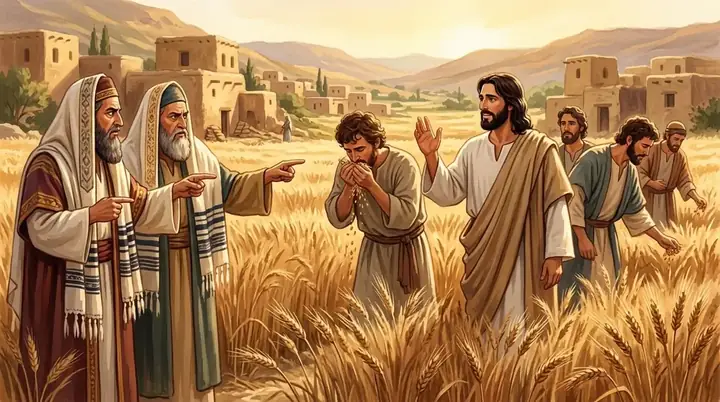
By Jesus' time the teachers had fenced the day with hundreds of rules about what counted as work. Jesus kept the Sabbath but refused the fences. He let his disciples pick ears of grain, healed a man's withered hand in the synagogue, and told a healed man to carry his mat (Matthew 12:1–13; John 5:8–10). "The sabbath was made for man, and not man for the sabbath", he said, and "the Son of man is Lord also of the sabbath" (Mark 2:27–28). The day was meant as a gift, and he was the one who had given it.
The first day
Jesus rose from the dead on the Sunday, the week's first day. From then on his followers met on that day to break bread (Acts 20:7; 1 Corinthians 16:2), and John calls it "the Lord's day" (Revelation 1:10). Christians have kept it ever since as their day of rest and worship. The deepest rest, Hebrews says, is still ahead: "There remaineth therefore a rest to the people of God" (Hebrews 4:9).
Key verses
- Genesis 2:2–3
And on the seventh day God ended his work which he had made; and he rested on the seventh day from all his work which he had made. And God blessed the seventh day, and sanctified it: because that in it he had rested from all his work which God created and made.
- Exodus 20:8–11
Remember the sabbath day, to keep it holy. Six days shalt thou labour, and do all thy work: But the seventh day is the sabbath of the Lord thy God: in it thou shalt not do any work, thou, nor thy son, nor thy daughter, thy manservant, nor thy maidservant, nor thy cattle, nor thy stranger that is within thy gates: …
- Isaiah 58:13–14
If thou turn away thy foot from the sabbath, from doing thy pleasure on my holy day; and call the sabbath a delight, the holy of the Lord, honourable; and shalt honour him, not doing thine own ways, nor finding thine own pleasure, nor speaking thine own words: Then shalt thou delight thyself in the Lord; and I will cause thee to ride upon the high places of the earth, and feed thee with the heritage of Jacob thy father: for the mouth of the Lord hath spoken it.
- Mark 2:27–28
And he said unto them, The sabbath was made for man, and not man for the sabbath: Therefore the Son of man is Lord also of the sabbath.
- Hebrews 4:9–10
There remaineth therefore a rest to the people of God. For he that is entered into his rest, he also hath ceased from his own works, as God did from his.
Read next
 Thing · SymbolMannaThe food God sent every morning to feed Israel in the desert for forty years. Jesus called himself the true bread from…
 Place · MountainSinaiThe mountain where God came down in fire and smoke, spoke the Ten Commandments, and made his covenant with Israel. The…
 Teaching · LawDecalogueThe Ten Commandments, which God spoke from Mount Sinai and wrote with his own finger on two stone tablets. They sum up…
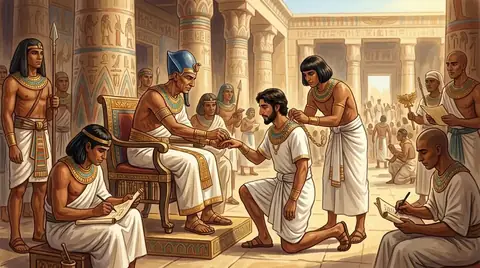 Place · NationEgyptThe great kingdom of the Nile, where Israel grew from a family into a nation and was then enslaved. The Exodus from…
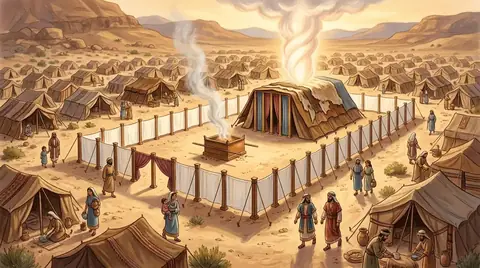 Thing · WorshipThe tabernacleThe holy tent Israel built in the wilderness, by God's own pattern, so that he could dwell in the middle of his people.…
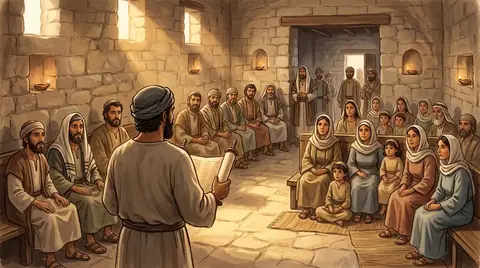 Custom · WorshipThe synagogueThe building where Jews in every town met on the Sabbath to pray, hear the Law and the Prophets read, and be taught.…
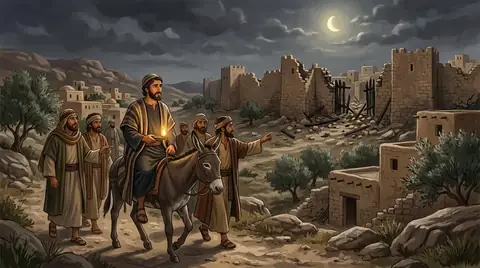 PersonNehemiahThe king of Persia's cupbearer who got leave to go to Jerusalem and rebuilt its broken walls in fifty-two days, despite…
 PlaceJerusalemThe city David made his capital and where Solomon built the temple. Jesus died and rose there and the church began…
Written for this app in its own words, from the Bible, with the facts checked against Bible dictionaries and encyclopedias: Easton's, Smith's, Fausset's, ISBE, Holman, the New Bible Dictionary, Vine's and the Thompson Chain topics.
