
Teaching · Law
Decalogue
DEK-a-logGreek for "ten words" · the Ten Commandments
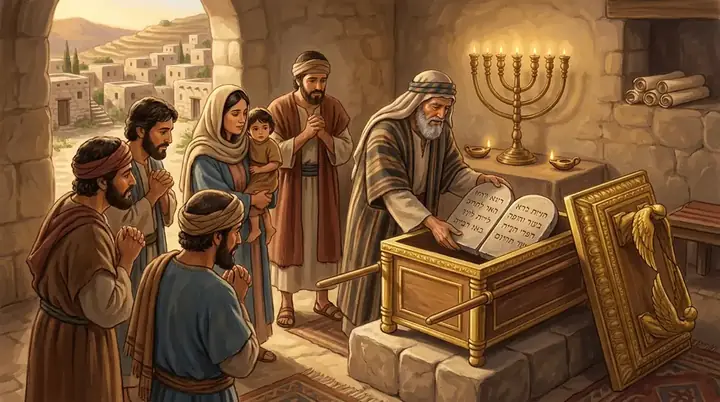
The Ten Commandments, which God spoke from Mount Sinai and wrote with his own finger on two stone tablets. They sum up what we owe to God and to our neighbour, and Jesus said he came to fulfil them.
- Where
- Exodus 20:1–17; Deuteronomy 5:6–21
- Called
- "The ten commandments" (Exodus 34:28), "the words of the covenant", "the tables of testimony" (Exodus 31:18)
- Kept in
- Inside the ark of the covenant, where Moses put the tablets (Deuteronomy 10:5)
- Jesus on them
- Matthew 5:17–19; Matthew 19:17–19; Matthew 22:37–40
What it is
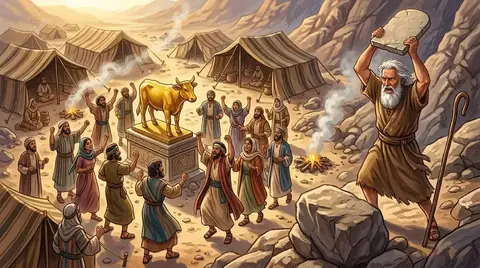
Decalogue is the Greek name for the "ten words" (Exodus 34:28). Three months out of Egypt, Israel stood at the foot of Mount Sinai while God spoke the ten from the fire and smoke, and the people begged that he speak through Moses instead (Exodus 20:18–19). God then wrote them on two tablets of stone (Exodus 31:18). When Moses came down and saw the golden calf, he smashed them; God wrote a second pair (Exodus 34:1), and they were kept inside the ark.
The two tables
The first commandments are about God: no other gods, no idols, no misuse of his name, keep the Sabbath. The rest are about people: honour your parents, do not murder, commit adultery, steal, lie about your neighbour or covet what is his. Jesus summed up the two tables as loving God with all your heart and loving your neighbour as yourself (Matthew 22:37–40). Christians have numbered them in slightly different ways, but all agree there are ten. Paul says the law is holy and good, and that it shows us our sin: "I had not known lust, except the law had said, Thou shalt not covet" (Romans 7:7).
In Jesus
Jesus said he had not come to destroy the law but to fulfil it (Matthew 5:17), and he went deeper than the letter: anger is murder in the heart, a lustful look is adultery (Matthew 5:21–28). He kept the commandments perfectly for us and died for our breaking of them. His people keep them now not to earn life but out of love, "for love is the fulfilling of the law" (Romans 13:10). See also Ten Commandments.
Key verses
- Exodus 20:1–17
And God spake all these words, saying, I am the Lord thy God, which have brought thee out of the land of Egypt, out of the house of bondage. Thou shalt have no other gods before me. …
- Exodus 31:18
And he gave unto Moses, when he had made an end of communing with him upon mount Sinai, two tables of testimony, tables of stone, written with the finger of God.
- Deuteronomy 5:6–21
I am the Lord thy God, which brought thee out of the land of Egypt, from the house of bondage. Thou shalt have none other gods before me. Thou shalt not make thee any graven image, or any likeness of any thing that is in heaven above, or that is in the earth beneath, or that is in the waters beneath the earth: …
- Matthew 22:37–40
Jesus said unto him, Thou shalt love the Lord thy God with all thy heart, and with all thy soul, and with all thy mind. This is the first and great commandment. And the second is like unto it, Thou shalt love thy neighbour as thyself. …
- Romans 13:9–10
For this, Thou shalt not commit adultery, Thou shalt not kill, Thou shalt not steal, Thou shalt not bear false witness, Thou shalt not covet; and if there be any other commandment, it is briefly comprehended in this saying, namely, Thou shalt love thy neighbour as thyself. Love worketh no ill to his neighbour: therefore love is the fulfilling of the law.
Read next
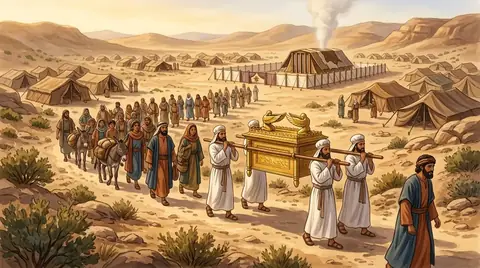 Thing · WorshipThe ark of the covenantThe gold-covered chest that held the Ten Commandments and stood in the Most Holy Place. God promised to meet with…
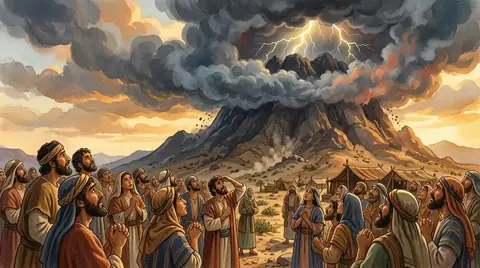 Place · MountainSinaiThe mountain where God came down in fire and smoke, spoke the Ten Commandments, and made his covenant with Israel. The…
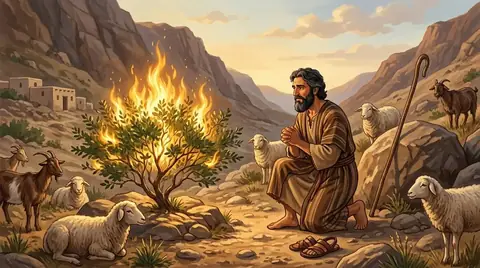 PersonMosesThe man God used to bring Israel out of Egypt, give them his Law at Sinai, and lead them for forty years in the…
 IdolThe golden calfThe image of a young bull that Aaron made at Sinai while Moses was on the mountain, and that Israel worshipped as the…
Written for this app in its own words, from the Bible, with the facts checked against Bible dictionaries and encyclopedias: Easton's, Smith's, Fausset's, ISBE, Holman, the New Bible Dictionary, Vine's and the Thompson Chain topics.
