
Custom · Worship
The synagogue
SIN-a-gogGreek synagoge, "a gathering" · the Jewish meeting house in every town
The building where Jews in every town met on the Sabbath to pray, hear the Law and the Prophets read, and be taught. Jesus and Paul preached in synagogues wherever they went, and the church's worship grew out of it.
- Began
- Probably in the exile, when there was no temple; everywhere by New Testament times
- Service
- Prayers, readings from the Law and the Prophets, a sermon, a blessing
- Run by
- A ruler of the synagogue (Mark 5:22) and elders; an attendant kept the scrolls (Luke 4:20)
- Also
- A school, a local court, and a place to give alms (Matthew 6:2; Matthew 10:17)
How it began
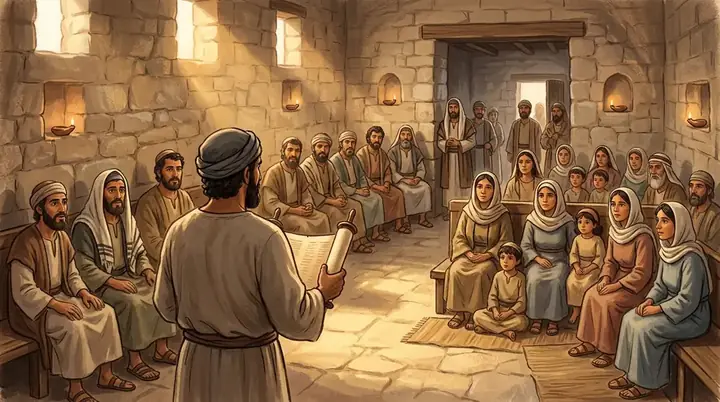
The Law gave Israel one place of sacrifice, the temple, but a people scattered across Babylon in the exile could not get there. They began to gather on the Sabbath to pray and hear the scriptures (Ezekiel 8:1; Ezekiel 14:1), and when they returned the habit came with them: Ezra read the Law from a wooden pulpit to all the people, and the Levites "gave the sense" (Nehemiah 8:4–8). By Jesus' day every town with ten Jewish men had a synagogue, and there were synagogues in every city of the Roman world where Jews lived (Acts 15:21). Jerusalem had many; one belonged to freed slaves (Acts 6:9). A Roman centurion built the one at Capernaum (Luke 7:5).
What happened there
A synagogue was a plain hall with benches round the walls, the best seats at the front for the elders (Matthew 23:6), and at the end nearest Jerusalem a chest, or ark, that held the scrolls. On the Sabbath the people met for prayers, then a passage from the Law was read, then one from the Prophets, and anyone the ruler invited might stand up to read and sit down to teach. That is how Jesus came to read Isaiah 61 in his home synagogue at Nazareth and tell them it was fulfilled that day (Luke 4:16–21), and how Paul was asked at Antioch in Pisidia whether he had "any word of exhortation" (Acts 13:15). The synagogue was also the local school and the local court, and could have offenders flogged (Matthew 10:17). To be "put out of the synagogue" was to lose one's whole community (John 9:22).
In the Gospels and Acts
Jesus taught and healed in synagogues throughout Galilee (Matthew 4:23): he cast out a demon at Capernaum (Mark 1:21–27), healed a withered hand (Matthew 12:9–13) and a woman bent double for eighteen years (Luke 13:10–17), and Jairus, a synagogue ruler, begged him to come to his dying daughter (Mark 5:22–23). Paul's rule in every new city was to go first to the synagogue and reason from the scriptures that Jesus was the Christ (Acts 17:1–4). Often he was thrown out, and then he turned to the Gentiles.
What it left behind
The first Christians were Jews, and they kept the synagogue's shape of worship: scripture read aloud, prayer, a sermon, a blessing. James still calls a Christian meeting an "assembly", the same word (James 2:2). The Christian church is the synagogue's child.
Key verses
- Nehemiah 8:8
So they read in the book in the law of God distinctly, and gave the sense, and caused them to understand the reading.
- Luke 4:16–21
And he came to Nazareth, where he had been brought up: and, as his custom was, he went into the synagogue on the sabbath day, and stood up for to read. And there was delivered unto him the book of the prophet Esaias. And when he had opened the book, he found the place where it was written, The Spirit of the Lord is upon me, because he hath anointed me to preach the gospel to the poor; he hath sent me to heal the brokenhearted, to preach deliverance to the captives, and recovering of sight to the blind, to set at liberty them that are bruised, …
- Acts 13:14–15
But when they departed from Perga, they came to Antioch in Pisidia, and went into the synagogue on the sabbath day, and sat down. And after the reading of the law and the prophets the rulers of the synagogue sent unto them, saying, Ye men and brethren, if ye have any word of exhortation for the people, say on.
- Acts 17:1–4
Now when they had passed through Amphipolis and Apollonia, they came to Thessalonica, where was a synagogue of the Jews: And Paul, as his manner was, went in unto them, and three sabbath days reasoned with them out of the scriptures, Opening and alleging, that Christ must needs have suffered, and risen again from the dead; and that this Jesus, whom I preach unto you, is Christ. …
- Acts 15:21
For Moses of old time hath in every city them that preach him, being read in the synagogues every sabbath day.
Read next
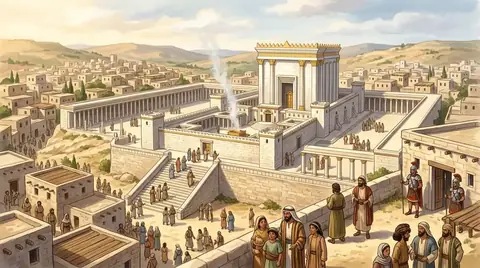 Thing · WorshipThe TempleGod's house in Jerusalem, where he was worshipped and the sacrifices offered. Solomon built it, Babylon burned it, the…
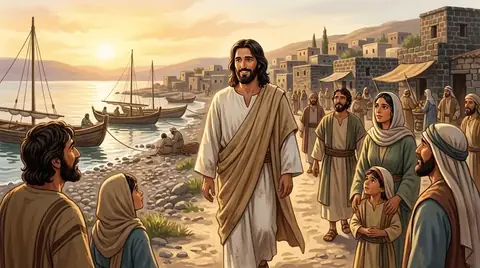 PlaceCapernaumA fishing town on the north shore of the Sea of Galilee that Jesus made his home. He taught in its synagogue and did…
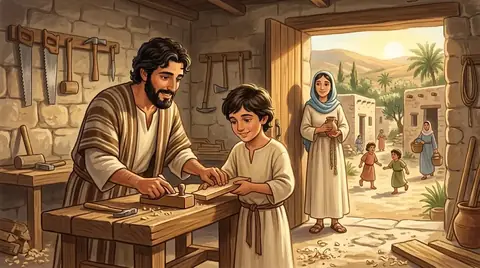 PlaceNazarethThe hill village in Galilee where Jesus grew up and where his own neighbours tried to throw him off a cliff. Gabriel…
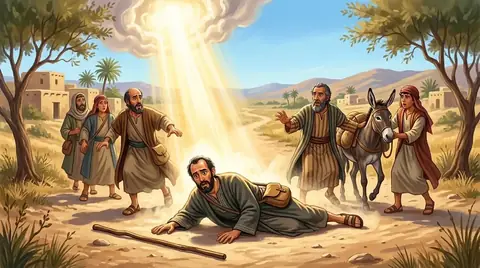 PersonPaulA Pharisee who hated the church until the risen Jesus met him on the road to Damascus. He became the apostle to the…
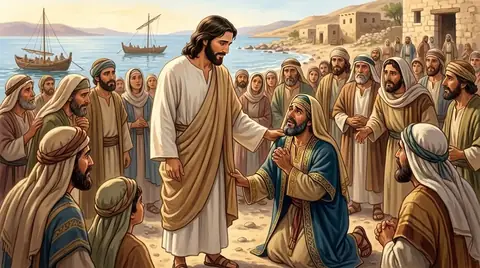 PersonJairusA ruler of a synagogue in Galilee who begged Jesus to come and heal his dying twelve-year-old daughter. When word came…
Written for this app in its own words, from the Bible, with the facts checked against Bible dictionaries and encyclopedias: Easton's, Smith's, Fausset's, ISBE, Holman, the New Bible Dictionary, Vine's and the Thompson Chain topics. Also: Edersheim, Sketches of Jewish Social Life.
