
Event · Teaching
Exile
Israel to Assyria from 734 BC · Judah to Babylon 605–586 BC · the return from 538 BC
The years when Israel and Judah were carried off from their land for their sins: Israel to Assyria, Judah to Babylon for seventy years. God brought a remnant home as he had promised.
- Israel
- Taken by Assyria in 734 and 722 BC (2 Kings 15:29; 2 Kings 17:6)
- Judah
- Taken to Babylon in three stages: 605, 597 and 586 BC (Daniel 1:1; 2 Kings 24:14; 2 Kings 25:11)
- Return
- Under Cyrus from 538 BC, with Zerubbabel, then Ezra and Nehemiah
- Also called
- The Captivity
Why it happened
Moses had warned that if Israel left God for idols, he would pull them up from the land and scatter them among the nations (Deuteronomy 28:63–64). For centuries the prophets repeated the warning, and for centuries the people ignored it. Exile was not bad luck; it was the covenant's penalty, carried out at last.
The northern kingdom
In the reign of Pekah the Assyrian king Tiglath-pileser took Galilee and Gilead and deported their people (2 Kings 15:29). About twelve years later Samaria fell after a three-year siege, and the ten tribes were resettled in Assyria and Media (2 Kings 17:6). Foreigners were moved in to take their place, and from them came the Samaritans. Israel as a kingdom never came back.
Judah in Babylon
Nebuchadnezzar came three times. In 605 BC he took Daniel and other young nobles, and vessels from the temple (Daniel 1:1–4). In 597 BC he carried off King Jehoiachin, the craftsmen and soldiers, thousands in all, leaving only the poorest (2 Kings 24:14); Ezekiel went with them. In 586 BC, after Zedekiah's revolt, he burned the city and the temple and took most of the rest (2 Kings 25:8–11). Jeremiah had said the exile would last seventy years (Jeremiah 25:11), and told the exiles to build houses, plant gardens and pray for the city they lived in (Jeremiah 29:5–7). Psalm 137 remembers their tears by the rivers of Babylon.
The return
When Babylon fell, Cyrus of Persia let the Jews go home and rebuild the temple (Ezra 1:1–4). Only a minority went; many stayed in Babylon, and Jewish communities lived there for centuries. The exile cured the nation of idols for good, and the synagogue grew out of those years without a temple.
For us
Peter calls believers "strangers and pilgrims" (1 Peter 2:11), living in a land that is not their home and looking for a better country (Hebrews 11:13–16).
Key verses
- Deuteronomy 28:64
And the Lord shall scatter thee among all people, from the one end of the earth even unto the other; and there thou shalt serve other gods, which neither thou nor thy fathers have known, even wood and stone.
- 2 Kings 17:6
In the ninth year of Hoshea the king of Assyria took Samaria, and carried Israel away into Assyria, and placed them in Halah and in Habor by the river of Gozan, and in the cities of the Medes.
- 2 Kings 25:11
Now the rest of the people that were left in the city, and the fugitives that fell away to the king of Babylon, with the remnant of the multitude, did Nebuzar–adan the captain of the guard carry away.
- Jeremiah 29:10
For thus saith the Lord, That after seventy years be accomplished at Babylon I will visit you, and perform my good word toward you, in causing you to return to this place.
- Ezra 1:1–3
Now in the first year of Cyrus king of Persia, that the word of the Lord by the mouth of Jeremiah might be fulfilled, the Lord stirred up the spirit of Cyrus king of Persia, that he made a proclamation throughout all his kingdom, and put it also in writing, saying, Thus saith Cyrus king of Persia, The Lord God of heaven hath given me all the kingdoms of the earth; and he hath charged me to build him an house at Jerusalem, which is in Judah. Who is there among you of all his people? his God be with him, and let him go up to Jerusalem, which is in Judah, and build the house of the Lord God of Israel, (he is the God,) which is in Jerusalem.
- 1 Peter 2:11
Dearly beloved, I beseech you as strangers and pilgrims, abstain from fleshly lusts, which war against the soul;
On the map
Read next
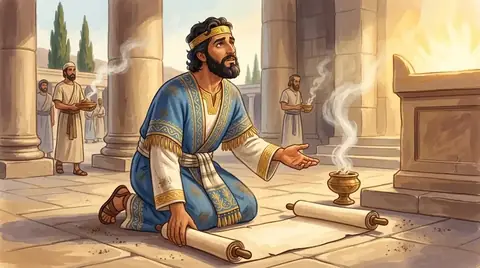 Place · EmpireAssyriaThe land and empire on the upper Tigris whose capital was Nineveh. Assyria crushed the northern kingdom of Israel in…
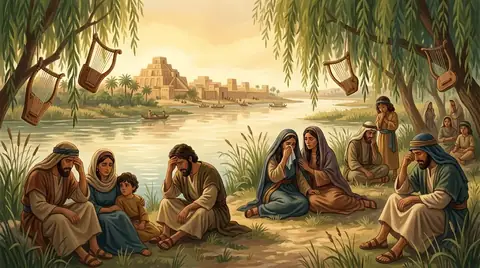 Place · CityBabylonThe great city on the Euphrates where the tower of Babel was built. Under Nebuchadnezzar it ruled the world, destroyed…
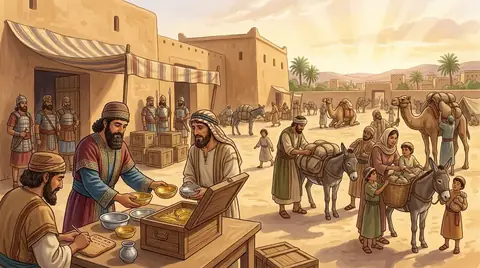 Person · King of PersiaCyrusThe Persian king who conquered Babylon and, in his first year there, let the Jews go home to rebuild the temple. Isaiah…
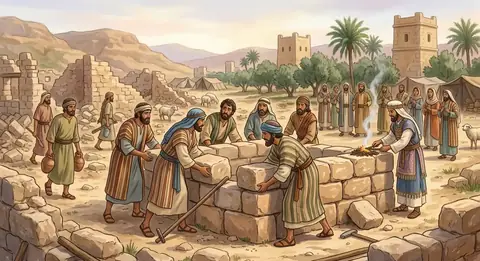 PersonZerubbabelThe prince of David's line who led the first exiles home from Babylon and rebuilt the temple in Jerusalem, finishing it…
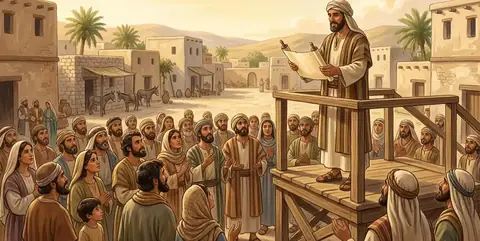 PersonEzraA priest and scribe who led a second group of exiles back from Babylon, taught the people God's law and read it to them…
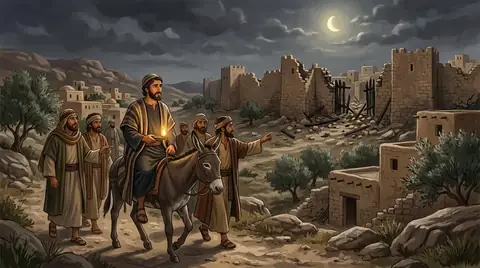 PersonNehemiahThe king of Persia's cupbearer who got leave to go to Jerusalem and rebuilt its broken walls in fifty-two days, despite…Teaching · HistoryCaptivityThe carrying away of Israel to Assyria and of Judah to Babylon as God's judgment for their sins, and the return of a…
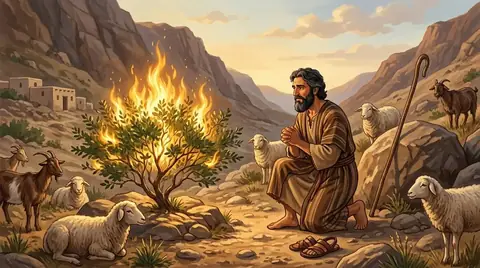 PersonMosesThe man God used to bring Israel out of Egypt, give them his Law at Sinai, and lead them for forty years in the…
Written for this app in its own words, from the Bible, with the facts checked against Bible dictionaries and encyclopedias: Easton's, Smith's, Fausset's, ISBE, Holman, the New Bible Dictionary, Vine's and the Thompson Chain topics.
