
Person · King
Nebuchadnezzar
neb-yoo-kad-NEZ-arKing of Babylon 605–562 BC · also spelt Nebuchadrezzar
The great king of Babylon who destroyed Jerusalem and its temple and carried Judah into exile. In Daniel he dreams of a statue and a tree, throws three men into a furnace, and is humbled until he praises the God of heaven.
- Meaning
- Nebo, protect my heir (Babylonian)
- Known for
- The fall of Jerusalem in 586 BC; Daniel's dreams; the fiery furnace; eating grass
- Family
- Son of Nabopolassar; his line ended with Belshazzar
- Where
- 2 Kings 24–25; Jeremiah 21–52; Daniel 1–4
His conquests
Nebuchadnezzar was the crown prince of Babylon when he smashed the Egyptian army at Carchemish on the Euphrates in 605 BC (Jeremiah 46:2). That year his father died and he became king. He marched on to Judah, took the city, and carried off treasures from the temple and young nobles for his court, Daniel among them (Daniel 1:1–6). When King Jehoiakim rebelled, he came again and in 597 BC took King Jehoiachin and ten thousand of the best people to Babylon, including Ezekiel (2 Kings 24:10–16). He set Zedekiah on the throne, and when he too rebelled, Nebuchadnezzar's army besieged Jerusalem for two years, broke in, burned the temple, the palace and the houses, and pulled down the walls (2 Kings 25:1–10). Zedekiah's sons were killed before him and his eyes put out. Later Nebuchadnezzar besieged Tyre for thirteen years and invaded Egypt, as Ezekiel and Jeremiah had foretold (Ezekiel 29:18; Jeremiah 46:13).
God's servant
Strangely, God calls this heathen king "my servant" (Jeremiah 25:9; Jeremiah 27:6). Jeremiah told Judah that God had handed the nations to Nebuchadnezzar for a time and that resisting him was resisting God. He was the rod God used to punish his people, and when his work was done Babylon would fall in its turn (Jeremiah 25:12).
In the book of Daniel
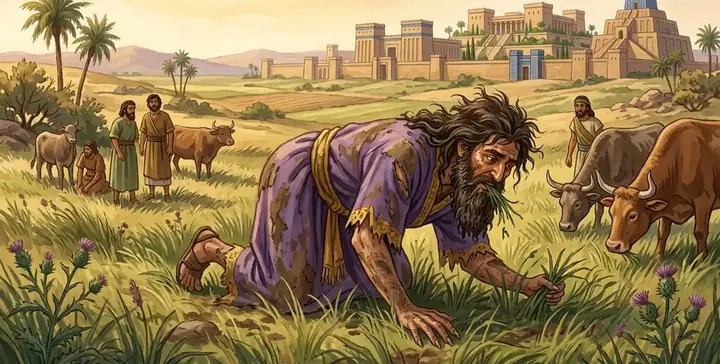
Daniel shows the other side of the man. He dreamed of a huge statue of gold, silver, bronze, iron and clay, smashed by a stone cut without hands; Daniel told him he was the head of gold, and that God's kingdom would outlast every empire (Daniel 2). He built a golden statue and threw Shadrach, Meshach and Abednego into a furnace for refusing to bow; a fourth figure walked with them in the fire, and the king blessed their God (Daniel 3). Then he dreamed of a great tree cut down. A year later, boasting of the Babylon he had built, he lost his mind, lived like an animal and ate grass for seven years, until he looked up to heaven and his reason came back. His last recorded words praise the King of heaven, "those that walk in pride he is able to abase" (Daniel 4:37).
What to learn
The most powerful man on earth was a tool in God's hand, and had to learn that heaven rules. Pride ends in grass; humility ends in praise.
Key verses
- 2 Kings 25:8–10
And in the fifth month, on the seventh day of the month, which is the nineteenth year of king Nebuchadnezzar king of Babylon, came Nebuzar–adan, captain of the guard, a servant of the king of Babylon, unto Jerusalem: And he burnt the house of the Lord, and the king’s house, and all the houses of Jerusalem, and every great man’s house burnt he with fire. And all the army of the Chaldees, that were with the captain of the guard, brake down the walls of Jerusalem round about.
- Jeremiah 25:9
Behold, I will send and take all the families of the north, saith the Lord, and Nebuchadrezzar the king of Babylon, my servant, and will bring them against this land, and against the inhabitants thereof, and against all these nations round about, and will utterly destroy them, and make them an astonishment, and an hissing, and perpetual desolations.
- Daniel 2:37–38
Thou, O king, art a king of kings: for the God of heaven hath given thee a kingdom, power, and strength, and glory. And wheresoever the children of men dwell, the beasts of the field and the fowls of the heaven hath he given into thine hand, and hath made thee ruler over them all. Thou art this head of gold.
- Daniel 3:28
Then Nebuchadnezzar spake, and said, Blessed be the God of Shadrach, Meshach, and Abed–nego, who hath sent his angel, and delivered his servants that trusted in him, and have changed the king’s word, and yielded their bodies, that they might not serve nor worship any god, except their own God.
- Daniel 4:37
Now I Nebuchadnezzar praise and extol and honour the King of heaven, all whose works are truth, and his ways judgment: and those that walk in pride he is able to abase.
On the map
Family
- Children
- Belshazzar
Mentioned in 88 verses
- 2 Kings 6
- 1 Chronicles 1
- 2 Chronicles 4
- Ezra 5
- Nehemiah 1
- Esther 1
- Jeremiah 37
- Ezekiel 4
- Daniel 29
Read next
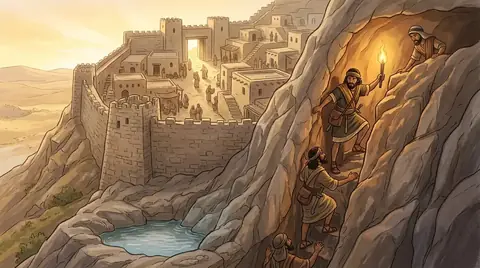 PlaceJerusalemThe city David made his capital and where Solomon built the temple. Jesus died and rose there and the church began…
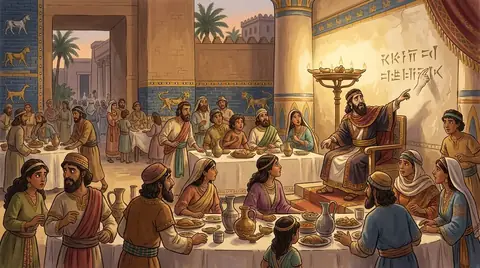 PersonBelshazzarThe ruler of Babylon who drank from the temple's holy cups at a great feast and saw a hand write on the wall. Daniel…Place · CityCarchemishA great fortress city on the Euphrates, guarding the main river crossing. There in 605 BC the Babylonians crushed the…
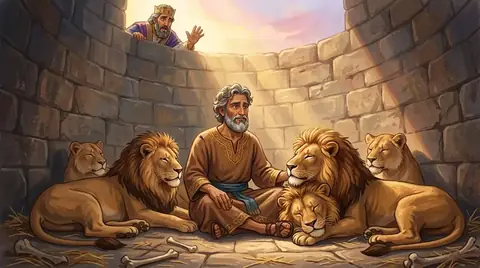 Person · ProphetDanielA young noble of Judah carried off to Babylon, who served four kings with wisdom and never bent his faith. God gave him…PersonJehoiakimThe king of Judah who cut up Jeremiah's scroll and burned it in his fire. Put on the throne by Pharaoh, he rebelled…
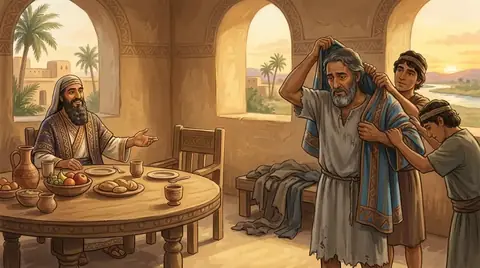 PersonJehoiachinThe young king of Judah who reigned three months before surrendering Jerusalem to Nebuchadnezzar. He spent thirty-seven…
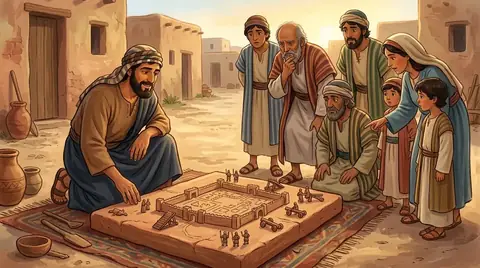 PersonEzekielA priest and prophet taken to Babylon with the exiles from Judah. By the river Chebar he saw visions of God's glory and…
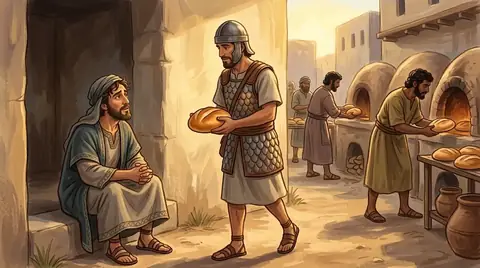 PersonZedekiahThe last king of Judah, put on the throne by Nebuchadnezzar and then rebelling against him. He would not heed Jeremiah…
Written for this app in its own words, from the Bible, with the facts checked against Bible dictionaries and encyclopedias: Easton's, Smith's, Fausset's, ISBE, Holman, the New Bible Dictionary, Vine's and the Thompson Chain topics. People and places: STEPBible.org (TIPNR), CC BY 4.0; where a place is today and its photo: OpenBible.info, CC BY 4.0.
