
Person
Zerubbabel
zeh-RUB-ah-belOld Testament · about 538–515 BC · "Zorobabel" in the New Testament
The prince of David's line who led the first exiles home from Babylon and rebuilt the temple in Jerusalem, finishing it with Haggai and Zechariah cheering him on.
- Family
- Grandson of King Jehoiachin; son of Shealtiel (or of his brother Pedaiah, 1 Chronicles 3:19); ancestor of Joseph
- Known for
- Leading the return, laying the temple's foundation, finishing it in 515 BC
- Meaning
- Seed of Babylon, where he was born
- Also called
- Perhaps Sheshbazzar, the "prince of Judah" (Ezra 1:8)
The return
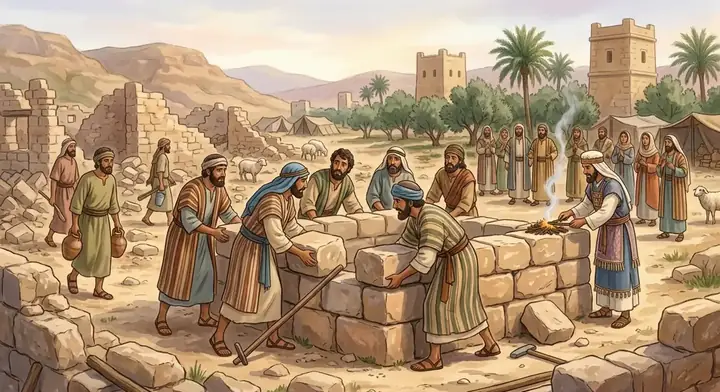
When Cyrus of Persia let the Jews go home in 538 BC, Zerubbabel led the first company, some 42,000 people, with Joshua the high priest (Ezra 2:2, 64). Though born in Babylon, he was a grandson of King Jehoiachin, the heir of David's line, and the Persians made him governor of Judah (Haggai 1:1). In the seventh month they built the altar on its old site and kept the Feast of Tabernacles, and in the second year they laid the temple's foundation. The young shouted for joy; the old men who remembered Solomon's temple wept (Ezra 3).
The work stopped and started
Enemies offered to help and were refused, then wrote to the Persian court and had the work stopped for years (Ezra 4). The people drifted into building their own panelled houses while God's house lay waste. In 520 BC the prophets Haggai and Zechariah stirred them up. God said to Zerubbabel, "be strong... and work: for I am with you" (Haggai 2:4), and promised that the glory of this house would be greater than the first. Zechariah's word for him has become famous: "Not by might, nor by power, but by my spirit, saith the LORD of hosts" (Zechariah 4:6). The mountain would become a plain before him, and the hands that laid the foundation would finish it (Zechariah 4:7–9). They did, in 515 BC (Ezra 6:15).
God's signet ring
God called Zerubbabel his servant and said he would make him "as a signet" (Haggai 2:23), the ring a king seals with. He never wore a crown; but both Matthew and Luke list him in the line that led to Jesus (Matthew 1:12; Luke 3:27), and in him the royal line came home from exile to build God's house, as a greater Son of David would.
Key verses
- Ezra 3:8
Now in the second year of their coming unto the house of God at Jerusalem, in the second month, began Zerubbabel the son of Shealtiel, and Jeshua the son of Jozadak, and the remnant of their brethren the priests and the Levites, and all they that were come out of the captivity unto Jerusalem; and appointed the Levites, from twenty years old and upward, to set forward the work of the house of the Lord.
- Haggai 2:4
Yet now be strong, O Zerubbabel, saith the Lord; and be strong, O Joshua, son of Josedech, the high priest; and be strong, all ye people of the land, saith the Lord, and work: for I am with you, saith the Lord of hosts:
- Haggai 2:23
In that day, saith the Lord of hosts, will I take thee, O Zerubbabel, my servant, the son of Shealtiel, saith the Lord, and will make thee as a signet: for I have chosen thee, saith the Lord of hosts.
- Zechariah 4:6
Then he answered and spake unto me, saying, This is the word of the Lord unto Zerubbabel, saying, Not by might, nor by power, but by my spirit, saith the Lord of hosts.
- Matthew 1:12
And after they were brought to Babylon, Jechonias begat Salathiel; and Salathiel begat Zorobabel;
On the map
Family
- Parents
- Pedaiah
- Brothers and sisters
- Shimei
- Children
- Meshullam, Hananiah, Shelomith, Hashubah, Ohel, Berechiah, Hasadiah, Jushab-hesed, Abiud
Mentioned in 27 verses
- 1 Chronicles 1
- Ezra 10
- Nehemiah 3
- Haggai 7
- Zechariah 4
- Matthew 2
Read next
 PersonJehoiachinThe young king of Judah who reigned three months before surrendering Jerusalem to Nebuchadnezzar. He spent thirty-seven…
 PersonJosephJacob's favourite son, sold by his brothers into Egypt, where he rose from prison to rule the land and saved his family…
 Person · King of PersiaCyrusThe Persian king who conquered Babylon and, in his first year there, let the Jews go home to rebuild the temple. Isaiah…
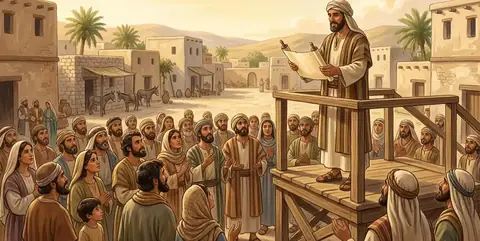 PersonJeshuaA name shared by several men of the return from Babylon, above all Jeshua the high priest, who rebuilt the altar, and a…
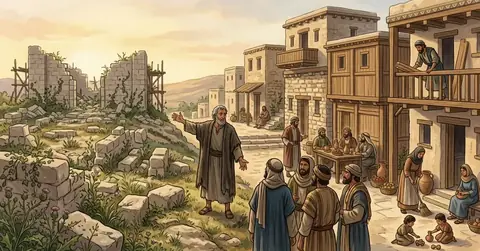 PersonHaggaiThe prophet who, in 520 BC, roused the Jews back from exile to finish rebuilding the temple they had neglected for…
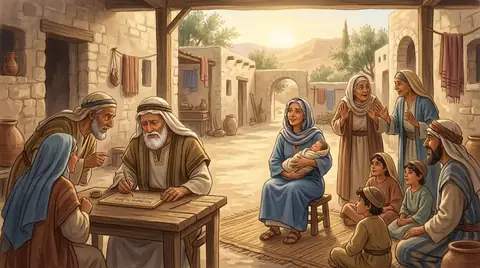 PersonZechariahThe prophet who, with Haggai, urged the returned exiles to rebuild the temple, and whose book foretells the humble King…
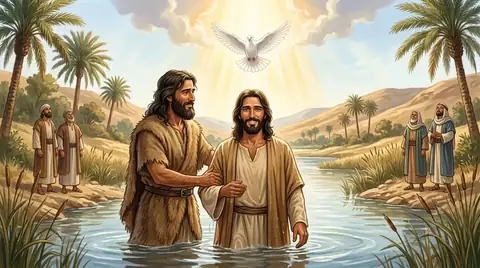 Person · The Son of GodJesus ChristThe Son of God, born of the virgin Mary, who lived a sinless life, died on a cross for the sins of the world and rose…PersonPedaiahA son of King Jehoiachin, born in exile in Babylon. Chronicles names him as the father of Zerubbabel, the leader of the…
Written for this app in its own words, from the Bible, with the facts checked against Bible dictionaries and encyclopedias: Easton's, Smith's, Fausset's, ISBE, Holman, the New Bible Dictionary, Vine's and the Thompson Chain topics. People and places: STEPBible.org (TIPNR), CC BY 4.0; where a place is today and its photo: OpenBible.info, CC BY 4.0.
