
Group · People
Samaritans
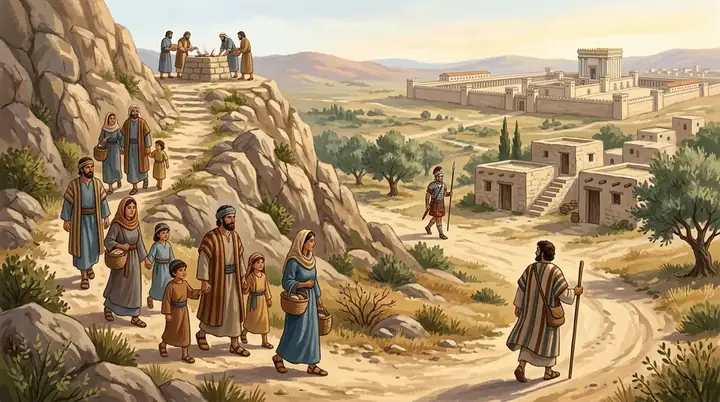
The people of the region of Samaria, between Judea and Galilee
The mixed people of central Israel, descended from Israelites left behind by the Assyrians and settlers brought in from abroad. They worshipped on Mount Gerizim, and Jews would have nothing to do with them.
- Origin
- Israelites left after 722 BC, mixed with settlers from Assyria's empire (2 Kings 17:24)
- Worship
- A temple on Mount Gerizim; only the five books of Moses
- Relations
- "The Jews have no dealings with the Samaritans" (John 4:9)
- Today
- A few hundred still live near Nablus and keep the Passover on Gerizim
Where they came from
When Assyria conquered the northern kingdom in 722 BC it deported much of the population of Samaria and moved in people from Babylon and other parts of its empire (2 Kings 17:24). The newcomers brought their gods, and after lions attacked them a priest was sent back to teach them "the manner of the God of the land". The result was a mixed religion: "They feared the LORD, and served their own gods" (2 Kings 17:33). Over time they married the Israelites who remained and became a people of their own.
The quarrel with the Jews
When the exiles came back from Babylon to rebuild the temple, the Samaritans offered to help and were refused (Ezra 4:1–5). They turned to hindering the work instead, and the hostility never healed. The Samaritans built their own temple on Mount Gerizim above Shechem and kept only the five books of Moses, rejecting the prophets and the Psalms. A Jewish ruler destroyed that temple in the second century BC, which did not help. In Jesus' day the two peoples avoided each other; a Jew travelling from Judea to Galilee would often cross the Jordan rather than go through Samaria, and to call a man a Samaritan was an insult, one Jesus' enemies threw at him (John 8:48).
Jesus and the Samaritans
Jesus walked straight through Samaria and sat down at Jacob's well to talk with a Samaritan woman, who was astonished that he would even ask her for a drink; many in her town believed (John 4:4–42). When a Samaritan village would not receive him he refused to call down fire on it (Luke 9:52–56). Of ten lepers he healed, the only one who came back to thank him was a Samaritan (Luke 17:16). And in his best-loved parable it is a Samaritan, not the priest or the Levite, who stops to help the wounded man (Luke 10:30–37). His hearers would have found that shocking.
The church
Jesus told the apostles they would be his witnesses "in Samaria" (Acts 1:8). Philip preached there with great success, and Peter and John came and prayed for the Holy Spirit to fall on the new believers, a sign that the old wall was down (Acts 8:5–25).
Key verses
- 2 Kings 17:24
And the king of Assyria brought men from Babylon, and from Cuthah, and from Ava, and from Hamath, and from Sepharvaim, and placed them in the cities of Samaria instead of the children of Israel: and they possessed Samaria, and dwelt in the cities thereof.
- John 4:9
Then saith the woman of Samaria unto him, How is it that thou, being a Jew, askest drink of me, which am a woman of Samaria? for the Jews have no dealings with the Samaritans.
- Luke 10:33
But a certain Samaritan, as he journeyed, came where he was: and when he saw him, he had compassion on him,
- Luke 17:16
And fell down on his face at his feet, giving him thanks: and he was a Samaritan.
- Acts 8:14–17
Now when the apostles which were at Jerusalem heard that Samaria had received the word of God, they sent unto them Peter and John: Who, when they were come down, prayed for them, that they might receive the Holy Ghost: (For as yet he was fallen upon none of them: only they were baptized in the name of the Lord Jesus.) …
On the map
Read next
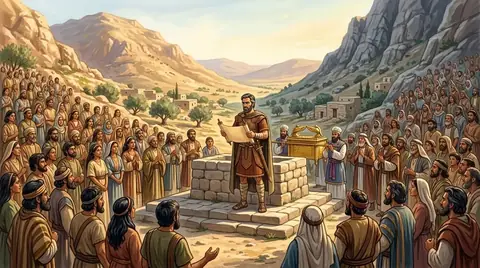 Place · MountainMount GerizimThe mountain south of Shechem, facing Mount Ebal. Israel spoke the blessings of the law from it, Jotham told his…
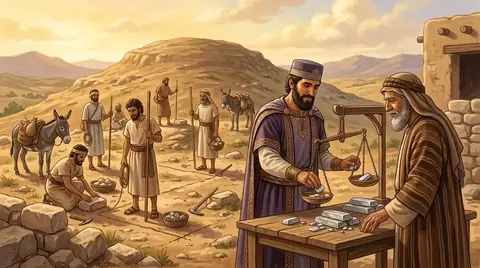 Place · City and regionSamariaThe hill city Omri built as capital of the northern kingdom of Israel. It saw Ahab and Jezebel, Elijah and Elisha…
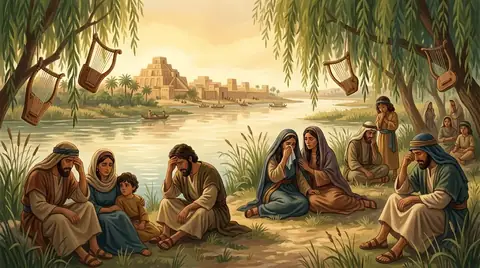 Place · CityBabylonThe great city on the Euphrates where the tower of Babel was built. Under Nebuchadnezzar it ruled the world, destroyed…
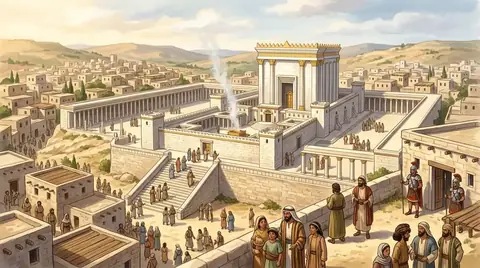 Thing · WorshipThe TempleGod's house in Jerusalem, where he was worshipped and the sacrifices offered. Solomon built it, Babylon burned it, the…
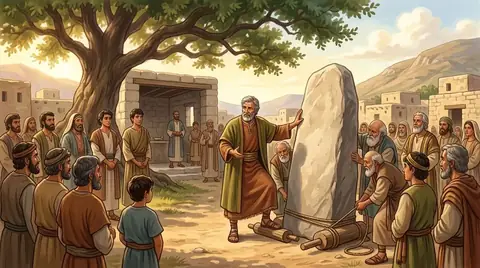 PlaceShechemAn ancient city in the heart of Canaan, between Mount Ebal and Mount Gerizim. Abraham built his first altar there…
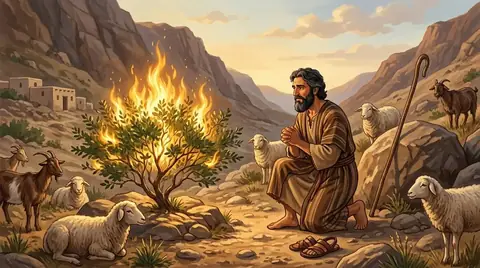 PersonMosesThe man God used to bring Israel out of Egypt, give them his Law at Sinai, and lead them for forty years in the…
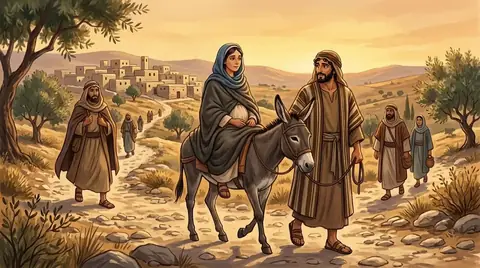 Place · RegionJudeaThe hill country of southern Palestine round Jerusalem, named after the tribe of Judah. In Jesus' day it was a Roman…
 Place · RegionGalileeThe hill country of northern Israel, west of the lake that bears its name. Jesus grew up there, chose his disciples…
Written for this app in its own words, from the Bible, with the facts checked against Bible dictionaries and encyclopedias: Easton's, Smith's, Fausset's, ISBE, Holman, the New Bible Dictionary, Vine's and the Thompson Chain topics.
