
Teaching
Law
Also called the moral law, the Mosaic law
God's rule for how his people should live. In the Bible it means above all the commands given through Moses at Sinai, which show what God is like, show us our sin, and lead us to Christ.
- Three strands
- The moral law (the Ten Commandments); the ceremonial law (priests, sacrifices, feasts, clean and unclean); the civil law for the nation of Israel
- Given
- At Mount Sinai, in 1446 BC, by the hand of Moses
- Fulfilled
- By Jesus, who kept it and bore its curse (Matthew 5:17; Galatians 3:13)
What it is
When the Bible says "the law" it usually means the commands God gave Israel through Moses, written in the first five books (see Law of Moses). They cover three kinds of thing. The moral law, summed up in the Ten Commandments, says what is right and wrong for everyone, everywhere: no other gods, honour your parents, do not kill, steal or lie. The ceremonial law set out Israel's worship: the tabernacle, the priests, the sacrifices and the feasts. The civil law ran the nation: courts, property, war and punishment. Behind all three is one idea: God is holy, and his people must be like him (Leviticus 19:2).
What it is for
The psalmist loved the law; it is "perfect, converting the soul", sweeter than honey (Psalms 19:7–10). It shows what God is like and how life works best. But the law also does something painful. It shows us our sin: "by the law is the knowledge of sin" (Romans 3:20). Paul says he would not have known what coveting was had the law not said, "Thou shalt not covet" (Romans 7:7). The law is good, but it cannot make us good; it diagnoses the disease without curing it. So the law was a "schoolmaster", a guardian, to bring us to Christ (Galatians 3:24).
In Jesus
Jesus said he had not come to destroy the law but to fulfil it (Matthew 5:17). He kept it perfectly, the only one who ever did. He took its curse on himself at the cross (Galatians 3:13). He summed it up in two commands, love God and love your neighbour (Matthew 22:37–40). And the ceremonial law found in him what it had been pointing at: the true priest, the true sacrifice, the true Passover. So those rules have done their work and are not binding on Christians (Colossians 2:16–17; Hebrews 10:1).
For us
A Christian is not under the law as a way of earning God's favour; that comes by grace through faith (Romans 6:14). But the moral law still shows what pleases God, and the Spirit writes it on the heart (Jeremiah 31:33; Romans 8:4). Love, says Paul, is the fulfilling of the law (Romans 13:10).
Key verses
- Psalms 19:7
The law of the Lord is perfect, converting the soul: the testimony of the Lord is sure, making wise the simple.
- Romans 3:20
Therefore by the deeds of the law there shall no flesh be justified in his sight: for by the law is the knowledge of sin.
- Galatians 3:24
Wherefore the law was our schoolmaster to bring us unto Christ, that we might be justified by faith.
- Matthew 5:17
Think not that I am come to destroy the law, or the prophets: I am not come to destroy, but to fulfil.
- Matthew 22:37–40
Jesus said unto him, Thou shalt love the Lord thy God with all thy heart, and with all thy soul, and with all thy mind. This is the first and great commandment. And the second is like unto it, Thou shalt love thy neighbour as thyself. …
- Romans 13:10
Love worketh no ill to his neighbour: therefore love is the fulfilling of the law.
Read next
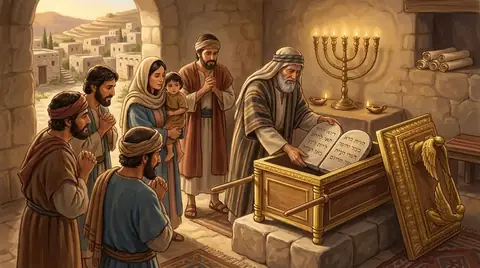 Teaching · LawDecalogueThe Ten Commandments, which God spoke from Mount Sinai and wrote with his own finger on two stone tablets. They sum up…
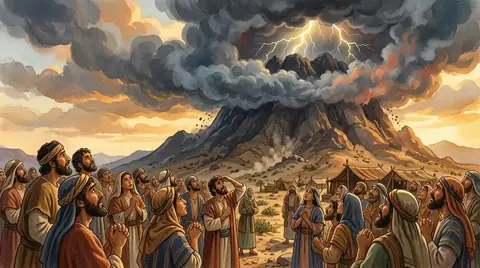 Place · MountainSinaiThe mountain where God came down in fire and smoke, spoke the Ten Commandments, and made his covenant with Israel. The…
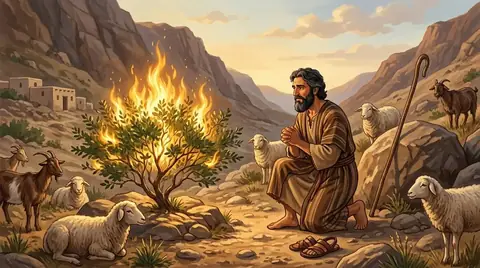 PersonMosesThe man God used to bring Israel out of Egypt, give them his Law at Sinai, and lead them for forty years in the…
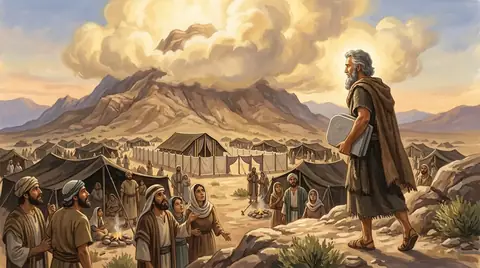 Teaching · BookThe Law of MosesThe commands God gave Israel through Moses at Sinai, recorded in the Bible's first five books. Israel's whole life was…
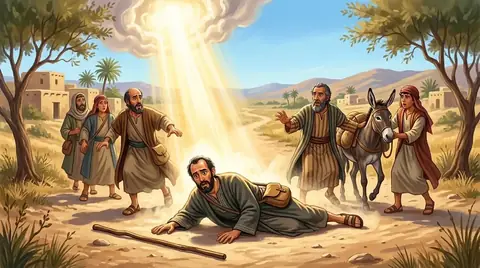 PersonPaulA Pharisee who hated the church until the risen Jesus met him on the road to Damascus. He became the apostle to the…
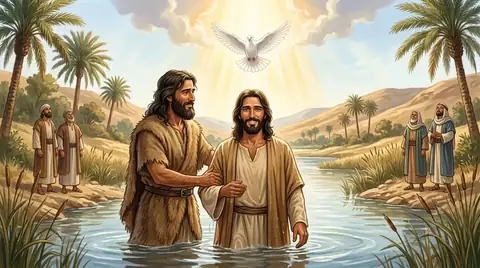 Person · The Son of GodJesus ChristThe Son of God, born of the virgin Mary, who lived a sinless life, died on a cross for the sins of the world and rose…
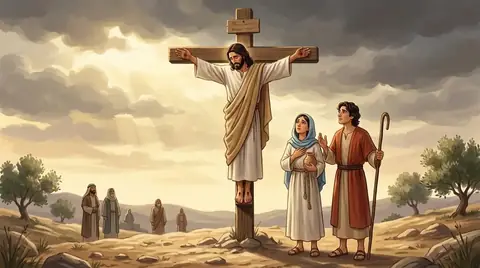 Custom · RomeCrossThe wooden post and crossbeam on which the Romans executed criminals, and on which Jesus died. In the New Testament…
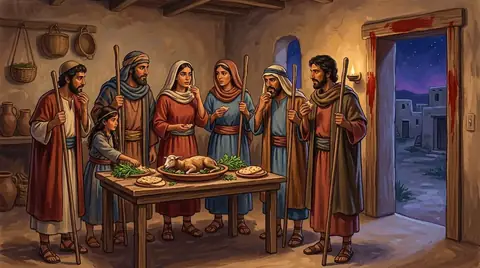 FeastPassoverThe yearly feast remembering the night God rescued Israel from Egypt, when death passed over every house marked with a…
Written for this app in its own words, from the Bible, with the facts checked against Bible dictionaries and encyclopedias: Easton's, Smith's, Fausset's, ISBE, Holman, the New Bible Dictionary, Vine's and the Thompson Chain topics.
