
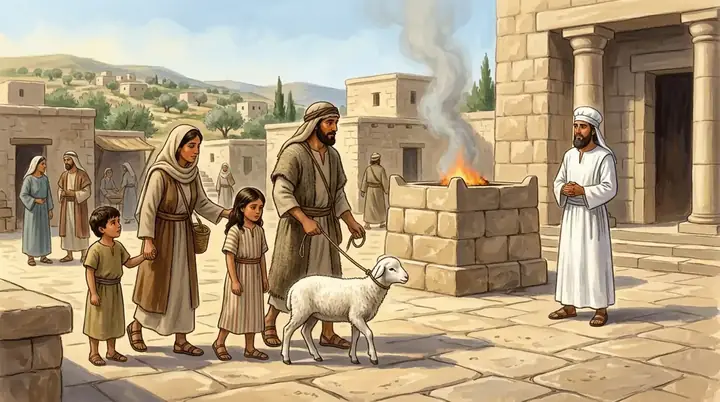
Custom · Worship
Sacrifice
An offering given to God · at the heart of Old Testament worship
Something given up to God: usually an animal, killed and burnt on the altar, or grain, wine and oil. The blood of sacrifices covered sin and pointed ahead to Christ, who gave himself once for all.
- Kinds
- Burnt offerings, grain offerings, peace offerings, sin offerings and guilt offerings (Leviticus 1–7)
- Where
- At first anywhere; then only at the tabernacle and the temple
- Key truth
- "It is the blood that maketh an atonement for the soul" (Leviticus 17:11)
- Fulfilled in
- Christ's death on the cross, "one sacrifice for sins for ever" (Hebrews 10:12)
What it was
A sacrifice was a gift to God that cost the giver something. Usually it was an animal from the flock or herd, without defect, brought to the altar. The worshipper laid his hand on its head, it was killed, and its blood was sprinkled or poured out. Some offerings were burnt whole; in others part was burnt, part went to the priests, and part was eaten by the family in a meal before God. Grain, oil, wine and incense were offered too.
Sacrifice is older than Israel. Abel brought the firstborn of his flock (Genesis 4:4), Noah built an altar when he left the ark (Genesis 8:20), and Abraham offered a ram in place of Isaac (Genesis 22:13). At Mount Sinai God gave Israel a full set of rules: the burnt offering, given wholly to God; the grain offering of thanks; the peace offering, shared as a meal; and the sin and guilt offerings, which dealt with wrongdoing (Leviticus 1–7). The greatest day was the Day of Atonement, when the high priest took blood into the Most Holy Place for the sins of the whole nation (Leviticus 16).
What it meant
The animal died in the sinner's place. "The life of the flesh is in the blood", God said, "and I have given it to you upon the altar to make an atonement for your souls" (Leviticus 17:11). Yet the prophets insisted that the act was worthless without the heart: "to obey is better than sacrifice" (1 Samuel 15:22); "I desired mercy, and not sacrifice" (Hosea 6:6); what God wants is "a broken and a contrite heart" (Psalms 51:17).
Points to Christ
Hebrews explains that all those animals could never really take sin away; they were a shadow of what was coming (Hebrews 10:1–4). John the Baptist pointed to Jesus as "the Lamb of God, which taketh away the sin of the world" (John 1:29). On the cross he was both the priest and the sacrifice, and his one offering did for ever what thousands of years of altars could not (Hebrews 9:26–28; Hebrews 10:12–14). That is why Christians no longer kill animals.
For us
There is still sacrifice in the Christian life, but of a different kind: offering our bodies "a living sacrifice" (Romans 12:1), and the sacrifices of praise, of sharing, and of doing good, "for with such sacrifices God is well pleased" (Hebrews 13:15–16).
Key verses
- Genesis 22:13
And Abraham lifted up his eyes, and looked, and behold behind him a ram caught in a thicket by his horns: and Abraham went and took the ram, and offered him up for a burnt offering in the stead of his son.
- Leviticus 17:11
For the life of the flesh is in the blood: and I have given it to you upon the altar to make an atonement for your souls: for it is the blood that maketh an atonement for the soul.
- 1 Samuel 15:22
And Samuel said, Hath the Lord as great delight in burnt offerings and sacrifices, as in obeying the voice of the Lord? Behold, to obey is better than sacrifice, and to hearken than the fat of rams.
- Hebrews 10:12
But this man, after he had offered one sacrifice for sins for ever, sat down on the right hand of God;
- Romans 12:1
I beseech you therefore, brethren, by the mercies of God, that ye present your bodies a living sacrifice, holy, acceptable unto God, which is your reasonable service.
Read next
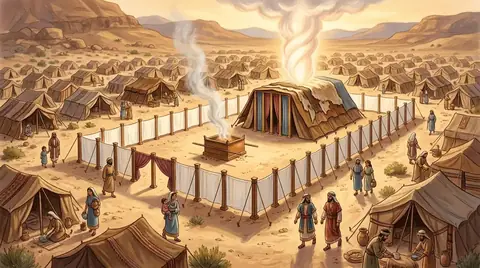 Thing · WorshipThe tabernacleThe holy tent Israel built in the wilderness, by God's own pattern, so that he could dwell in the middle of his people.…
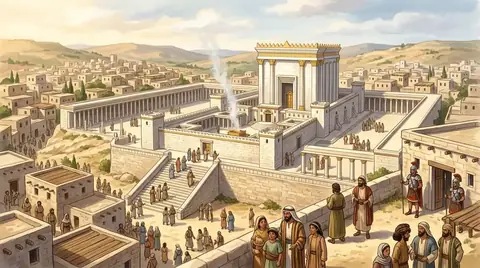 Thing · WorshipThe TempleGod's house in Jerusalem, where he was worshipped and the sacrifices offered. Solomon built it, Babylon burned it, the…
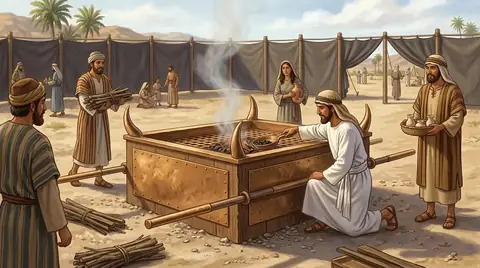 Thing · WorshipThe altarA raised structure of earth, stone or bronze on which sacrifices were offered to God. The big bronze altar stood in the…
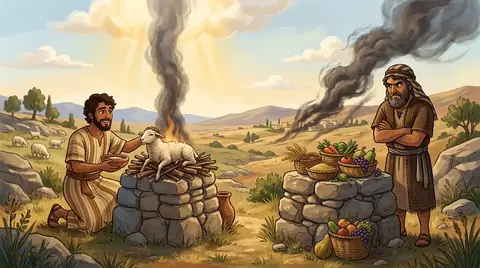 PersonAbelThe second son of Adam and Eve, a shepherd whose offering God accepted. His jealous brother Cain murdered him, making…
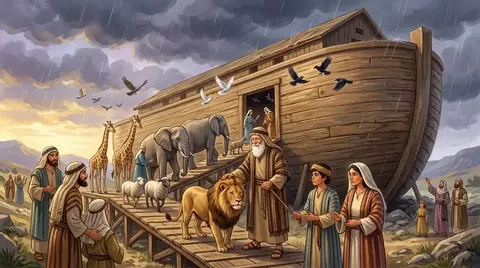 PersonNoahThe one righteous man of his age. God told him to build an ark, and through it saved him, his family and the animals…
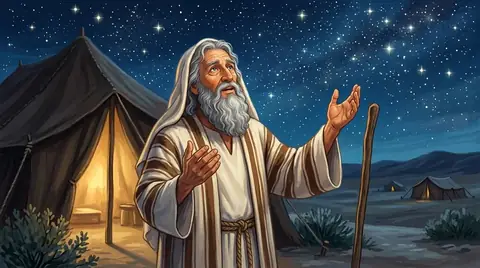 PersonAbrahamThe man God called out of Ur to a land he had never seen, promising him a people and a blessing for the whole world. He…
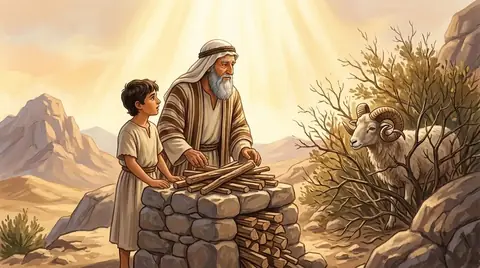 PersonIsaacThe son God promised to Abraham and Sarah when they were far too old for children, offered on Mount Moriah and spared.…
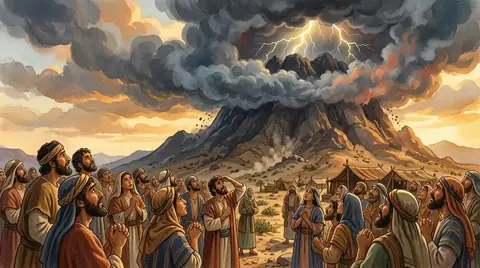 Place · MountainSinaiThe mountain where God came down in fire and smoke, spoke the Ten Commandments, and made his covenant with Israel. The…
Written for this app in its own words, from the Bible, with the facts checked against Bible dictionaries and encyclopedias: Easton's, Smith's, Fausset's, ISBE, Holman, the New Bible Dictionary, Vine's and the Thompson Chain topics.
