
Feast · Fast
The Day of Atonement
Yom Kippur · the tenth day of the seventh month (September–October)
The one day in the year when the high priest went behind the veil with blood to atone for all Israel's sins, while a second goat carried them off into the desert. A day of fasting and rest; Hebrews says Jesus fulfilled it once for all.
- When
- Tisri 10; the Feast of Tabernacles began five days later (Leviticus 23:27–34)
- Law
- Leviticus 16; Leviticus 23:26–32; Numbers 29:7–11
- The two goats
- One killed for the LORD; the scapegoat sent into the wilderness (Leviticus 16:7–10)
- In the New Testament
- "The fast" (Acts 27:9); Hebrews 9; Hebrews 10
What happened
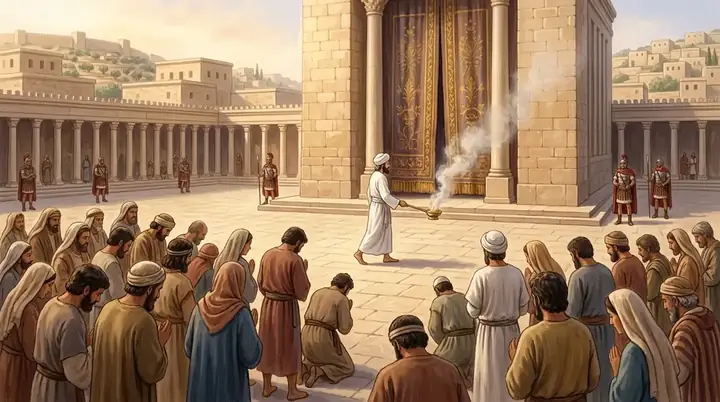
On this one day the high priest laid aside his golden robes, washed, and put on plain white linen (Leviticus 16:4). He killed a bull for his own sins and his family's, then carried its blood behind the veil into the Most Holy Place, with a cloud of incense to hide the mercy seat, and sprinkled it there (Leviticus 16:11–14). Two goats stood at the door. Lots were cast; one goat was killed for the people's sins and its blood too was carried within the veil (Leviticus 16:15). On the head of the other, the scapegoat, the high priest laid both hands and confessed all the sins of Israel; then a man led it away into the wilderness, never to return (Leviticus 16:21–22). The tabernacle, the altar and the priests were cleansed as well, so that God could go on living among a sinful people.
For the people
Everyone was to "afflict" their souls, that is, fast, and no work was done, as on the Sabbath (Leviticus 23:27–32). It was the only fast the law commanded; Luke calls it simply "the fast" (Acts 27:9). The jubilee year was announced on this day with a trumpet (Leviticus 25:9). After the exile the day was kept at the temple with great solemnity, and the people waited outside for the high priest to come out alive.
Points to Christ
Hebrews says the whole day was a picture. The high priest went in once a year with blood that could never truly take away sin, which is why it had to be done again every year. Christ, our high priest, entered heaven itself "by his own blood", once, "having obtained eternal redemption for us" (Hebrews 9:12). The torn veil at his death showed that the way in was now open to all (Hebrews 10:19–20). Both goats point to him: he died for sin, and he carries it away, "as far as the east is from the west" (Psalms 103:12).
Key verses
- Leviticus 16:29–34
And this shall be a statute for ever unto you: that in the seventh month, on the tenth day of the month, ye shall afflict your souls, and do no work at all, whether it be one of your own country, or a stranger that sojourneth among you: For on that day shall the priest make an atonement for you, to cleanse you, that ye may be clean from all your sins before the Lord. It shall be a sabbath of rest unto you, and ye shall afflict your souls, by a statute for ever. …
- Leviticus 23:27–28
Also on the tenth day of this seventh month there shall be a day of atonement: it shall be an holy convocation unto you; and ye shall afflict your souls, and offer an offering made by fire unto the Lord. And ye shall do no work in that same day: for it is a day of atonement, to make an atonement for you before the Lord your God.
- Hebrews 9:7
But into the second went the high priest alone once every year, not without blood, which he offered for himself, and for the errors of the people:
- Hebrews 9:11–12
But Christ being come an high priest of good things to come, by a greater and more perfect tabernacle, not made with hands, that is to say, not of this building; Neither by the blood of goats and calves, but by his own blood he entered in once into the holy place, having obtained eternal redemption for us.
- Hebrews 9:24–28
For Christ is not entered into the holy places made with hands, which are the figures of the true; but into heaven itself, now to appear in the presence of God for us: Nor yet that he should offer himself often, as the high priest entereth into the holy place every year with blood of others; For then must he often have suffered since the foundation of the world: but now once in the end of the world hath he appeared to put away sin by the sacrifice of himself. …
- Hebrews 10:1–4
For the law having a shadow of good things to come, and not the very image of the things, can never with those sacrifices which they offered year by year continually make the comers thereunto perfect. For then would they not have ceased to be offered? because that the worshippers once purged should have had no more conscience of sins. But in those sacrifices there is a remembrance again made of sins every year. …
Read next
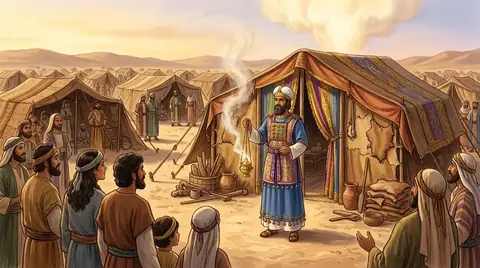 Custom · WorshipThe high priestThe head of Israel's priests, descended from Aaron, who alone went into the Most Holy Place once a year to make…Thing · WorshipThe mercy seatThe solid gold cover on top of the ark, with two cherubim rising from it, where God met Israel and where blood was…
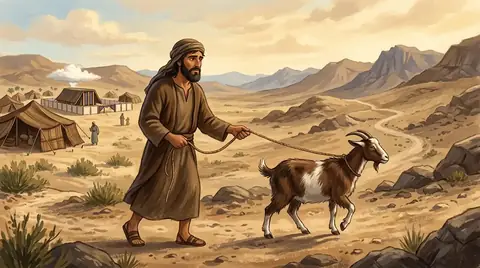 Custom · WorshipThe scapegoatOnce a year, at the Day of Atonement, the high priest confessed the nation's sins over a live goat and sent it off into…
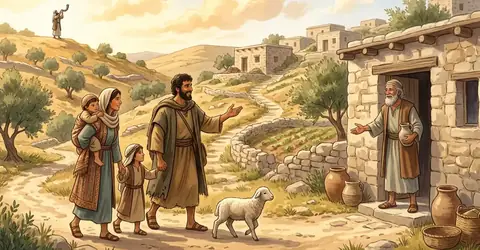 Feast · LawThe JubileeEvery fiftieth year in Israel, announced by a trumpet blast on the Day of Atonement. Sold land went back to its first…
Written for this app in its own words, from the Bible, with the facts checked against Bible dictionaries and encyclopedias: Easton's, Smith's, Fausset's, ISBE, Holman, the New Bible Dictionary, Vine's and the Thompson Chain topics.
