
Thing · Worship
The altar
Also: the golden altar of incense
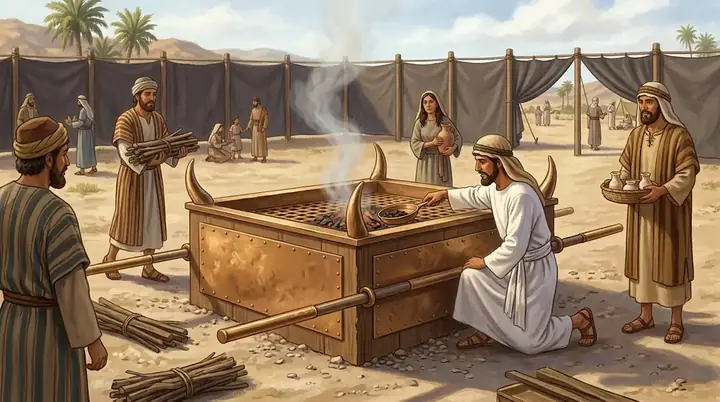
A raised structure of earth, stone or bronze on which sacrifices were offered to God. The big bronze altar stood in the courtyard of the tabernacle; a smaller golden altar for incense stood inside the holy place.
- Hebrew
- Mizbeach, "place of slaughter"
- Bronze altar
- 7½ ft (2.3 m) square and 4½ ft (1.4 m) high, acacia wood covered in bronze, with a horn at each corner (Exodus 27:1–2)
- Golden altar
- 1½ ft (0.5 m) square and 3 ft (0.9 m) high, for incense morning and evening (Exodus 30:1–8)
- Built by
- Noah, Abraham, Isaac, Jacob, Moses, Joshua, Samuel, David, Elijah…
What it was
An altar was the place where a gift was offered to God, usually an animal killed and burned. The first the Bible mentions is Noah's, built when he came out of the ark (Genesis 8:20). Abraham built altars wherever God met him, at Shechem, Bethel and Hebron, and on Mount Moriah he bound Isaac on one (Genesis 22:9). God told Moses that an altar should be of earth or of stones no tool had touched, and without steps (Exodus 20:24–26): nothing of man's craft or pride was to come between the worshipper and God.
In the tabernacle and temple
The great altar of burnt offering stood in the open courtyard, just inside the entrance, so that no one could come near God without passing a place of sacrifice. It was a hollow box of acacia wood plated with bronze, with a grating of bronze and a horn at each corner, carried by poles (Exodus 27:1–8). Its fire was lit from heaven and was never to go out (Leviticus 6:13). Blood was smeared on its horns, and a fugitive could grip them and claim mercy (1 Kings 1:50). Solomon's temple had a far larger altar of bronze (2 Chronicles 4:1).
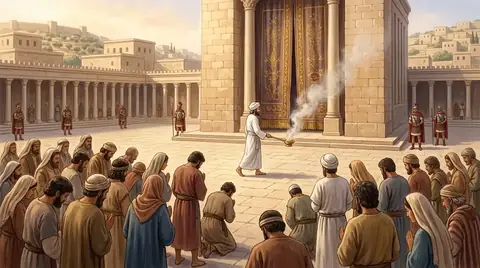
Inside, in front of the veil, stood the small golden altar of incense. On it the priest burned sweet incense every morning and evening, with fire taken from the bronze altar (Exodus 30:7–8); once a year its horns were touched with the blood of the Day of Atonement. The rising smoke was a picture of prayer (Psalms 141:2; Revelation 8:3–4).
Altars gone wrong
Israel was to tear down every altar of Baal and the other gods (Deuteronomy 12:3). Gideon pulled down his father's altar of Baal by night; Elijah repaired the LORD's broken altar on Mount Carmel and saw fire fall on it (1 Kings 18:30–38); Ahaz replaced the bronze altar with a copy of one he had seen in Damascus. In Athens Paul found an altar "to the unknown God" and used it to preach (Acts 17:23).
Points to Christ
Every altar said the same thing: sin costs a life, and God will accept a substitute. Hebrews says Christians have an altar of their own (Hebrews 13:10): the cross, where Jesus offered himself once for all. Jesus said that before bringing a gift to the altar we should first be reconciled to our brother (Matthew 5:23–24).
Key verses
- Genesis 8:20
And Noah builded an altar unto the Lord; and took of every clean beast, and of every clean fowl, and offered burnt offerings on the altar.
- Exodus 20:24
An altar of earth thou shalt make unto me, and shalt sacrifice thereon thy burnt offerings, and thy peace offerings, thy sheep, and thine oxen: in all places where I record my name I will come unto thee, and I will bless thee.
- Exodus 27:1–2
And thou shalt make an altar of shittim wood, five cubits long, and five cubits broad; the altar shall be foursquare: and the height thereof shall be three cubits. And thou shalt make the horns of it upon the four corners thereof: his horns shall be of the same: and thou shalt overlay it with brass.
- Leviticus 6:13
The fire shall ever be burning upon the altar; it shall never go out.
- 1 Kings 18:30–38
And Elijah said unto all the people, Come near unto me. And all the people came near unto him. And he repaired the altar of the Lord that was broken down. And Elijah took twelve stones, according to the number of the tribes of the sons of Jacob, unto whom the word of the Lord came, saying, Israel shall be thy name: And with the stones he built an altar in the name of the Lord: and he made a trench about the altar, as great as would contain two measures of seed. …
- Hebrews 13:10
We have an altar, whereof they have no right to eat which serve the tabernacle.
Read next
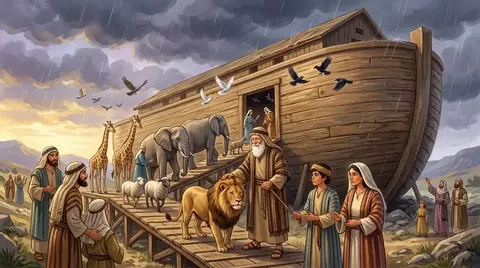 PersonNoahThe one righteous man of his age. God told him to build an ark, and through it saved him, his family and the animals…
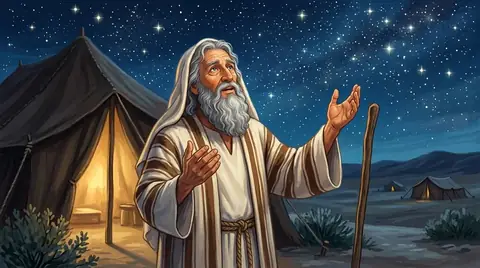 PersonAbrahamThe man God called out of Ur to a land he had never seen, promising him a people and a blessing for the whole world. He…
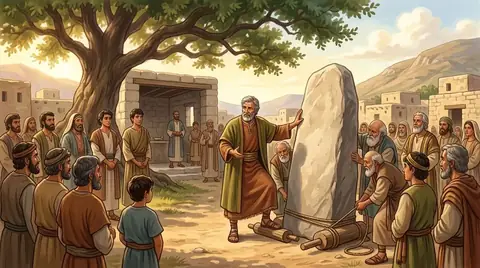 PlaceShechemAn ancient city in the heart of Canaan, between Mount Ebal and Mount Gerizim. Abraham built his first altar there…
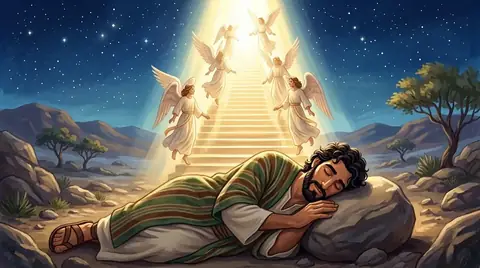 PlaceBethelA town about 10 miles north of Jerusalem where Jacob dreamed of a stairway to heaven. Later it became the home of…
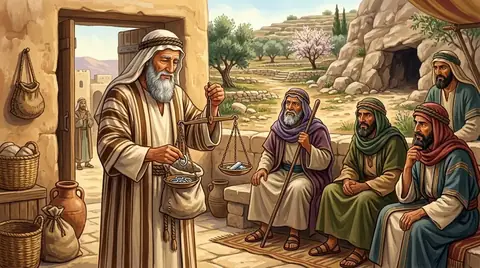 Place · CityHebronAn ancient city in the hills of Judah where Abraham lived and the patriarchs were buried in the cave of Machpelah.…
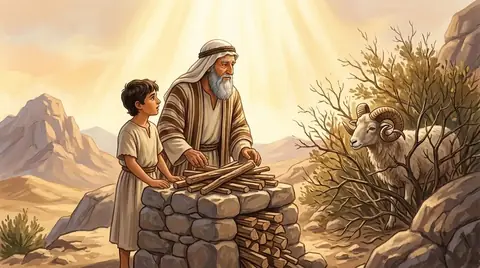 PlaceMount MoriahThe hill in Jerusalem where Solomon built the temple. It is the same land of Moriah where God told Abraham to offer…
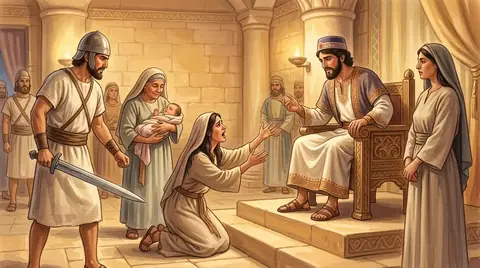 Person · KingSolomonDavid's son and Israel's third king, who asked God for wisdom and received riches and fame as well. He built the temple…
 Feast · FastThe Day of AtonementThe one day in the year when the high priest went behind the veil with blood to atone for all Israel's sins, while a…
Written for this app in its own words, from the Bible, with the facts checked against Bible dictionaries and encyclopedias: Easton's, Smith's, Fausset's, ISBE, Holman, the New Bible Dictionary, Vine's and the Thompson Chain topics.
