
Person
Rabshakeh
RAB-sha-kehOld Testament · about 701 BC · the title of an Assyrian officer rather than a name
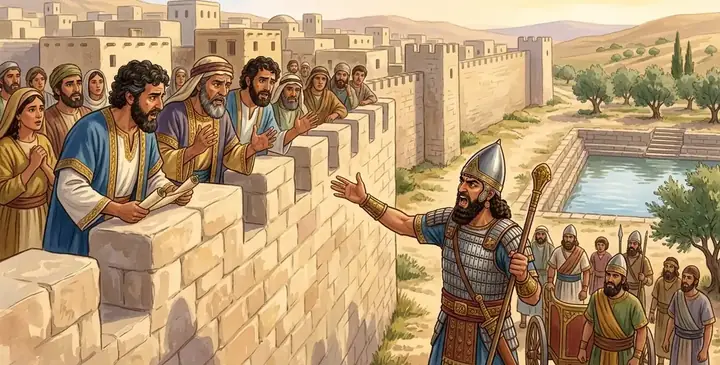
The Assyrian king's spokesman who stood outside Jerusalem's wall and shouted at Hezekiah's people to give up and not to trust the LORD. God answered his taunts by destroying the Assyrian army.
- Served
- Sennacherib, king of Assyria
- Known for
- Mocking God outside Jerusalem's wall
- Where
- 2 Kings 18–19; Isaiah 36–37
His mission
Rabshakeh is a title rather than a personal name: it was the rank of a senior officer at the Assyrian court. When Sennacherib invaded Judah in Hezekiah's reign, he sent this officer with two others and a large army from Lachish to Jerusalem to demand its surrender (2 Kings 18:17).
What he said
Standing by the conduit of the upper pool, he called out to Hezekiah's officials Eliakim, Shebna and Joah. He sneered that Judah's trust in Egypt was like leaning on a broken reed, and that trusting the LORD was no better, since Hezekiah had pulled down the high places. He even claimed the LORD himself had sent Assyria. When the officials begged him to speak in Aramaic so the people on the wall would not understand, he shouted all the louder in Hebrew, promising the people food and vines if they gave in, and reminding them that no god of any other nation had saved its city (2 Kings 18:19–35).
How it ended
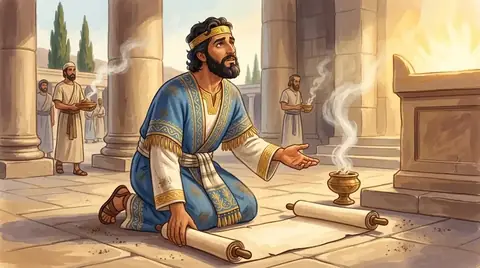
The people kept silent, as the king had ordered. Hezekiah tore his clothes, went to the temple, and sent to Isaiah, who told him not to be afraid of the words with which the Assyrian servants had blasphemed God (2 Kings 19:6). Rabshakeh went back to find his master fighting at Libnah. That night the angel of the LORD struck the Assyrian camp, and Sennacherib went home to be killed by his own sons (2 Kings 19:35–37).
What to learn
Rabshakeh's speech is the voice of the world telling God's people that faith is useless. Hezekiah did the right thing: he took the threats to God in prayer and let God answer them.
Key verses
- 2 Kings 18:19–25
And Rab–shakeh said unto them, Speak ye now to Hezekiah, Thus saith the great king, the king of Assyria, What confidence is this wherein thou trustest? Thou sayest, (but they are but vain words,) I have counsel and strength for the war. Now on whom dost thou trust, that thou rebellest against me? Now, behold, thou trustest upon the staff of this bruised reed, even upon Egypt, on which if a man lean, it will go into his hand, and pierce it: so is Pharaoh king of Egypt unto all that trust on him. …
- 2 Kings 18:28–30
Then Rab–shakeh stood and cried with a loud voice in the Jews’ language, and spake, saying, Hear the word of the great king, the king of Assyria: Thus saith the king, Let not Hezekiah deceive you: for he shall not be able to deliver you out of his hand: Neither let Hezekiah make you trust in the Lord, saying, The Lord will surely deliver us, and this city shall not be delivered into the hand of the king of Assyria.
- 2 Kings 19:6
And Isaiah said unto them, Thus shall ye say to your master, Thus saith the Lord, Be not afraid of the words which thou hast heard, with which the servants of the king of Assyria have blasphemed me.
- 2 Kings 19:35
And it came to pass that night, that the angel of the Lord went out, and smote in the camp of the Assyrians an hundred fourscore and five thousand: and when they arose early in the morning, behold, they were all dead corpses.
On the map
Mentioned in 16 verses
- 2 Kings 8
- Isaiah 8
Read next
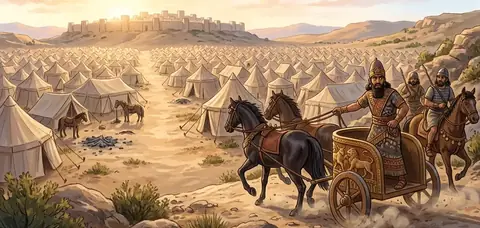 PersonSennacheribThe king of Assyria who invaded Judah in Hezekiah's reign and threatened Jerusalem. God answered Hezekiah's prayer…
 Place · EmpireAssyriaThe land and empire on the upper Tigris whose capital was Nineveh. Assyria crushed the northern kingdom of Israel in…Person · KingHezekiahOne of Judah's best kings. He cleansed the temple, smashed the idols, trusted God when Assyria besieged Jerusalem, and…
 Place · CityLachishA great walled city in the lowlands of Judah, taken by Joshua, made a fortress by Rehoboam, and besieged by…
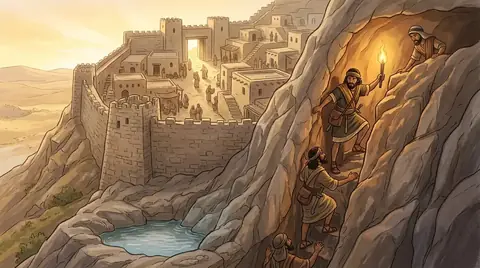 PlaceJerusalemThe city David made his capital and where Solomon built the temple. Jesus died and rose there and the church began…
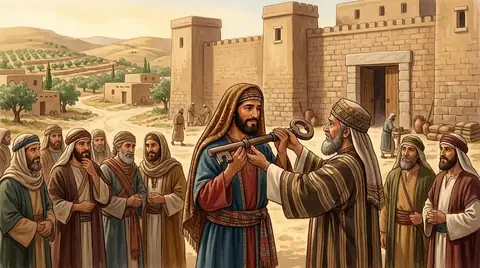 PersonEliakimHezekiah's palace steward, who faced the Assyrian envoys outside Jerusalem and whom Isaiah promised the key of David's…PersonShebnaA powerful official at King Hezekiah's court. Isaiah rebuked him for building himself a grand tomb and said his place…
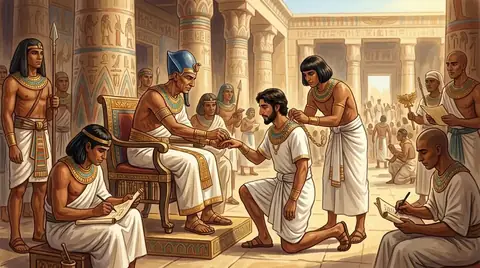 Place · NationEgyptThe great kingdom of the Nile, where Israel grew from a family into a nation and was then enslaved. The Exodus from…
Written for this app in its own words, from the Bible, with the facts checked against Bible dictionaries and encyclopedias: Easton's, Smith's, Fausset's, ISBE, Holman, the New Bible Dictionary, Vine's and the Thompson Chain topics. People and places: STEPBible.org (TIPNR), CC BY 4.0; where a place is today and its photo: OpenBible.info, CC BY 4.0.
