
Place · City
Lachish
LAY-kishToday Tell ed-Duweir (Tel Lachish), 25 miles (40 km) south-west of Jerusalem
A great walled city in the lowlands of Judah, taken by Joshua, made a fortress by Rehoboam, and besieged by Sennacherib, who carved the siege on his palace walls at Nineveh.
- Where
- The Shephelah, the foothills between the mountains of Judah and the Philistine plain (Joshua 15:39)
- Known for
- Joshua's conquest, Amaziah's murder, Sennacherib's siege, the Lachish letters
- Today
- One of the largest ancient mounds in Israel, a national park
Where
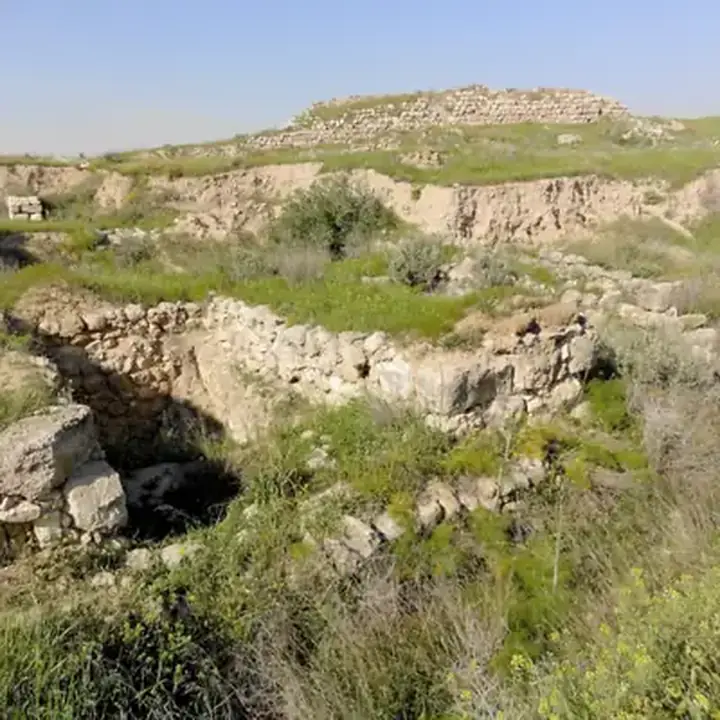
Lachish guarded the road from the coast up into the hills of Judah, second only to Jerusalem in strength. Its mound rises above a broad valley, with the lines of its double walls and the Assyrian siege ramp still visible.
In the Old Testament
Its Amorite king joined the five kings who attacked Gibeon, and Joshua killed him and took the city on the second day of siege (Joshua 10:3–5, 31–32). Rehoboam rebuilt it as one of fifteen fortress cities to protect Judah (2 Chronicles 11:9). King Amaziah fled here from a plot in Jerusalem, but the plotters followed and killed him (2 Kings 14:19).
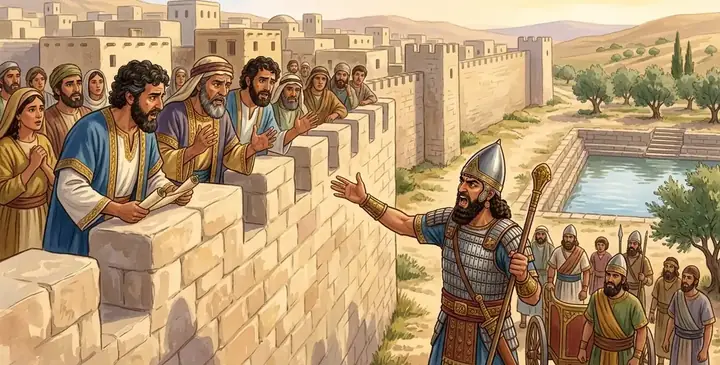
In 701 BC Sennacherib of Assyria swept through Judah and sat down before Lachish while his officers went up to shout threats at the walls of Jerusalem (2 Kings 18:14, 17). Hezekiah sent tribute to him there. The Assyrians stormed the city with a huge earth ramp and carried its people away. Sennacherib was proud enough of the victory to cover a room of his palace at Nineveh with carvings of the siege, now in the British Museum: the ramp, the battering rams, the archers, and the long line of captives. Micah mourned over the city (Micah 1:13).
A century later, when Nebuchadnezzar attacked Judah, Lachish and Azekah were the last fortified towns holding out besides Jerusalem (Jeremiah 34:7). Letters written on broken pottery by an officer in those last weeks were dug up in the gatehouse; one says that he can no longer see the signal fires of Azekah. After the exile Jews lived there again (Nehemiah 11:30).
Today
Excavations have uncovered the Assyrian ramp, the Judean counter-ramp inside the wall, thousands of arrowheads and slingstones, and the burnt gate where the letters lay. Few Bible sites show a Bible battle so plainly.
Key verses
- Joshua 10:31–32
And Joshua passed from Libnah, and all Israel with him, unto Lachish, and encamped against it, and fought against it: And the Lord delivered Lachish into the hand of Israel, which took it on the second day, and smote it with the edge of the sword, and all the souls that were therein, according to all that he had done to Libnah.
- 2 Chronicles 11:9
And Adoraim, and Lachish, and Azekah,
- 2 Kings 18:17
And the king of Assyria sent Tartan and Rabsaris and Rab–shakeh from Lachish to king Hezekiah with a great host against Jerusalem. And they went up and came to Jerusalem. And when they were come up, they came and stood by the conduit of the upper pool, which is in the highway of the fuller’s field.
- Jeremiah 34:7
When the king of Babylon’s army fought against Jerusalem, and against all the cities of Judah that were left, against Lachish, and against Azekah: for these defenced cities remained of the cities of Judah.
- Micah 1:13
O thou inhabitant of Lachish, bind the chariot to the swift beast: she is the beginning of the sin to the daughter of Zion: for the transgressions of Israel were found in thee.
On the map
Mentioned in 22 verses
- Joshua 10
- 2 Kings 4
- 2 Chronicles 3
- Nehemiah 1
- Isaiah 2
- Jeremiah 1
- Micah 1
Read next
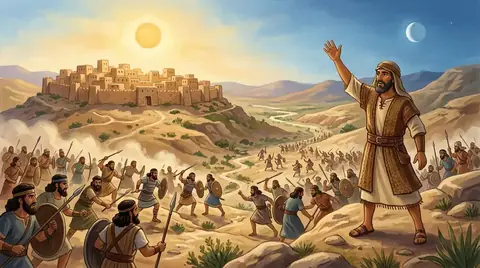 Place · CityGibeonThe Hivite city whose people fooled Joshua into a treaty, and where the sun stood still over the battle that followed.…
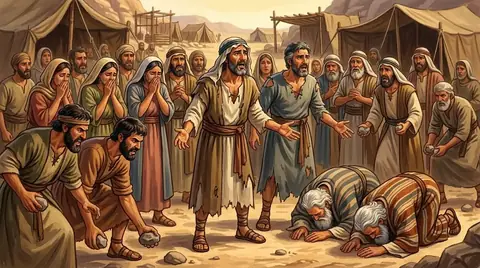 PersonJoshuaMoses' helper who took over from him and led Israel across the Jordan into the Promised Land. He fought the wars of…
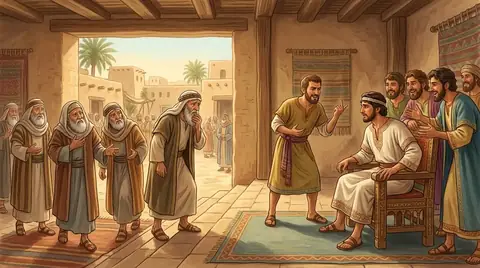 PersonRehoboamSolomon's son, whose harsh answer to the people at Shechem split the kingdom in two. He ruled Judah and Benjamin for…
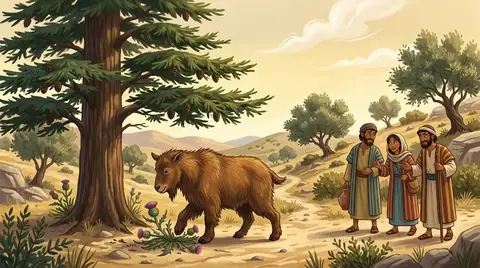 Person · KingAmaziahA king of Judah who began well, beat Edom with God's help, then bowed to Edom's idols and picked a foolish war with…
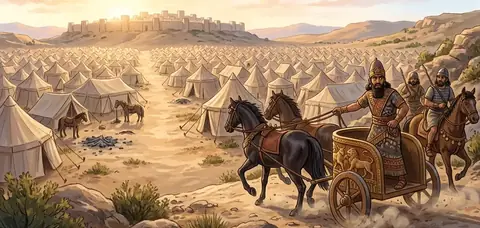 PersonSennacheribThe king of Assyria who invaded Judah in Hezekiah's reign and threatened Jerusalem. God answered Hezekiah's prayer…
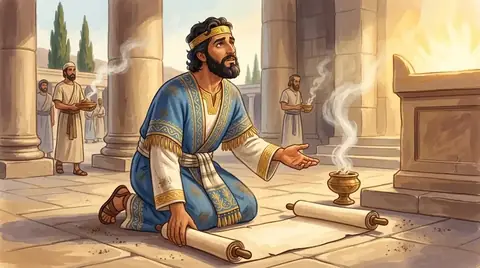 Person · KingHezekiahOne of Judah's best kings. He cleansed the temple, smashed the idols, trusted God when Assyria besieged Jerusalem, and…
 Place · CityNinevehThe last and greatest capital of Assyria, on the Tigris. Jonah preached there and the whole city repented; a century…
 Person · KingNebuchadnezzarThe great king of Babylon who destroyed Jerusalem and its temple and carried Judah into exile. In Daniel he dreams of a…
Written for this app in its own words, from the Bible, with the facts checked against Bible dictionaries and encyclopedias: Easton's, Smith's, Fausset's, ISBE, Holman, the New Bible Dictionary, Vine's and the Thompson Chain topics. People and places: STEPBible.org (TIPNR), CC BY 4.0; where a place is today and its photo: OpenBible.info, CC BY 4.0.
