
Place
Mizpah
MIZ-pah"Watchtower" · a hill town of Benjamin, north of Jerusalem
A town of Benjamin where Israel gathered in times of crisis: Samuel prayed there and won the victory of Ebenezer, Saul was chosen king there, and Gedaliah ruled from it after Jerusalem fell.
- Meaning
- Watchtower, lookout
- Where
- In the hills of Benjamin, a few miles north of Jerusalem; the exact site isn't certain
- Known for
- Samuel's assembly and Ebenezer; Saul made king; Gedaliah's seat
- Also called
- Mizpeh
- Today
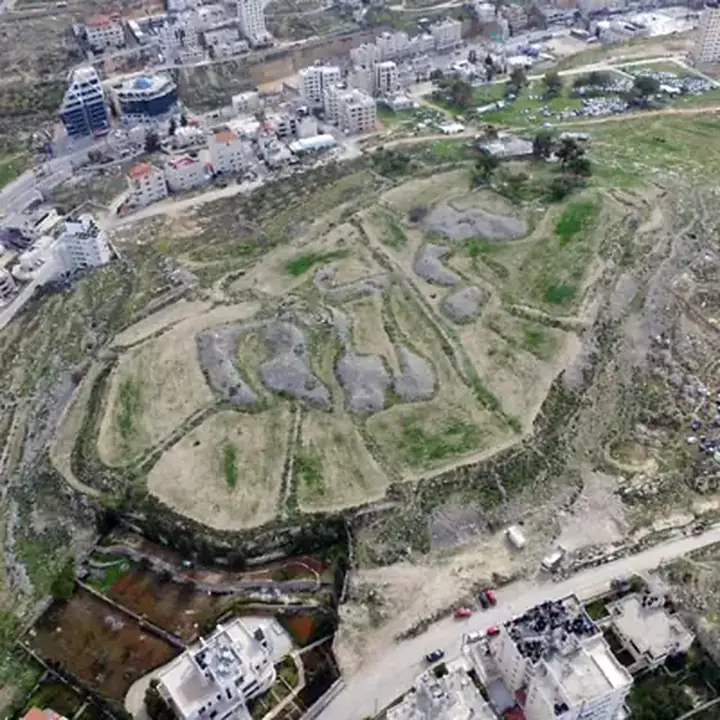
- Tell en Nasbeh, in Ramallah, the West Bank.
Where
Mizpah stood on high ground north of Jerusalem, near the border between Benjamin and Ephraim (Joshua 18:26). Its name means a lookout, and it watched the road from the north. Tradition places it at Nebi Samwil, the hill where Samuel's tomb is shown; many now point to Tell en-Nasbeh a little further north. The Bible does not settle it.
In the Old Testament
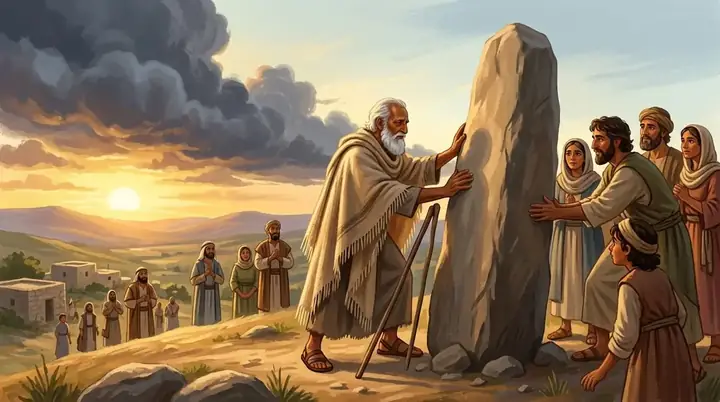
In the days of the judges "all Israel" met at Mizpah to deal with the crime at Gibeah and went to war against Benjamin (Judges 20:1–3; Judges 21:1–8). Samuel called the nation there to repent of its idols; while he was offering a lamb the Philistines attacked, God thundered against them, and Israel won. Samuel set up a stone and named it Ebenezer, "Hitherto hath the LORD helped us" (1 Samuel 7:5–12). Mizpah was one of the three towns where he judged Israel each year (1 Samuel 7:16), and there he presented Saul as the first king (1 Samuel 10:17–25).
King Asa fortified Mizpah with the stones of Ramah to guard his border (1 Kings 15:22). After Nebuchadnezzar destroyed Jerusalem, the governor Gedaliah ruled the survivors from Mizpah, and Jeremiah lived with him there until Gedaliah was murdered by Ishmael (2 Kings 25:23–25; Jeremiah 40:6–41:3). Men of Mizpah later helped Nehemiah rebuild Jerusalem's wall (Nehemiah 3:7, 15, 19).
Others with this name
Several lookout points bore the name. In Gilead, Jacob and Laban made their covenant at a heap of stones and called the place Mizpah, "The LORD watch between me and thee" (Genesis 31:49); Jephthah later lived at a Mizpah in Gilead (Judges 11:11, 34). There was a land of Mizpeh below Mount Hermon (Joshua 11:3), a Mizpeh in the lowlands of Judah (Joshua 15:38), and a Mizpeh in Moab where David left his parents for safety (1 Samuel 22:3).
Key verses
- Judges 20:1
Then all the children of Israel went out, and the congregation was gathered together as one man, from Dan even to Beer–sheba, with the land of Gilead, unto the Lord in Mizpeh.
- 1 Samuel 7:5–12
And Samuel said, Gather all Israel to Mizpeh, and I will pray for you unto the Lord. And they gathered together to Mizpeh, and drew water, and poured it out before the Lord, and fasted on that day, and said there, We have sinned against the Lord. And Samuel judged the children of Israel in Mizpeh. And when the Philistines heard that the children of Israel were gathered together to Mizpeh, the lords of the Philistines went up against Israel. And when the children of Israel heard it, they were afraid of the Philistines. …
- 1 Samuel 10:17
And Samuel called the people together unto the Lord to Mizpeh;
- 2 Kings 25:23
And when all the captains of the armies, they and their men, heard that the king of Babylon had made Gedaliah governor, there came to Gedaliah to Mizpah, even Ishmael the son of Nethaniah, and Johanan the son of Careah, and Seraiah the son of Tanhumeth the Netophathite, and Jaazaniah the son of a Maachathite, they and their men.
- Genesis 31:49
And Mizpah; for he said, The Lord watch between me and thee, when we are absent one from another.
On the map
Mentioned in 50 verses
- Joshua 1
- Judges 5
- 1 Samuel 21
- 1 Kings 1
- 2 Kings 2
- 2 Chronicles 1
- Nehemiah 3
- Jeremiah 12
- Matthew 1
- Mark 1
- Luke 1
- John 1
Read next
 PersonBenjaminJacob's youngest son, whose mother Rachel died bearing him. Joseph's only full brother, he was the centre of the…
 PlaceJerusalemThe city David made his capital and where Solomon built the temple. Jesus died and rose there and the church began…
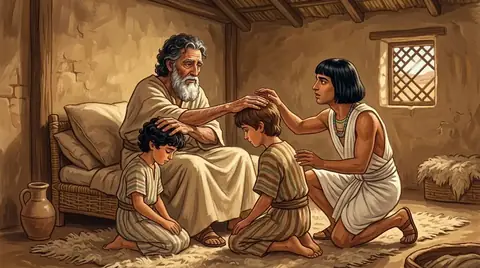 Person · TribeEphraimJoseph's second son, whom Jacob blessed ahead of his older brother. His tribe became the strongest in the north, and…
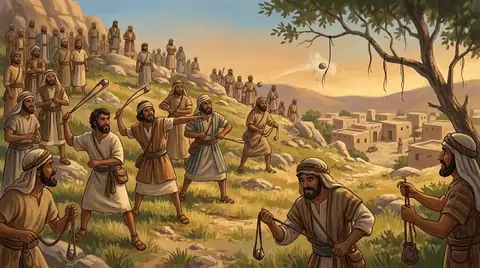 Place · TownGibeahSaul's home town in Benjamin, and his capital as king. Long before that it was the scene of the crime against a…
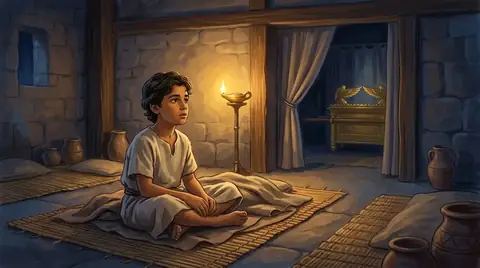 Person · Prophet and judgeSamuelThe prophet who led Israel from the time of the judges into the time of the kings. Given to God by his mother Hannah…NationThe PhilistinesA warlike people from over the sea, settled in five cities on the coastal plain to the south-west of Israel. With iron…
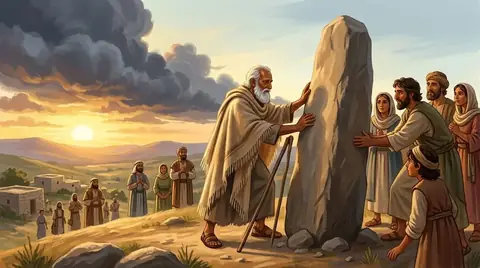 Place · Memorial stoneEbenezer"Stone of help": the stone Samuel set up after God gave Israel victory over the Philistines. Twenty years earlier…
 Person · KingSaulIsrael's first king, a tall Benjamite chosen when the people demanded a king like the nations. He began humbly and won…
Written for this app in its own words, from the Bible, with the facts checked against Bible dictionaries and encyclopedias: Easton's, Smith's, Fausset's, ISBE, Holman, the New Bible Dictionary, Vine's and the Thompson Chain topics. People and places: STEPBible.org (TIPNR), CC BY 4.0; where a place is today and its photo: OpenBible.info, CC BY 4.0.
