
Place · Nation
Moab
MOH-abEast of the Dead Sea · today in Jordan
The land and people east of the Dead Sea, descended from Lot. Balak of Moab hired Balaam to curse Israel, Moses died on its mountain, and Ruth the Moabitess became David's great-grandmother.
- Where
- The high tableland east of the Dead Sea, between the Arnon and Zered rivers; today in Jordan
- People
- Descended from Moab, the son born to Lot and his older daughter (Genesis 19:37)
- God
- Chemosh
- Known for
- Balaam, Moses' death on Nebo, Ruth, Mesha's rebellion
Where
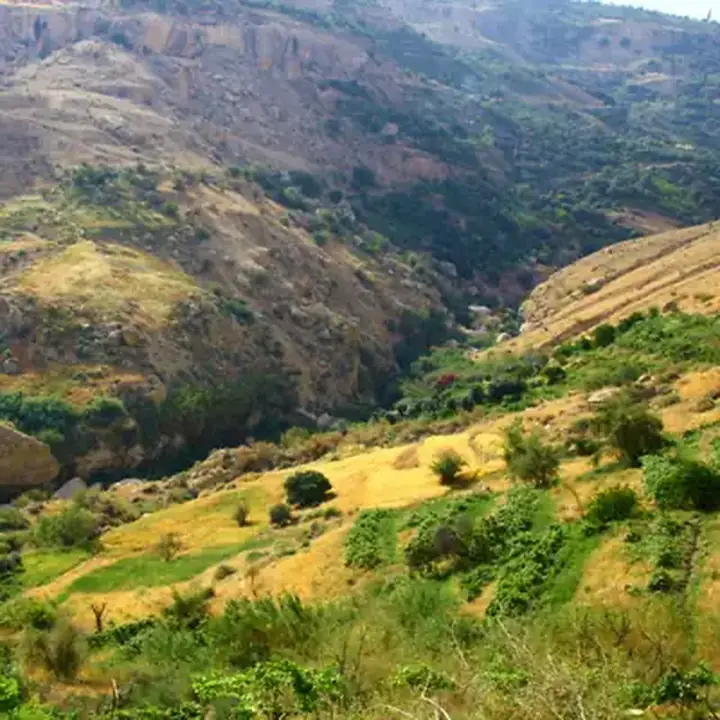
Moab was a high, rolling plateau about 3,000 feet (900 m) above the Dead Sea, good sheep country with fields of grain. Its northern part, the plains of Moab across the Jordan from Jericho, was Israel's last camp before entering Canaan (Numbers 22:1). Its chief towns were Ar, Dibon and Kir. Mount Nebo rose at its edge.
In the Old Testament
The Moabites were cousins of Israel through Lot, so Moses was told not to attack them (Deuteronomy 2:9). Still, when Israel camped on their border, King Balak hired Balaam to curse them. God turned every curse into a blessing (Numbers 22–24), but the women of Moab drew Israel into the worship of Baal of Peor, and thousands died (Numbers 25:1–9). Moses gave his last speeches in Moab and climbed Nebo to see the land he could not enter; he died "in the land of Moab" (Deuteronomy 34:5–6).
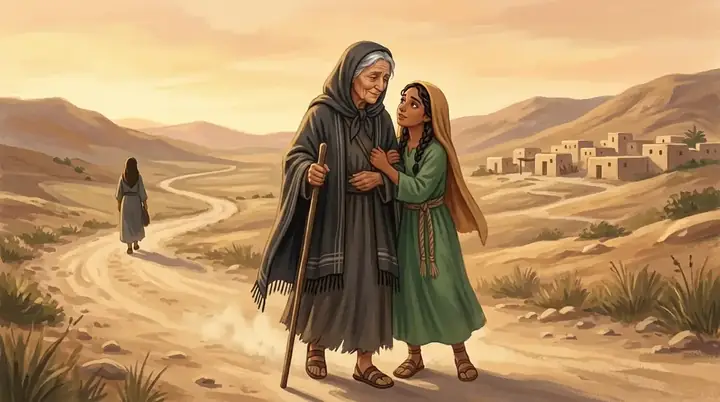
In the days of the judges King Eglon of Moab oppressed Israel until Ehud killed him (Judges 3:12–30). In the same period a famine drove Elimelech's family to Moab, and Ruth the Moabitess came back with Naomi to Bethlehem, married Boaz, and became the great-grandmother of David (Ruth 1–4). David himself left his parents in Moab for safety (1 Samuel 22:3–4), yet later conquered the country and made it pay tribute (2 Samuel 8:2). After Israel split, Moab broke free under King Mesha, who boasted of it on the stone found at Dibon in 1868; Jehoram, Jehoshaphat and the king of Edom marched against him, and in his desperation he sacrificed his own son on the wall (2 Kings 3:4–27).
Isaiah wept over Moab's coming ruin (Isaiah 15–16), and Jeremiah, Ezekiel, Amos and Zephaniah also spoke against its pride and its contempt for Israel (Jeremiah 48; Ezekiel 25:8–11; Amos 2:1–3; Zephaniah 2:8–11). The nation faded away after the exile.
What to learn
Moab shows both sides of God's dealings with the nations. Its pride and its idol Chemosh brought judgment. Yet from Moab came Ruth, who said to Naomi, "thy people shall be my people, and thy God my God" (Ruth 1:16), and through her came David and, in time, Jesus (Matthew 1:5). No one is shut out who comes to Israel's God. See also Moab and Ammon.
Key verses
- Genesis 19:37
And the firstborn bare a son, and called his name Moab: the same is the father of the Moabites unto this day.
- Numbers 22:1–6
And the children of Israel set forward, and pitched in the plains of Moab on this side Jordan by Jericho. And Balak the son of Zippor saw all that Israel had done to the Amorites. And Moab was sore afraid of the people, because they were many: and Moab was distressed because of the children of Israel. …
- Deuteronomy 34:5–6
So Moses the servant of the Lord died there in the land of Moab, according to the word of the Lord. And he buried him in a valley in the land of Moab, over against Beth–peor: but no man knoweth of his sepulchre unto this day.
- Ruth 1:16
And Ruth said, Intreat me not to leave thee, or to return from following after thee: for whither thou goest, I will go; and where thou lodgest, I will lodge: thy people shall be my people, and thy God my God:
- 2 Kings 3:4–5
And Mesha king of Moab was a sheepmaster, and rendered unto the king of Israel an hundred thousand lambs, and an hundred thousand rams, with the wool. But it came to pass, when Ahab was dead, that the king of Moab rebelled against the king of Israel.
- Jeremiah 48:42
And Moab shall be destroyed from being a people, because he hath magnified himself against the Lord.
On the map
Mentioned in 160 verses
- Genesis 2
- Exodus 1
- Numbers 21
- Deuteronomy 11
- Joshua 1
- Judges 12
- Ruth 11
- 1 Samuel 4
- 2 Samuel 3
- 1 Kings 3
- 2 Kings 15
- 1 Chronicles 7
- 2 Chronicles 5
- Ezra 1
- Nehemiah 2
- Psalms 3
- Isaiah 16
- Jeremiah 33
- Ezekiel 3
- Daniel 1
- Amos 2
- Micah 1
- Zephaniah 2
Read next
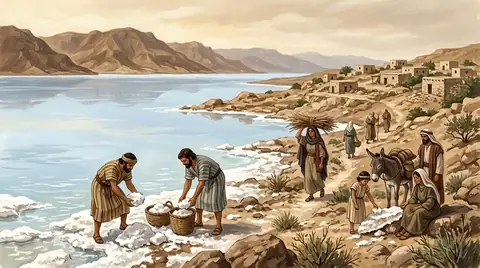 PlaceSalt SeaThe Bible's name for the Dead Sea, the great salt lake at the end of the Jordan River. It is the lowest place on the…
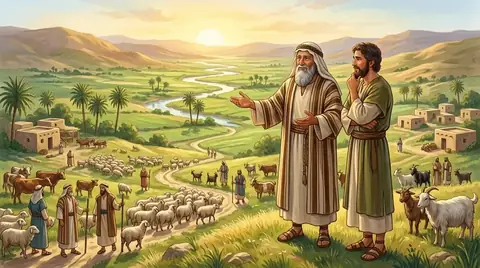 PersonLotAbraham's nephew, who chose the rich plain of Jordan and settled in Sodom. Angels dragged him out before the city…IdolChemoshThe national god of Moab, "the abomination of Moab". Solomon built him a shrine outside Jerusalem to please his foreign…Place · RiverJordanThe river of the Bible: Israel crossed it on dry ground into the promised land, Elijah and Elisha parted it, Naaman…
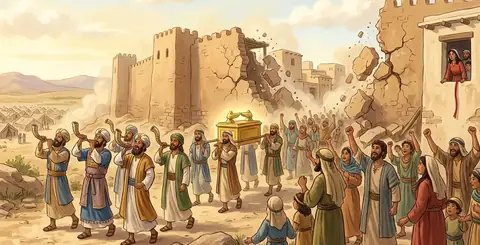 PlaceJerichoThe walled city in the Jordan valley whose walls fell flat when Israel marched round it. Called the city of palm trees…
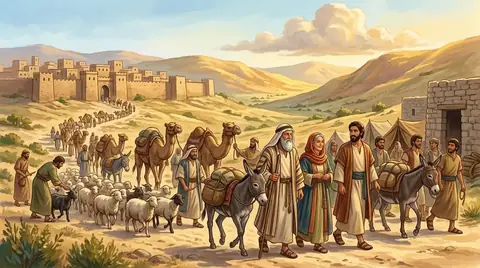 PlaceCanaanThe land between the Jordan and the Mediterranean that God promised to Abraham and gave to Israel under Joshua. It took…
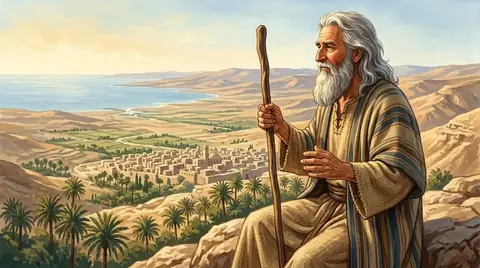 Place · MountainMount NeboThe mountain in Moab from which Moses saw the promised land he was not allowed to enter, and where he died. It stands…
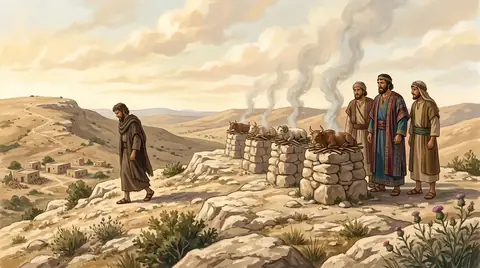 Person · King of MoabBalakMoab's king, who paid Balaam to put a curse on Israel as they camped along his border. Seven altars on three hilltops…
Written for this app in its own words, from the Bible, with the facts checked against Bible dictionaries and encyclopedias: Easton's, Smith's, Fausset's, ISBE, Holman, the New Bible Dictionary, Vine's and the Thompson Chain topics. People and places: STEPBible.org (TIPNR), CC BY 4.0; where a place is today and its photo: OpenBible.info, CC BY 4.0.
