
Place
Ramah
"Height" · several towns carried the name
A town of Benjamin five miles north of Jerusalem, on the border between the two kingdoms. Deborah judged near it, Baasha fortified it, and Jeremiah's captives were gathered there.
- Where
- In Benjamin, about 5 miles (8 km) north of Jerusalem; today Er-Ram
- Known for
- Deborah's palm, Baasha's fort, "Rachel weeping"
- Also
- Ramahs in Asher, Naphtali and Gilead; Samuel's Ramah
- Today
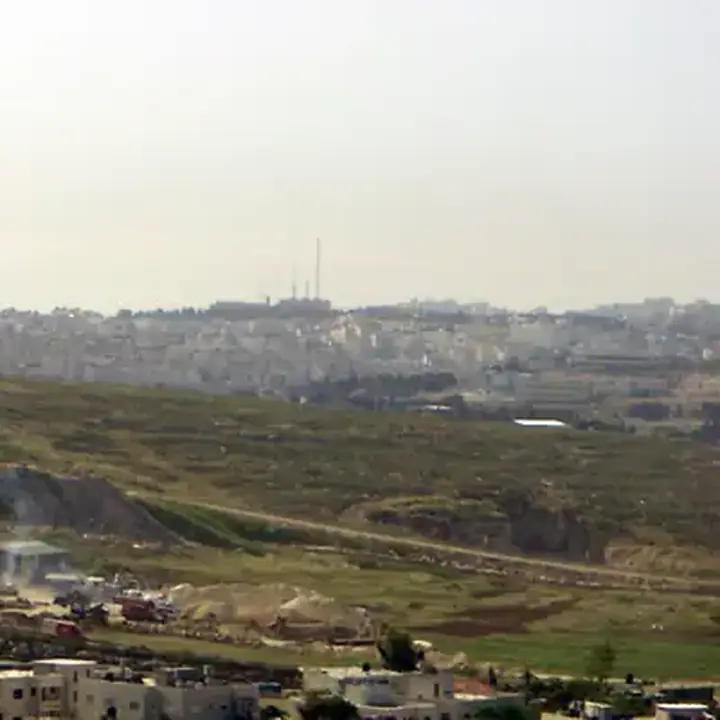
- Al Ram, in the West Bank, about 9 km north of Jerusalem.
Where
The name means "height", and like many a hilltop town more than one place bore it. The best known Ramah lay in the territory of Benjamin, next to Gibeah and on the main road north from Jerusalem (Joshua 18:25). Its site today is the village of Er-Ram.
In the Old Testament
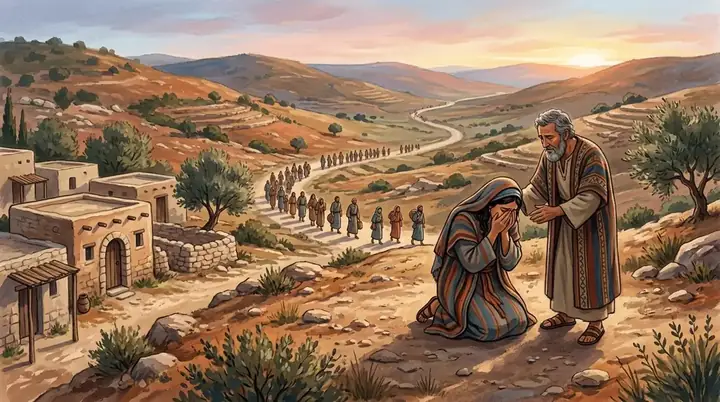
Deborah sat under her palm tree between Ramah and Bethel, and Israel came to her for judgment (Judges 4:5). The Levite of Judges 19 passed Ramah hoping to lodge there before the terrible night at Gibeah (Judges 19:13). After the kingdom split, Ramah stood right on the frontier. King Baasha of Israel began to fortify it to block the road to Judah, until King Asa bribed Syria to attack him and then carried off Baasha's stones and timber to build his own forts (1 Kings 15:17–22). Isaiah pictured the Assyrian army sweeping past Ramah toward Jerusalem (Isaiah 10:29). After the city fell, the Babylonians gathered their chained captives at Ramah, and Jeremiah was released there (Jeremiah 40:1). That is the setting of his famous line about Rachel, weeping in Ramah for her children and refusing to be comforted (Jeremiah 31:15); Rachel's tomb was close by. People of Ramah came home from the exile (Ezra 2:26).
In the New Testament
Matthew heard Rachel's weeping again when Herod killed the little boys of Bethlehem (Matthew 2:18). As Jeremiah's words were followed by a promise of return, so the tears of Bethlehem were followed by a Saviour.
Others with this name
A Ramah on the border of Asher near Tyre (Joshua 19:29), and a fortified Ramah in Naphtali in Galilee (Joshua 19:36). Ramah in Gilead is Ramoth-gilead (2 Kings 8:29). Samuel's home town of Ramah, also called Ramathaim-zophim, in the hills of Ephraim, is where he was born, judged Israel, anointed Saul's successor and was buried (1 Samuel 1:1; 1 Samuel 7:17; 1 Samuel 25:1); whether it was the same place as Benjamin's Ramah isn't certain.
Key verses
- Judges 4:5
And she dwelt under the palm tree of Deborah between Ramah and Beth–el in mount Ephraim: and the children of Israel came up to her for judgment.
- 1 Kings 15:17–22
And Baasha king of Israel went up against Judah, and built Ramah, that he might not suffer any to go out or come in to Asa king of Judah. Then Asa took all the silver and the gold that were left in the treasures of the house of the Lord, and the treasures of the king’s house, and delivered them into the hand of his servants: and king Asa sent them to Ben–hadad, the son of Tabrimon, the son of Hezion, king of Syria, that dwelt at Damascus, saying, There is a league between me and thee, and between my father and thy father: behold, I have sent unto thee a present of silver and gold; come and break thy league with Baasha king of Israel, that he may depart from me. …
- Jeremiah 31:15
Thus saith the Lord; A voice was heard in Ramah, lamentation, and bitter weeping; Rahel weeping for her children refused to be comforted for her children, because they were not.
- Matthew 2:18
In Rama was there a voice heard, lamentation, and weeping, and great mourning, Rachel weeping for her children, and would not be comforted, because they are not.
On the map
Mentioned in 18 verses
- Joshua 2
- Judges 2
- 1 Kings 3
- 2 Chronicles 3
- Ezra 1
- Nehemiah 2
- Isaiah 1
- Jeremiah 2
- Hosea 1
- Matthew 1
Read next
 PlaceJerusalemThe city David made his capital and where Solomon built the temple. Jesus died and rose there and the church began…
 PersonBenjaminJacob's youngest son, whose mother Rachel died bearing him. Joseph's only full brother, he was the centre of the…
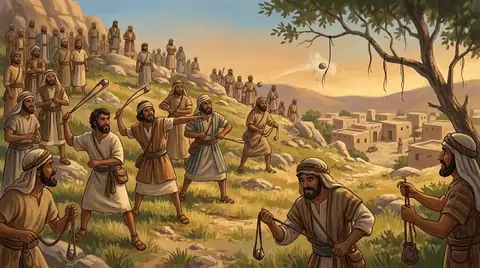 Place · TownGibeahSaul's home town in Benjamin, and his capital as king. Long before that it was the scene of the crime against a…
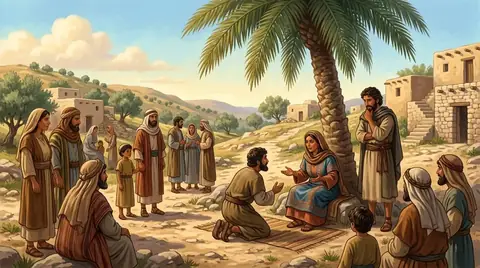 PersonDeborahA prophetess who judged Israel from under a palm tree in Ephraim. She summoned Barak to fight Sisera, went with him to…
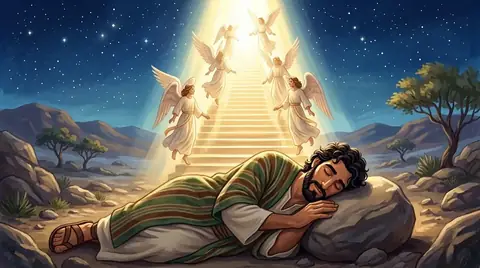 PlaceBethelA town about 10 miles north of Jerusalem where Jacob dreamed of a stairway to heaven. Later it became the home of…Person · King of IsraelBaashaAn army officer who murdered King Nadab and wiped out Jeroboam's family, then ruled Israel for twenty-four years from…Person · KingAsaThe third king of Judah, who reigned forty-one years. He swept away the idols, won a great victory by prayer, and then…
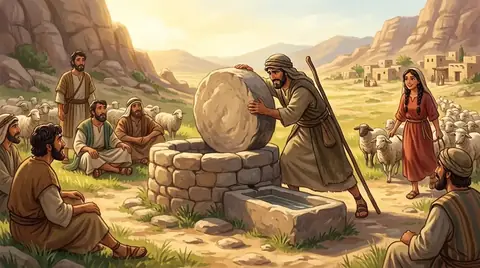 PersonRachelJacob's beloved wife, for whom he worked fourteen years. Long childless, she became the mother of Joseph and died…
Written for this app in its own words, from the Bible, with the facts checked against Bible dictionaries and encyclopedias: Easton's, Smith's, Fausset's, ISBE, Holman, the New Bible Dictionary, Vine's and the Thompson Chain topics. People and places: STEPBible.org (TIPNR), CC BY 4.0; where a place is today and its photo: OpenBible.info, CC BY 4.0.
