
Nation
The Egyptians
The people of the Nile, descended from Mizraim, son of Ham
The people of the ancient kingdom on the Nile. They sheltered Abraham and Joseph's family, then enslaved Israel until God broke their power at the Exodus; later they were a tempting but useless ally.
- Ancestor
- Mizraim, son of Ham (Genesis 10:6)
- Known for
- Enslaving Israel; the ten plagues; the army lost in the Red Sea
- Famous skills
- Writing, building, medicine, embalming (Genesis 50:2), "the wisdom of the Egyptians" (Acts 7:22)
- Land
- Egypt
Who they were
Genesis traces the Egyptians to Mizraim, a son of Ham (Genesis 10:6, 13–14). They were a proud, settled, deeply religious people who worshipped many gods, the sun, the Nile, sacred animals, and the Pharaoh himself. They were skilled in building, writing and medicine; Moses was educated in their learning (Acts 7:22), and Solomon's wisdom was measured against theirs (1 Kings 4:30). They kept apart from foreigners, would not eat with Hebrews, and looked down on shepherds (Genesis 43:32; Genesis 46:34).
With Israel
At first they were hosts. Pharaoh gave Abraham gifts (Genesis 12:16), and a later Pharaoh raised Joseph to rule and gave his family the best of the land (Genesis 47:6). Then a king who knew nothing of Joseph made the Israelites slaves and ordered their baby boys drowned (Exodus 1). God answered with ten plagues that struck the Egyptians' gods one by one, killed their firstborn, and finally drowned their army in the Red Sea (Exodus 7–14). Even so, the law said that Israel must not despise an Egyptian, "because thou wast a stranger in his land" (Deuteronomy 23:7).
Later history
The Egyptians invaded Judah under Shishak (1 Kings 14:25) and killed King Josiah under Necho (2 Kings 23:29). More often Judah's kings looked to them for help against Assyria and Babylon, and the prophets said this trust was folly (Isaiah 31:1; Jeremiah 37:5–10). Yet Isaiah promised that one day the Egyptians would worship the LORD too (Isaiah 19:21–25). In the New Testament an Egyptian rebel is mentioned (Acts 21:38), and the gospel reached Egypt early; the church of Alexandria became one of the greatest in the world.
Key verses
- Genesis 10:6
And the sons of Ham; Cush, and Mizraim, and Phut, and Canaan.
- Exodus 1:13–14
And the Egyptians made the children of Israel to serve with rigour: And they made their lives bitter with hard bondage, in morter, and in brick, and in all manner of service in the field: all their service, wherein they made them serve, was with rigour.
- Exodus 14:30
Thus the Lord saved Israel that day out of the hand of the Egyptians; and Israel saw the Egyptians dead upon the sea shore.
- Deuteronomy 23:7
Thou shalt not abhor an Edomite; for he is thy brother: thou shalt not abhor an Egyptian; because thou wast a stranger in his land.
- Isaiah 19:21–25
And the Lord shall be known to Egypt, and the Egyptians shall know the Lord in that day, and shall do sacrifice and oblation; yea, they shall vow a vow unto the Lord, and perform it. And the Lord shall smite Egypt: he shall smite and heal it: and they shall return even to the Lord, and he shall be intreated of them, and shall heal them. In that day shall there be a highway out of Egypt to Assyria, and the Assyrian shall come into Egypt, and the Egyptian into Assyria, and the Egyptians shall serve with the Assyrians. …
On the map
Read next
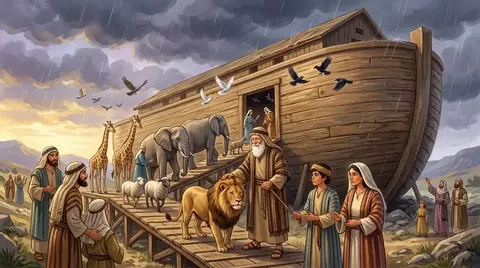 PersonHamNoah's youngest son, saved in the ark with his wife. After the flood he shamed his drunken father, and Noah's curse…
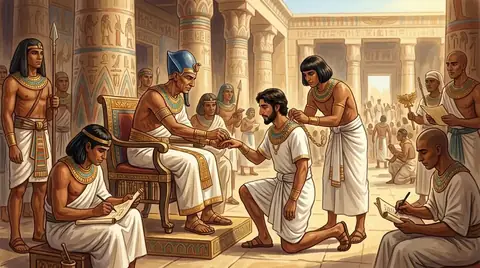 Place · NationEgyptThe great kingdom of the Nile, where Israel grew from a family into a nation and was then enslaved. The Exodus from…
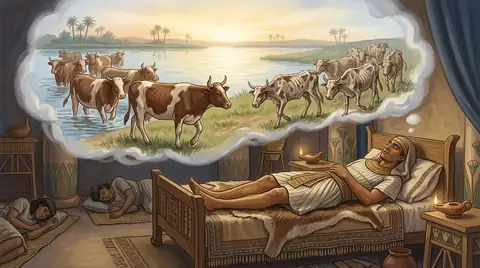 Title · RulerPharaohNot a personal name but the title borne by every king of Egypt, like "Caesar". The Bible names several, the best known…
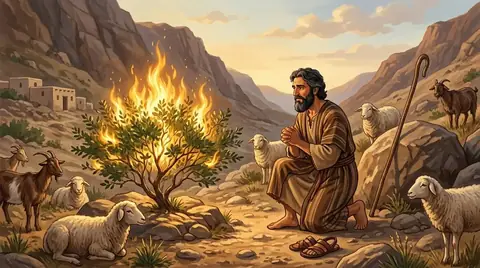 PersonMosesThe man God used to bring Israel out of Egypt, give them his Law at Sinai, and lead them for forty years in the…
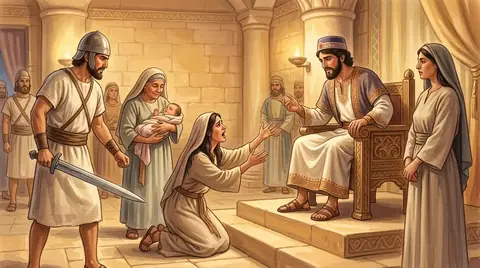 Person · KingSolomonDavid's son and Israel's third king, who asked God for wisdom and received riches and fame as well. He built the temple…
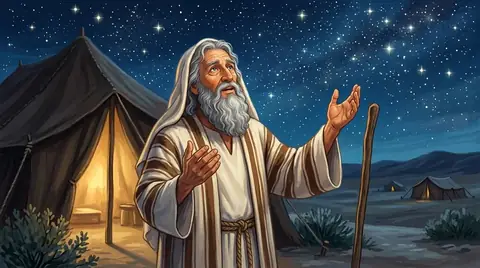 PersonAbrahamThe man God called out of Ur to a land he had never seen, promising him a people and a blessing for the whole world. He…
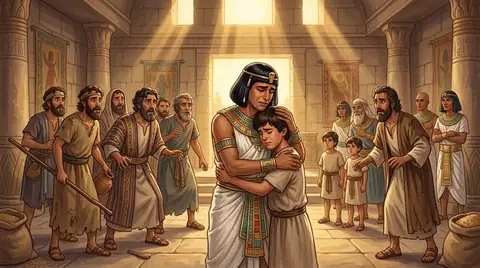 PersonJosephJacob's favourite son, sold by his brothers into Egypt, where he rose from prison to rule the land and saved his family…
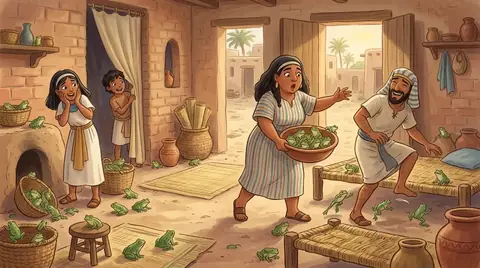 Custom · JudgmentPlagueA blow from God: a sudden disease or disaster sent as judgment. The ten plagues of Egypt broke Pharaoh's grip; later…
Written for this app in its own words, from the Bible, with the facts checked against Bible dictionaries and encyclopedias: Easton's, Smith's, Fausset's, ISBE, Holman, the New Bible Dictionary, Vine's and the Thompson Chain topics.
