
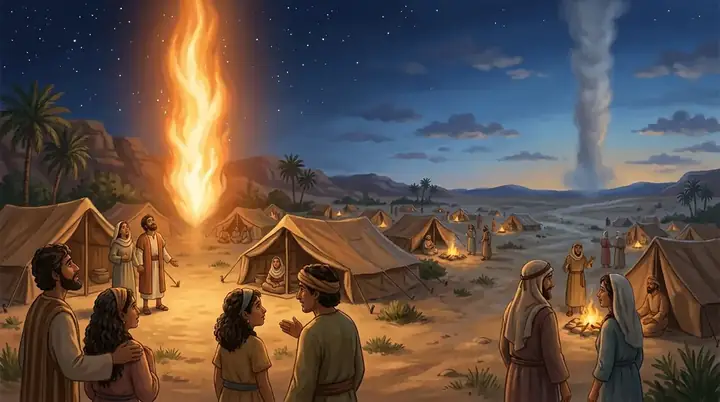
Place
Red Sea
Hebrew Yam Suph, "sea of reeds"
The sea God parted so Israel could escape from Egypt on dry ground, and then closed over Pharaoh's army. Its crossing is remembered through the whole Bible as the great rescue.
- Where
- Between Egypt and the Sinai peninsula; its two arms are today's Gulf of Suez and Gulf of Aqaba
- Known for
- The crossing of the Israelites (Exodus 14)
- Also
- Solomon's port of Ezion-geber on its eastern arm (1 Kings 9:26)
- Today
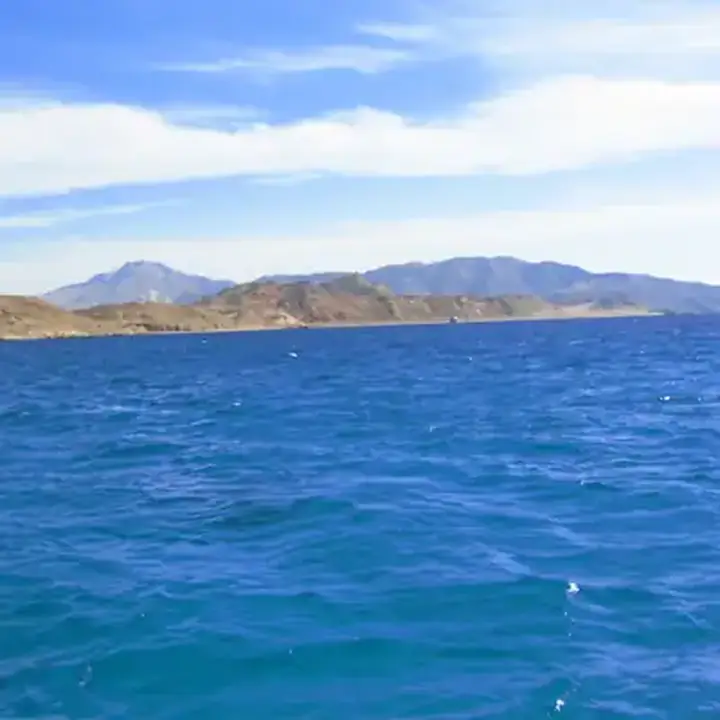
- the Gulf of Aqaba, across Egypt and Saudi Arabia.
Where
The Red Sea runs for some 1,400 miles (2,250 km) between Africa and Arabia. At its northern end it forks round the Sinai peninsula into the Gulf of Suez on the west and the Gulf of Aqaba on the east. The Hebrew name, Yam Suph, means "sea of reeds" or weeds. Where exactly Israel crossed isn't certain; the Bible places it after the camp at Pi-hahiroth, "between Migdol and the sea" (Exodus 14:2), on the Egyptian side. The eastern gulf is also called the Red Sea in the Bible, since Solomon's ships sailed from Ezion-geber near Elath (1 Kings 9:26), and Israel later journeyed by "the way of the Red sea" round Edom (Numbers 21:4).
The crossing
God led Israel out of Egypt not by the short coastal road but "the way of the wilderness of the Red sea" (Exodus 13:18). Trapped between the water and Pharaoh's chariots, the people panicked. Moses said, "Fear ye not, stand still, and see the salvation of the LORD" (Exodus 14:13). A strong east wind blew all night, the waters stood up as walls on either side, and Israel walked across on dry ground. When the Egyptians followed, the sea came back and "there remained not so much as one of them" (Exodus 14:21–28). On the far shore Moses and Miriam led the people in song (Exodus 15).
Why it mattered
The crossing became the event Israel looked back on whenever it needed to remember what God could do. Rahab had heard of it in Jericho (Joshua 2:10); the psalms sing of it (Psalms 106:9; Psalms 136:13–15); Stephen retold it (Acts 7:36); Hebrews lists it among the acts of faith (Hebrews 11:29). The locusts of the eighth plague had already been blown into this sea (Exodus 10:19), and God named it the southern border of the land he would give (Exodus 23:31).
Points to Christ
Paul says that in passing through the sea Israel was "baptized unto Moses" (1 Corinthians 10:1–2). As God brought his people out of slavery through the water, so he brings believers out of sin through Christ, and the enemy that chased them is gone for good.
Key verses
- Exodus 14:13–14
And Moses said unto the people, Fear ye not, stand still, and see the salvation of the Lord, which he will shew to you to day: for the Egyptians whom ye have seen to day, ye shall see them again no more for ever. The Lord shall fight for you, and ye shall hold your peace.
- Exodus 14:21–22
And Moses stretched out his hand over the sea; and the Lord caused the sea to go back by a strong east wind all that night, and made the sea dry land, and the waters were divided. And the children of Israel went into the midst of the sea upon the dry ground: and the waters were a wall unto them on their right hand, and on their left.
- Exodus 15:1
Then sang Moses and the children of Israel this song unto the Lord, and spake, saying, I will sing unto the Lord, for he hath triumphed gloriously: the horse and his rider hath he thrown into the sea.
- Psalms 106:9
He rebuked the Red sea also, and it was dried up: so he led them through the depths, as through the wilderness.
- Hebrews 11:29
By faith they passed through the Red sea as by dry land: which the Egyptians assaying to do were drowned.
On the map
Mentioned in 26 verses
- Exodus 5
- Numbers 4
- Deuteronomy 3
- Joshua 3
- Judges 1
- 1 Kings 1
- Nehemiah 1
- Psalms 5
- Jeremiah 1
- Acts 1
- Hebrews 1
Read next
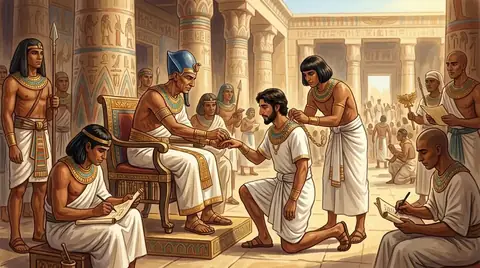 Place · NationEgyptThe great kingdom of the Nile, where Israel grew from a family into a nation and was then enslaved. The Exodus from…
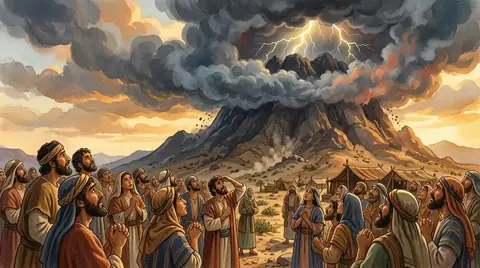 Place · MountainSinaiThe mountain where God came down in fire and smoke, spoke the Ten Commandments, and made his covenant with Israel. The…
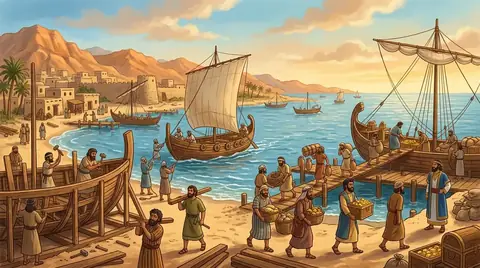 Place · PortEzion-geberA camp of Israel in the wilderness that became Solomon's harbour on the Red Sea, from which his ships sailed to Ophir…Place · PortElathA port at the head of the Gulf of Aqaba on the Red Sea, first Edomite, then Solomon's, lost and won again by the kings…
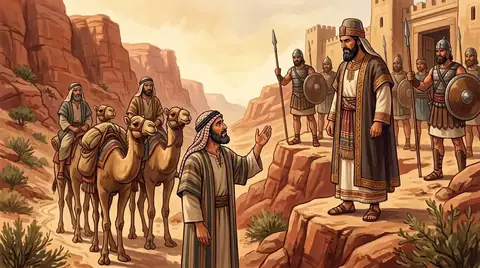 Place · NationEdomThe rugged land south of the Dead Sea where Esau's descendants lived. Edom was Israel's unfriendly brother nation, and…
 PersonMosesThe man God used to bring Israel out of Egypt, give them his Law at Sinai, and lead them for forty years in the…
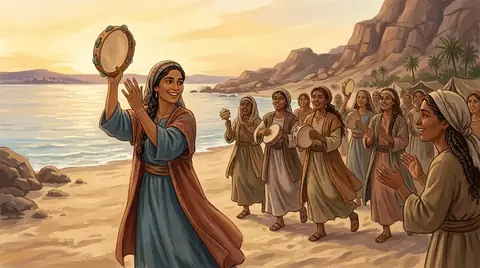 PersonMiriamMoses' older sister, who watched over his basket in the Nile and later led the women of Israel in song at the Red Sea.…
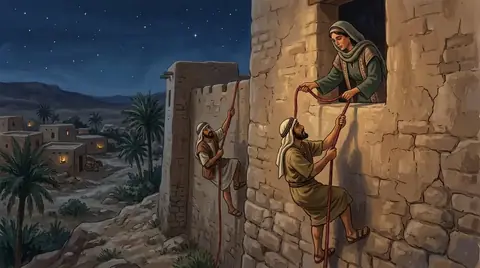 PersonRahabA woman of Jericho who hid Joshua's two spies because she believed in Israel's God. She and her family were spared when…
Written for this app in its own words, from the Bible, with the facts checked against Bible dictionaries and encyclopedias: Easton's, Smith's, Fausset's, ISBE, Holman, the New Bible Dictionary, Vine's and the Thompson Chain topics. People and places: STEPBible.org (TIPNR), CC BY 4.0; where a place is today and its photo: OpenBible.info, CC BY 4.0.
