
Custom · Judgment
Plague
A blow from God: a sudden disease or disaster sent as judgment. The ten plagues of Egypt broke Pharaoh's grip; later plagues fell on Israel itself when the people rebelled.
- Ten in Egypt
- Blood, frogs, gnats, flies, cattle disease, boils, hail, locusts, darkness, death of the firstborn (Exodus 7–12)
- On Israel
- After the quail (Numbers 11:33), at Korah's rebellion (Numbers 16:46–49), at Peor (Numbers 25:9), after David's census (2 Samuel 24:15)
- In Revelation
- Seven last plagues (Revelation 15–16)
What it was
The Bible's word for plague means a stroke or a blow. It can be a disease, like the sores a priest examined (Leviticus 13), but most often it is a judgment sent from God, falling suddenly on a people who have defied him.
The plagues of Egypt
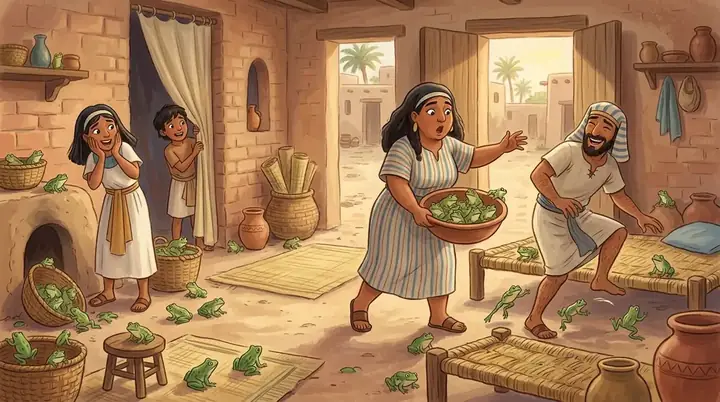
When Pharaoh refused to let Israel go, God struck Egypt ten times (Exodus 7–12). The Nile turned to blood and the fish died. Frogs filled the houses; gnats and then swarms of flies covered the land. Disease killed the cattle, boils broke out on man and beast, and hail mixed with fire flattened the crops. Locusts ate what the hail had left, and three days of thick darkness followed, so heavy that "they saw not one another" (Exodus 10:23). Each blow shamed one of Egypt's gods, and from the fourth plague on, God kept Goshen, where Israel lived, untouched.
The last and worst came at midnight: every firstborn in Egypt died, from the king's son to the prisoner's, while the homes marked with the blood of the Passover lamb were passed over (Exodus 12:29–30). That night Pharaoh let Israel go.
Plagues on God's own people
Israel learned that God's judgments were not only for Egypt. A plague struck while the quail meat was still between their teeth (Numbers 11:33); another after the spies' bad report (Numbers 14:37); another when the people grumbled over Korah, until Aaron ran with his censer and "stood between the dead and the living" (Numbers 16:48). At Peor 24,000 died (Numbers 25:9), and after David's proud census 70,000 fell before the angel's sword was stayed at the threshing floor of Araunah (2 Samuel 24:15–16). The Philistines too were struck with tumours while they held the ark of the covenant (1 Samuel 5–6).
What it means
A plague says that sin is serious and that God is not mocked; but every story also shows a way out: the blood on the door, the priest with his censer, the king's offering on the threshing floor. Revelation pictures seven last plagues at the end of the age (Revelation 15–16), and its last word warns against tampering with God's book lest its plagues be added to the reader (Revelation 22:18). Through Christ, the judgment we deserve has already fallen on him.
Key verses
- Exodus 9:14
For I will at this time send all my plagues upon thine heart, and upon thy servants, and upon thy people; that thou mayest know that there is none like me in all the earth.
- Exodus 12:13
And the blood shall be to you for a token upon the houses where ye are: and when I see the blood, I will pass over you, and the plague shall not be upon you to destroy you, when I smite the land of Egypt.
- Numbers 16:46–48
And Moses said unto Aaron, Take a censer, and put fire therein from off the altar, and put on incense, and go quickly unto the congregation, and make an atonement for them: for there is wrath gone out from the Lord; the plague is begun. And Aaron took as Moses commanded, and ran into the midst of the congregation; and, behold, the plague was begun among the people: and he put on incense, and made an atonement for the people. And he stood between the dead and the living; and the plague was stayed.
- 2 Samuel 24:15–16
So the Lord sent a pestilence upon Israel from the morning even to the time appointed: and there died of the people from Dan even to Beer–sheba seventy thousand men. And when the angel stretched out his hand upon Jerusalem to destroy it, the Lord repented him of the evil, and said to the angel that destroyed the people, It is enough: stay now thine hand. And the angel of the Lord was by the threshingplace of Araunah the Jebusite.
- Revelation 15:1
And I saw another sign in heaven, great and marvellous, seven angels having the seven last plagues; for in them is filled up the wrath of God.
On the map
Read next
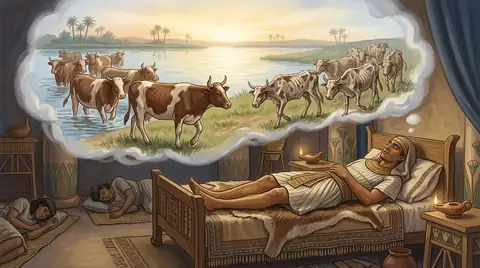 Title · RulerPharaohNot a personal name but the title borne by every king of Egypt, like "Caesar". The Bible names several, the best known…
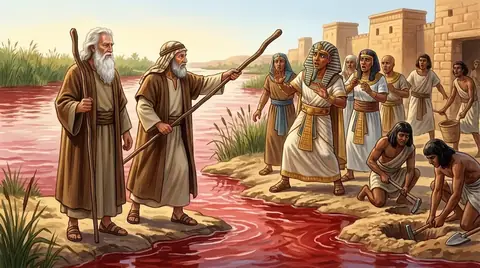 Place · RiverNileThe great river of Egypt, which the Bible usually just calls "the river". Moses floated on it in a basket, and its…
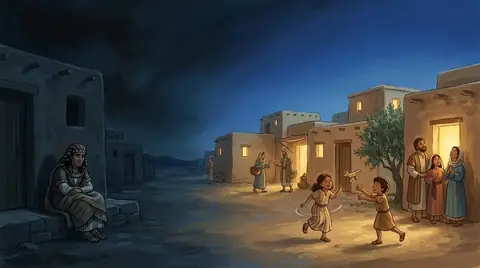 PlaceGoshenThe rich grazing land in the eastern Nile delta where Jacob's family settled under Joseph and where Israel grew into a…
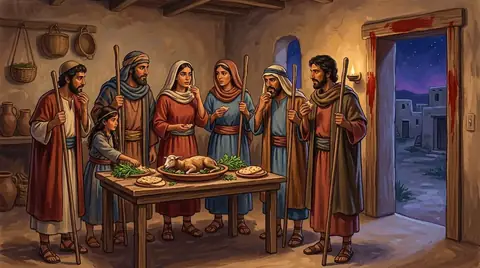 FeastPassoverThe yearly feast remembering the night God rescued Israel from Egypt, when death passed over every house marked with a…
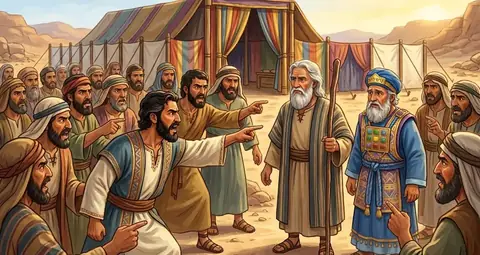 PersonKorahA Levite, Moses' cousin, who led a revolt in the wilderness against Moses and Aaron, demanding the priesthood. The…
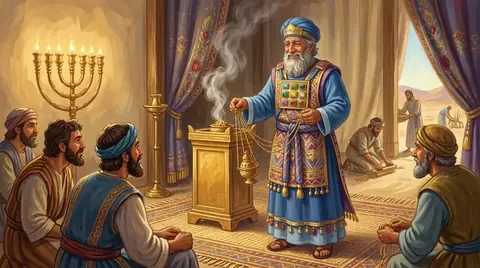 PersonAaronMoses' older brother and Israel's first high priest. He spoke for Moses before Pharaoh and served God at the tabernacle…PlacePeorA mountain top in Moab, looking down on Israel's camp, where Balaam blessed Israel. Soon after, Israel sinned there by…
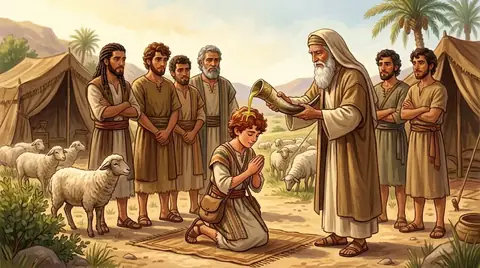 Person · KingDavidThe shepherd boy who killed Goliath and became Israel's greatest king, "a man after God's own heart". He wrote many…
Written for this app in its own words, from the Bible, with the facts checked against Bible dictionaries and encyclopedias: Easton's, Smith's, Fausset's, ISBE, Holman, the New Bible Dictionary, Vine's and the Thompson Chain topics.
