
Custom · Worship
Consecration
Setting a person or a thing apart for God, so that it belongs to him and is used only for him. Priests, firstborn sons, altars, fields and whole lives were consecrated.
- Hebrew
- qadash, to make holy; also "fill the hand" of a priest
- Consecrated
- Priests (Exodus 29), the firstborn (Exodus 13:2), Levites (Numbers 8), the tabernacle and its furniture (Exodus 40), the temple (1 Kings 8)
- For us
- Romans 12:1; 1 Peter 2:9
What it was
To consecrate something was to take it out of common use and hand it over to God. Once it was his, it could not be taken back for ordinary purposes. The altar, the laver and all the furniture of the tabernacle were consecrated with anointing oil (Exodus 40:9–11). Every firstborn son and firstborn animal belonged to God from the night of the Passover, when he spared Israel's firstborn in Egypt (Exodus 13:2, 15); later the tribe of Levi was taken in their place (Numbers 3:12). A person could also consecrate a field, a house or an animal by a vow (Leviticus 27), and spoil taken in war was sometimes devoted to God (Joshua 6:19).
Consecrating a priest
The fullest ceremony was for Aaron and his sons (Exodus 29; Leviticus 8). They were washed, dressed in the priestly robes and anointed with oil. A bull was offered for their sin and a ram as a burnt offering. Then the blood of a second ram was put on the right ear, thumb and big toe of each man: what he heard, what he did and where he went now belonged to God. The ceremony lasted seven days. The Hebrew phrase for it means "to fill the hand", since the offerings were placed in the new priest's hands.
In the New Testament
No new ceremony is given, because Christ has consecrated his people by his own blood (Hebrews 10:10; Hebrews 13:12). All believers are now "a royal priesthood" (1 Peter 2:9). What remains is the response: Paul urges Christians to present their bodies as a living sacrifice, holy and pleasing to God (Romans 12:1). Jesus himself said, "for their sakes I sanctify myself" (John 17:19), setting himself apart for the cross so that his followers might be set apart for God.
For us
Consecration is not a feeling but a handing over. What has been given to God is no longer ours to spend as we please.
Key verses
- Exodus 13:2
Sanctify unto me all the firstborn, whatsoever openeth the womb among the children of Israel, both of man and of beast: it is mine.
- Exodus 29:1
And this is the thing that thou shalt do unto them to hallow them, to minister unto me in the priest’s office: Take one young bullock, and two rams without blemish,
- Leviticus 8:30
And Moses took of the anointing oil, and of the blood which was upon the altar, and sprinkled it upon Aaron, and upon his garments, and upon his sons, and upon his sons’ garments with him; and sanctified Aaron, and his garments, and his sons, and his sons’ garments with him.
- Romans 12:1
I beseech you therefore, brethren, by the mercies of God, that ye present your bodies a living sacrifice, holy, acceptable unto God, which is your reasonable service.
- 1 Peter 2:9
But ye are a chosen generation, a royal priesthood, an holy nation, a peculiar people; that ye should shew forth the praises of him who hath called you out of darkness into his marvellous light:
Read next
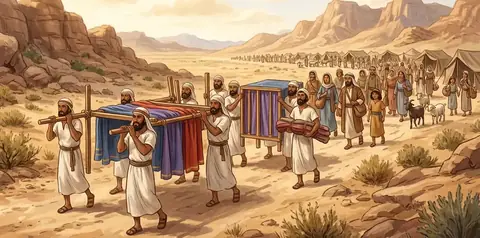 Group · WorshipThe LevitesThe men of the tribe of Levi, chosen to serve God instead of Israel's firstborn sons. They carried the tabernacle…
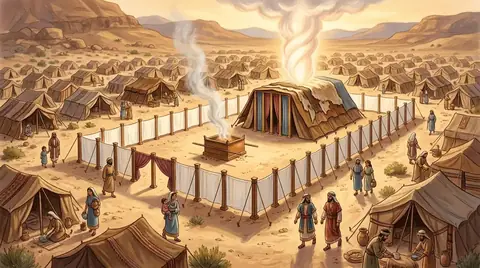 Thing · WorshipThe tabernacleThe holy tent Israel built in the wilderness, by God's own pattern, so that he could dwell in the middle of his people.…
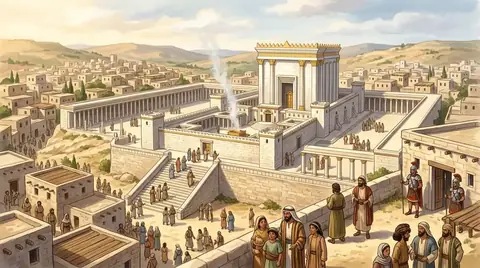 Thing · WorshipThe TempleGod's house in Jerusalem, where he was worshipped and the sacrifices offered. Solomon built it, Babylon burned it, the…
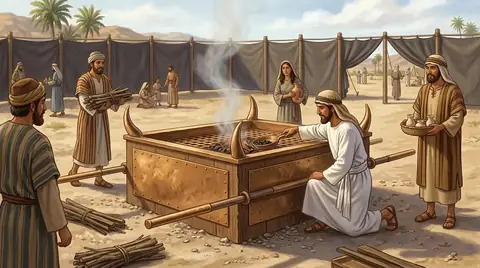 Thing · WorshipThe altarA raised structure of earth, stone or bronze on which sacrifices were offered to God. The big bronze altar stood in the…
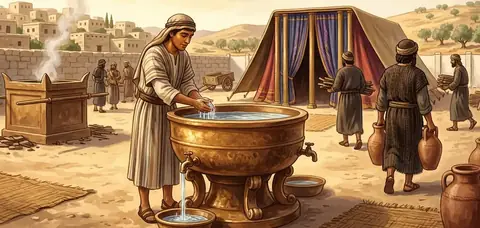 Thing · WorshipLaverThe large bronze basin that stood in the tabernacle court at which the priests washed hands and feet before they served…
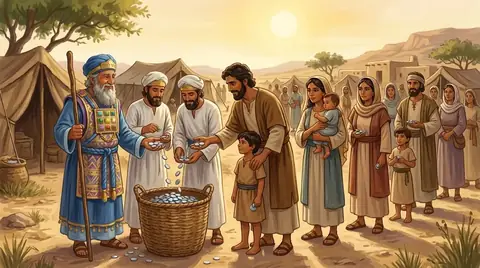 Teaching · Title of ChristThe FirstbornThe eldest son held the first place in an Israelite family and a double share of the inheritance. Every firstborn…
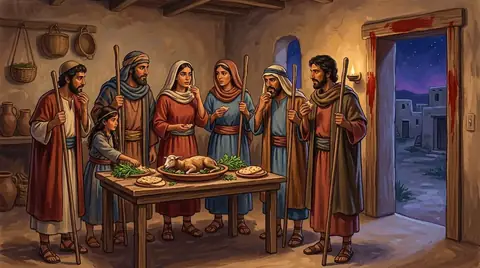 FeastPassoverThe yearly feast remembering the night God rescued Israel from Egypt, when death passed over every house marked with a…
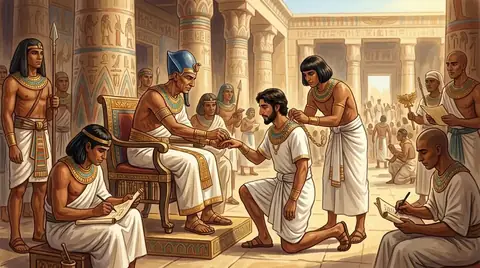 Place · NationEgyptThe great kingdom of the Nile, where Israel grew from a family into a nation and was then enslaved. The Exodus from…
Written for this app in its own words, from the Bible, with the facts checked against Bible dictionaries and encyclopedias: Easton's, Smith's, Fausset's, ISBE, Holman, the New Bible Dictionary, Vine's and the Thompson Chain topics.
